Chinese Quantum Satellite Networks
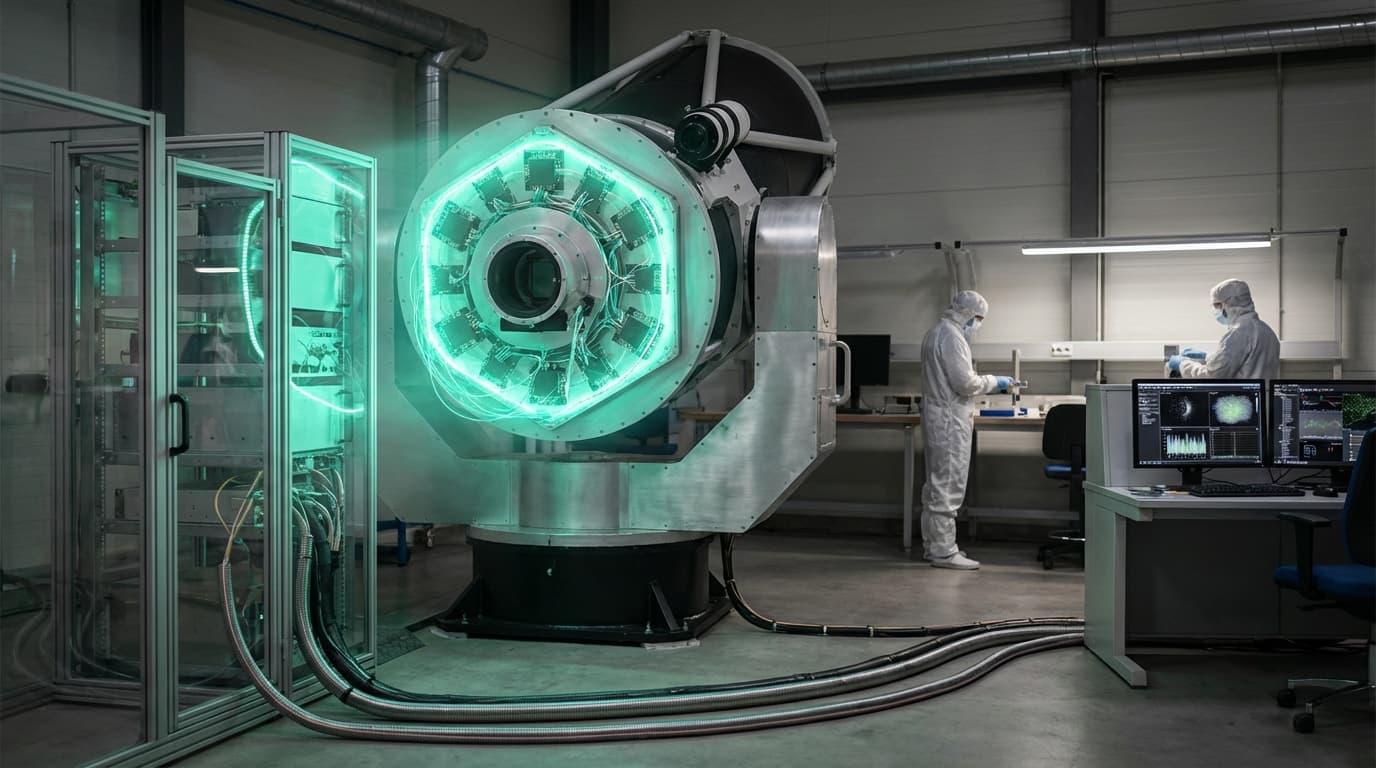
Chinese quantum satellite networks are space-based quantum communication systems that use satellites to extend quantum key distribution (QKD, a method of secure communication using quantum mechanics) and entanglement distribution globally, enabling secure communication between continents. China's Micius satellite missions pioneered satellite-to-ground quantum key distribution (proving that quantum communication can work over long distances through space), and plans now call for multi-satellite constellations (networks of multiple satellites) providing secure links between continents. These systems combine entangled photon sources (devices that create pairs of entangled photons), adaptive optics (systems that compensate for atmospheric distortion), and trusted relay nodes (intermediate stations that help extend the range) to harden diplomatic and financial communications (make them more secure), creating global quantum communication networks that could provide unprecedented security for sensitive communications.
This innovation addresses the challenge of long-distance quantum communication, where quantum signals can't travel far through fiber optic cables. By using satellites, these systems can extend quantum communication globally. China is leading development of these systems, with other countries also pursuing similar capabilities.
The technology is particularly significant for enabling global quantum communication, where satellite networks could provide secure communication worldwide. As these networks expand, they could transform secure communication. However, ensuring reliability, managing satellite costs, and achieving global coverage remain challenges. The technology represents an important step toward global quantum networks, but requires continued development to achieve widespread deployment. Success could enable global quantum communication, but the technology must prove its reliability and value. China's quantum satellite program is a major achievement in quantum communication, demonstrating the feasibility of space-based quantum networks.
Related Organizations
China · University
The lead academic institution behind the Micius satellite and the Quantum Experiments at Space Scale (QUESS) mission.

The national scientific body that funded and oversaw the launch of the Micius quantum satellite.

Commercializes quantum communication hardware and builds the ground station infrastructure connecting to satellites.
China · Company
The state-owned contractor responsible for the launch vehicles and satellite bus platforms for the quantum constellation.
China · Research Lab
Developed the optical payloads, including the quantum entanglement transmitter, for the Micius satellite.
China Telecom
China · Company
Integrates satellite-based QKD links into the national terrestrial fiber network for secure telecommunications.
Jinan Institute of Quantum Technology
China · Research Lab
Manages the Jinan quantum communication network, a key node in the integrated space-ground quantum infrastructure.
China · Government Agency
Responsible for the mission operations and ground support system for the quantum science satellites.
Supporting Evidence
Research this in Signals
Signals turns a topic into a sourced research record you can inspect and rerun. Your first scan is free, and this one starts with Chinese Quantum Satellite Networks already loaded, so edit it or scan as is.