Quantum Key Distribution (QKD) Networks
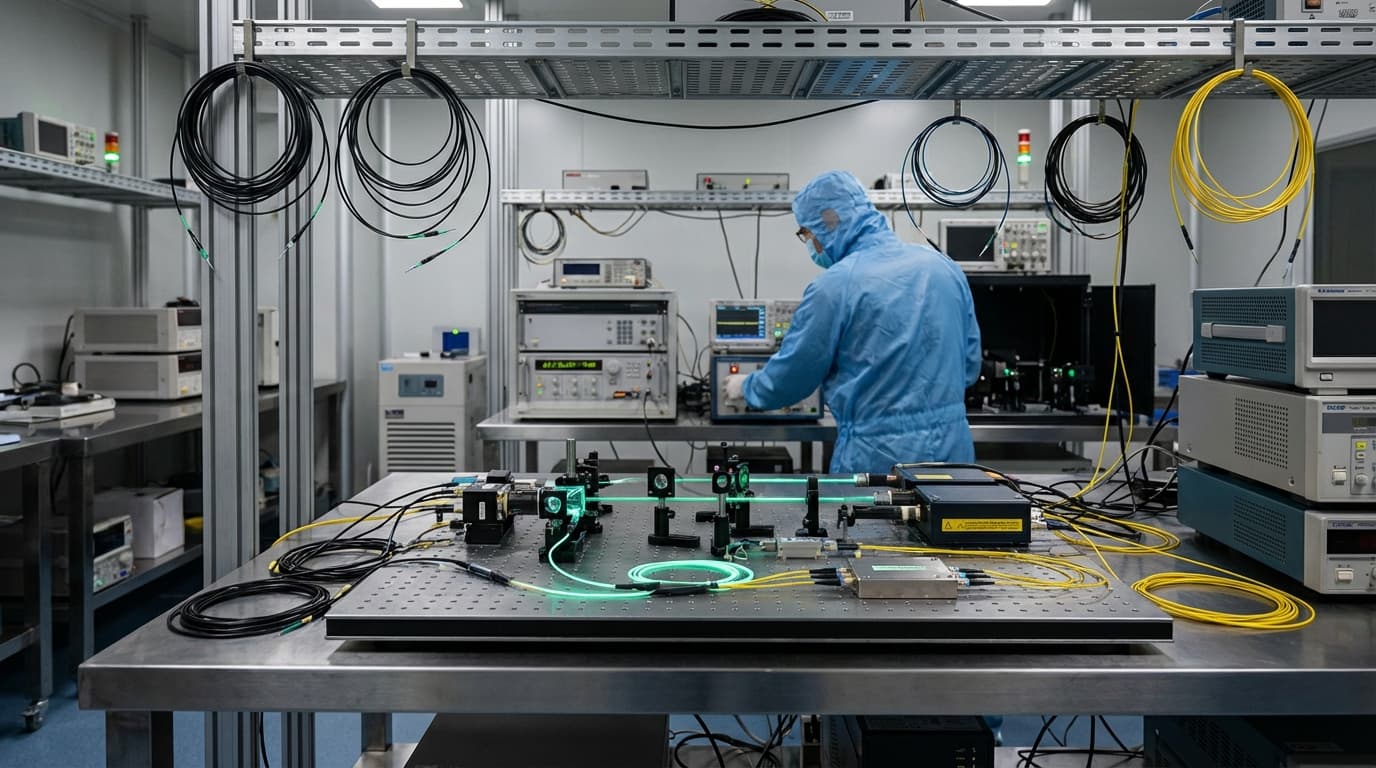
Quantum Key Distribution (QKD) networks are physical networks (actual communication infrastructure) using quantum states (quantum mechanical properties of particles like photons) to share encryption keys (secret keys for encrypting messages) securely, where QKD networks are already being deployed in metro areas (cities) and via satellite (space-based systems). They use the properties of quantum measurement (how measuring quantum states affects them) to detect any eavesdropping (unauthorized interception) on the fiber optic line (communication cables), ensuring the physical layer of communication is secure (the actual transmission of data is protected), making QKD networks a practical quantum technology that is already being used to provide secure communication, enabling encryption key distribution that is provably secure against interception.
This innovation addresses the need for secure key distribution, where QKD provides provable security. By using quantum mechanics, these networks can detect interception. Companies, governments, and research institutions are deploying these networks.
The technology is particularly significant for high-security communication, where QKD provides provable security. As these networks expand, they could become standard for secure communication. However, ensuring reliability, managing costs, and achieving widespread deployment remain challenges. The technology represents a mature application of quantum technology, with commercial deployments already happening. Success is already being achieved, with QKD networks being deployed. QKD networks are one of the most mature quantum technologies, with practical deployments already in place.
Related Organizations

A global leader in quantum cybersecurity solutions, specifically known for their Quantis QRNG chips and appliances.

Provider of quantum-safe cryptography and operator of Phio TX, a commercial QKD network in the US.

Australian quantum cybersecurity company offering high-throughput QRNG appliances.
Develops quantum memory and networking devices that interface with existing fiber infrastructure.

South Korea's largest wireless telecommunications operator.

Develops space-based QKD systems to enable global quantum-secure communication networks.

British multinational telecommunications holding company conducting extensive QKD trials and commercial pilots.

Develops chip-based QKD hardware to miniaturize quantum security for telecommunications.

Spin-off from ICFO developing Continuous Variable QKD (CV-QKD) systems for metropolitan networks.
Italy · Startup
Italian startup offering QKD solutions for fiber and free-space optical communications.
Supporting Evidence
Research this in Signals
Signals turns a topic into a sourced research record you can inspect and rerun. Your first scan is free, and this one starts with Quantum Key Distribution (QKD) Networks already loaded, so edit it or scan as is.