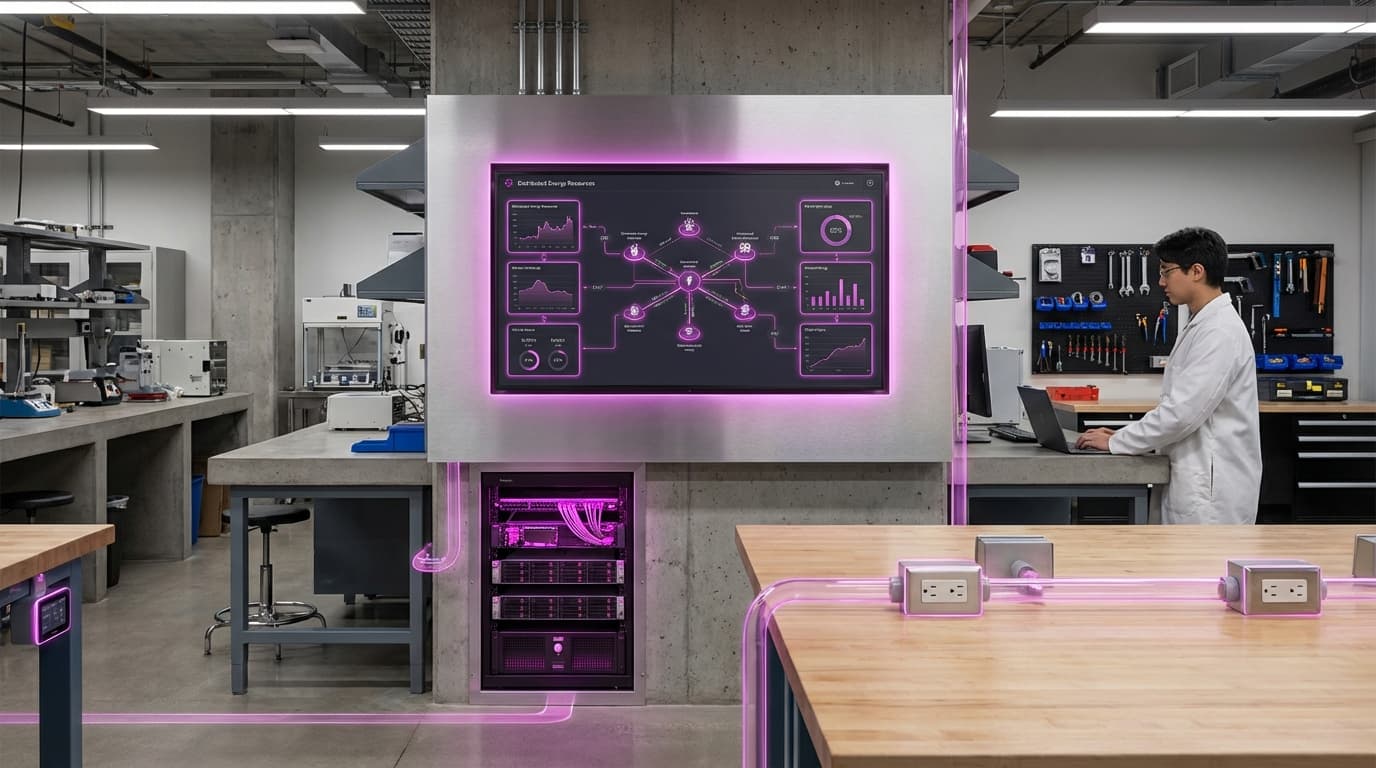
Transactive Energy Platforms
Transactive energy platforms represent a fundamental shift in how electrical grids coordinate supply and demand, moving from centralized command-and-control systems to distributed, market-based coordination. At their core, these platforms expose real-time or near-real-time price signals that reflect the true cost of electricity at any given moment, accounting for factors such as generation availability, transmission constraints, and local distribution capacity. Rather than treating consumers as passive loads, the system enables millions of grid-edge devices—smart thermostats, electric vehicle chargers, battery storage systems, water heaters, and industrial equipment—to automatically respond to these price signals. The technical architecture typically involves a layered communication infrastructure that propagates price information from wholesale markets down through distribution networks to individual devices, while aggregating flexibility offers back up the chain. Advanced metering infrastructure, secure communication protocols, and standardized interfaces enable this bidirectional flow of information, creating what is essentially a continuous, automated negotiation between grid operators and distributed energy resources.
The traditional power grid faces mounting challenges as renewable energy penetration increases and load patterns become less predictable. Conventional approaches to grid balancing rely on expensive peaking power plants, manual demand response programs with limited participation, and increasingly strained transmission infrastructure. Transactive energy platforms address these limitations by unlocking the inherent flexibility already present in millions of devices that can shift their consumption by minutes or hours without compromising their core function. A refrigerator can delay its compressor cycle, an EV can charge more slowly during peak periods, and a building's HVAC system can pre-cool spaces before prices spike—all while maintaining temperature within acceptable ranges. This distributed coordination eliminates the need for centralized systems to track and control every device, instead allowing local intelligence to make decisions based on both economic signals and user-defined constraints. The result is a grid that can absorb higher levels of variable renewable generation, defer costly infrastructure upgrades, and reduce overall system costs while maintaining reliability.
Early deployments of transactive energy concepts have emerged in several regions, with pilot programs demonstrating the viability of coordinating thousands of residential devices through dynamic pricing mechanisms. Pacific Northwest research initiatives have tested transactive coordination among buildings and distribution feeders, while various utilities have experimented with time-varying rates that enable automated device response. The technology builds on decades of research in distributed control systems, market design, and power systems optimization, now made practical by the proliferation of smart devices and declining costs of communication infrastructure. As renewable energy continues to reshape generation portfolios and electric vehicles add new, flexible loads to the grid, transactive platforms offer a scalable path forward that aligns individual economic incentives with system-wide reliability goals. The approach represents a convergence of energy markets, digital infrastructure, and distributed intelligence—transforming the grid from a one-way delivery system into a dynamic, self-organizing network capable of integrating millions of active participants while maintaining the stability and reliability that modern society demands.
Related Organizations

US DOE lab conducting environmental monitoring and materials research relevant to marine energy, including OTEC environmental impacts.

Blockchain-enabled energy trading platform for peer-to-peer energy exchange.

Provider of local energy marketplaces for zero-carbon grids.

Provides a universal API for energy markets, allowing DER partners to automate bids and dispatch assets into wholesale markets.

Independent marketplace for trading flexibility in the electricity grid.

Energy technology company providing the Kraken platform for utility management.

Develops an independent marketplace for energy flexibility services.

Develops enterprise software that unlocks the value of distributed energy resources (DERs) through Virtual Power Plants (VPPs).

Provides a grid orchestration platform that gives utilities real-time visibility and control over local energy resources.

Non-profit accelerating the energy transition using open-source digital technologies.
Supporting Evidence
Research this in Signals
Signals turns a topic into a sourced research record you can inspect and rerun. Your first scan is free, and this one starts with Transactive Energy Platforms already loaded, so edit it or scan as is.