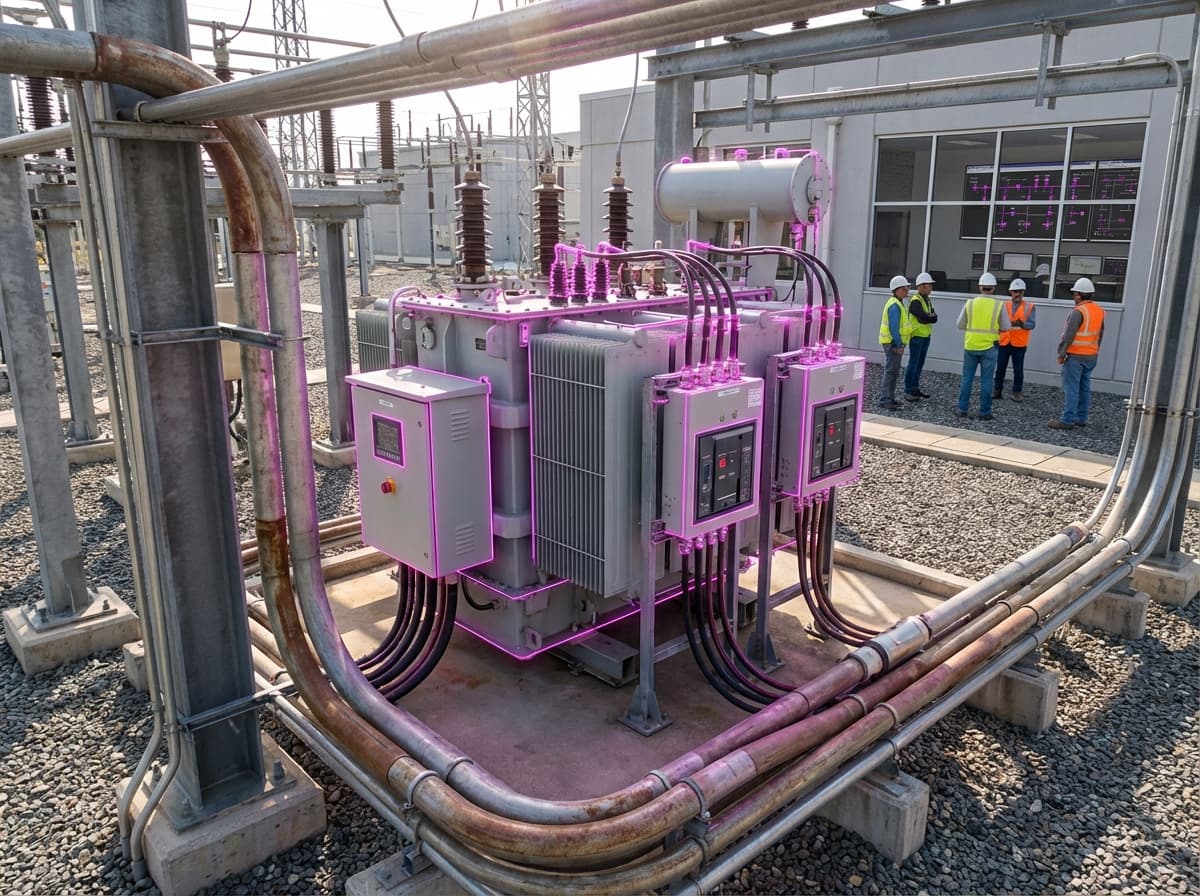
Self-Healing Grid Automation
Modern electrical grids face mounting challenges from aging infrastructure, increasing demand, and the growing frequency of extreme weather events driven by climate change. Traditional grid systems rely on manual intervention to identify and respond to faults, often resulting in prolonged outages that can last hours or even days. When a fault occurs—whether from a fallen tree, equipment failure, or storm damage—conventional grids require human operators to locate the problem, dispatch repair crews, and manually reconfigure the network to restore power. This reactive approach leaves customers without electricity for extended periods and creates cascading economic impacts across affected regions. Self-healing grid automation addresses these limitations by embedding intelligence directly into the electrical infrastructure, enabling the grid to detect, diagnose, and respond to disruptions autonomously, often before customers even notice an interruption.
At its technical core, self-healing grid automation integrates distributed sensors throughout the network that continuously monitor voltage, current, and power quality at thousands of points across transmission and distribution lines. When these sensors detect anomalies—such as sudden voltage drops, current surges, or frequency deviations—they trigger high-speed protection devices like automated circuit breakers and reclosers that can isolate the affected section within milliseconds. Advanced algorithms, increasingly powered by artificial intelligence and machine learning, analyse the sensor data in real time to determine the precise location and nature of the fault. The system then automatically reconfigures the grid topology by opening and closing switches to reroute power around the damaged section, drawing from alternative feeders or distributed energy resources. This entire sequence—from fault detection to power restoration—can occur in seconds rather than hours, minimising disruption while maintaining grid stability and power quality across the network.
Early deployments of self-healing grid technologies have demonstrated substantial improvements in reliability metrics, with some utility operators reporting reductions in average outage duration by 50 percent or more in pilot areas. These systems prove particularly valuable in regions prone to severe weather, where rapid restoration can mean the difference between minor inconvenience and major public safety emergencies. The technology also supports the integration of renewable energy sources and distributed generation, as the intelligent switching capabilities can manage bidirectional power flows and maintain stability even as generation patterns fluctuate. As extreme weather events become more frequent and grids incorporate higher percentages of variable renewable energy, self-healing automation represents a critical evolution in infrastructure resilience. The approach aligns with broader smart grid initiatives and positions electrical networks to meet the reliability expectations of an increasingly digital economy while reducing the operational costs associated with manual fault response and prolonged outages.
Related Organizations

A specialist in switching, protection, and control solutions, specifically known for the IntelliRupter PulseCloser which enables advanced self-healing grid schemes.

Designs and manufactures digital products and systems that protect power grids.

A global leader in HVDC technology, specifically HVDC Light (VSC), supplying converter stations for major interconnectors worldwide.

Global specialist in energy management and automation that integrates cybersecurity into its industrial hardware and software.

Industrial giant offering the 'Senseye Predictive Maintenance' suite and MindSphere IoT platform.

Provides Cooper Power series reclosers and Yukon feeder automation software.

Manufactures the Viper recloser and LaZer automation software specifically for distribution grid automation.

Sentient Energy
United States · Company
Provides intelligent line sensors and analytics that detect faults and feed data to self-healing systems. Acquired by Koch Engineered Solutions.

An independent, non-profit energy research and development organization.
Supporting Evidence
Research this in Signals
Signals turns a topic into a sourced research record you can inspect and rerun. Your first scan is free, and this one starts with Self-Healing Grid Automation already loaded, so edit it or scan as is.