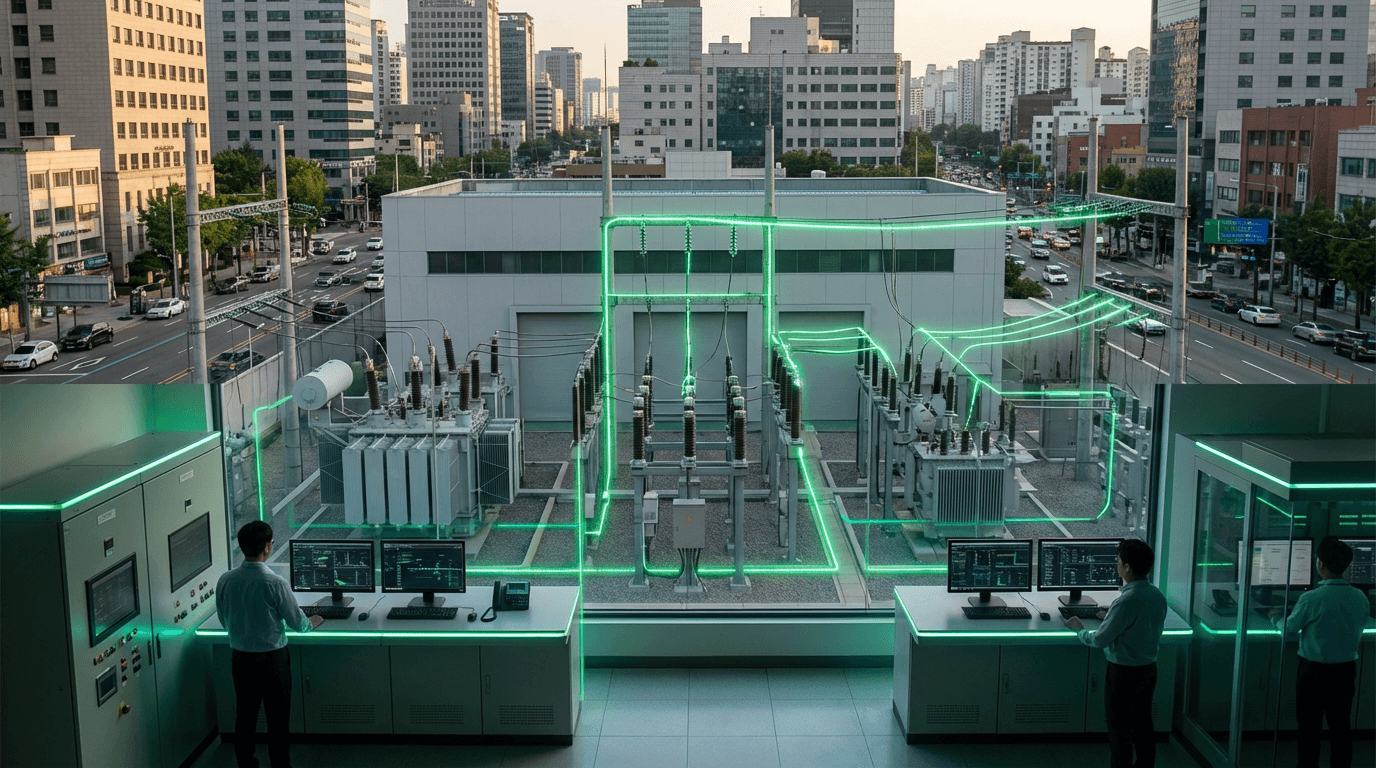
Self-Healing Grid Algorithms
The electrical grid faces an escalating challenge: as power networks grow more complex and distributed energy resources proliferate, traditional fault detection and response mechanisms struggle to maintain reliability. Conventional grid management relies heavily on manual intervention and centralised control systems that can take minutes or even hours to identify and respond to disruptions. Self-healing grid algorithms represent a paradigm shift in power system resilience, employing artificial intelligence and machine learning to create autonomous networks capable of detecting, diagnosing, and responding to faults in milliseconds. These systems continuously monitor grid conditions through distributed sensors and smart meters, analysing voltage fluctuations, current anomalies, and power quality indicators to identify potential failures before they cascade into widespread outages. When a fault occurs, the algorithms rapidly isolate the affected section by coordinating intelligent switching devices and circuit breakers, then calculate optimal power rerouting strategies that restore service to as many customers as possible while maintaining system stability.
The implementation of self-healing capabilities addresses critical vulnerabilities in modern power infrastructure, particularly as extreme weather events and aging equipment increase the frequency of grid disturbances. Research suggests these systems can reduce outage durations by up to 60% compared to traditional manual restoration processes, translating to significant economic savings and improved quality of life for consumers. Beyond reactive fault response, self-healing algorithms enable predictive maintenance by identifying equipment degradation patterns and potential failure points before they manifest as outages. This proactive approach allows utilities to schedule maintenance during low-demand periods rather than responding to emergency failures. The technology also facilitates the integration of renewable energy sources and distributed generation, which introduce new complexity and variability into grid operations. By continuously optimising power flow and automatically adjusting to changing conditions, these algorithms help balance supply and demand across increasingly decentralised networks.
Early deployments of self-healing grid technologies have demonstrated promising results in pilot programs across North America, Europe, and Asia, with utilities reporting measurable improvements in reliability metrics and customer satisfaction. The systems prove particularly valuable in urban environments where underground cable networks make fault location challenging, and in rural areas where long distribution lines are vulnerable to weather-related damage. Industry analysts note that the convergence of advanced metering infrastructure, edge computing capabilities, and improved communication networks has made widespread adoption increasingly feasible. As climate change intensifies the threat of severe weather events and as consumer expectations for uninterrupted power service continue to rise, self-healing grid algorithms are becoming essential components of utility modernisation strategies. The technology represents a crucial step toward truly resilient power systems capable of maintaining service continuity in an era of growing uncertainty, while simultaneously supporting the transition to cleaner, more distributed energy architectures that characterise the grid of the future.
Related Organizations

The energy portfolio of GE (formerly GE Digital), offering Asset Performance Management (APM) software powered by AI.

A global leader in HVDC technology, specifically HVDC Light (VSC), supplying converter stations for major interconnectors worldwide.

A specialist in switching, protection, and control solutions, specifically known for the IntelliRupter PulseCloser which enables advanced self-healing grid schemes.

Global specialist in energy management and automation that integrates cybersecurity into its industrial hardware and software.

Designs and manufactures digital products and systems that protect power grids.

Sentient Energy
United States · Company
Provides intelligent line sensors and analytics that detect faults and feed data to self-healing systems. Acquired by Koch Engineered Solutions.

Partners with NVIDIA to deploy AI-driven smart grid chips for real-time edge processing and control.

Software company adapting Iron Dome missile defense algorithms for grid orchestration and self-healing.

Develops advanced grid control software enabling utilities to manage distributed energy resources (DERs) and microgrids autonomously.
Provides distributed energy resource management system (DERMS) software.
Deep tech startup providing real-time grid monitoring and flexibility management to prevent outages.
Supporting Evidence
Research this in Signals
Signals turns a topic into a sourced research record you can inspect and rerun. Your first scan is free, and this one starts with Self-Healing Grid Algorithms already loaded, so edit it or scan as is.