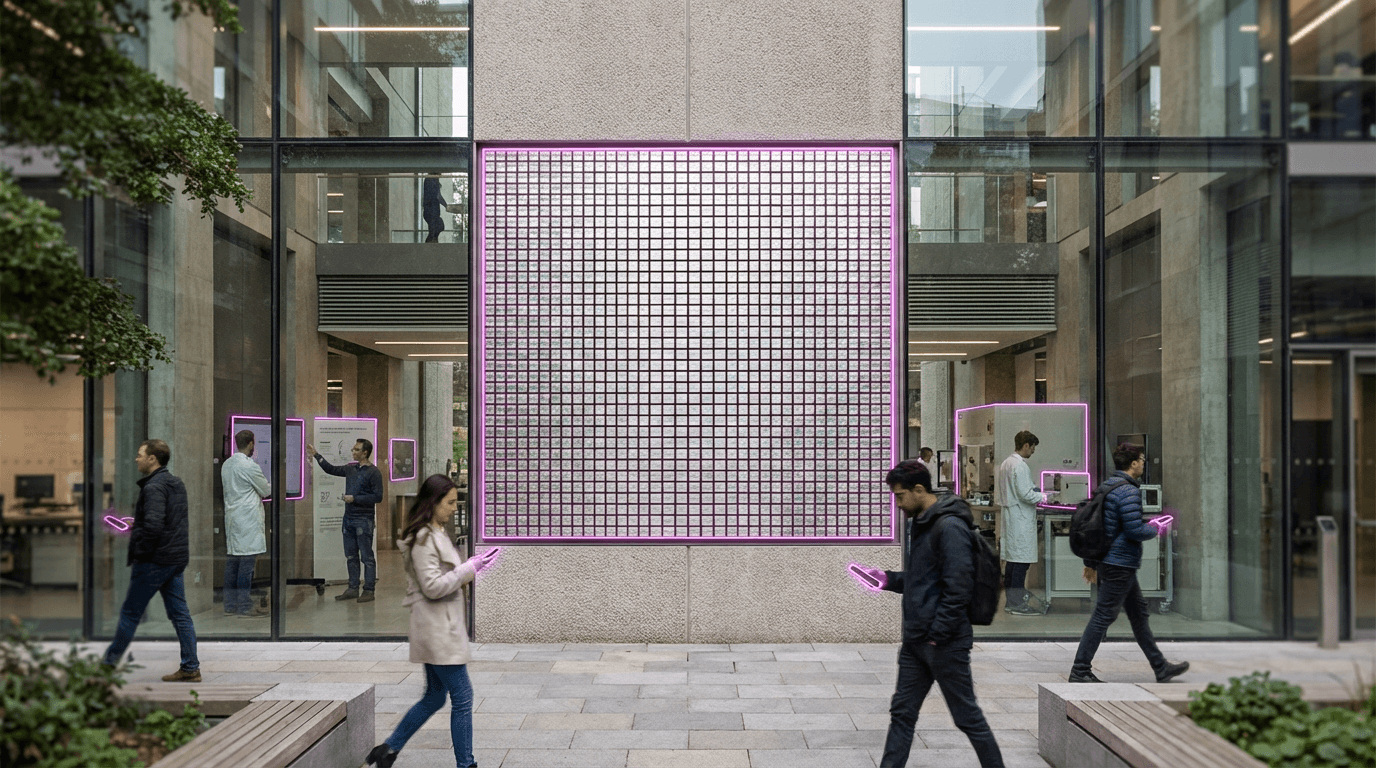
Reconfigurable Intelligent Surfaces (RIS)
Reconfigurable Intelligent Surfaces represent a paradigm shift in wireless communication infrastructure, transforming passive building surfaces into active network components. These panels consist of arrays of programmable meta-material elements—typically sub-wavelength electromagnetic structures that can be electronically controlled to manipulate radio wave propagation. Each element acts as a tiny antenna that can adjust its reflection coefficient, phase shift, and amplitude in real-time based on signals from a central controller. Unlike traditional relay stations or repeaters that consume significant power to receive and retransmit signals, RIS panels operate in a nearly passive manner, requiring minimal energy only for the control circuitry. The meta-materials are engineered at scales smaller than the wavelength of the radio signals they manipulate, allowing precise control over how electromagnetic waves interact with the surface. This enables the panels to redirect signals around obstacles, focus energy toward specific users, or create constructive interference patterns that strengthen coverage in previously unreachable areas.
The telecommunications industry faces mounting pressure to deliver higher data rates and more reliable connectivity while managing the escalating costs and energy consumption of traditional network densification strategies. Deploying additional base stations in urban environments is expensive, often requiring costly site acquisition, power infrastructure, and regulatory approvals. RIS technology addresses these challenges by leveraging existing building facades, indoor walls, and other surfaces as network infrastructure. This approach is particularly valuable in addressing the propagation challenges of millimeter-wave and sub-terahertz frequencies being adopted for 5G and future 6G networks, where signals struggle to penetrate buildings and are easily blocked by obstacles. By strategically placing RIS panels on building exteriors or within indoor spaces, network operators can extend coverage into dead zones, reduce interference between competing signals, and improve spectral efficiency without the capital expenditure of new cell towers. The technology also enables more sustainable network expansion, as the passive nature of RIS panels results in dramatically lower power consumption compared to active repeaters or small cells.
Early field trials and pilot deployments have demonstrated the practical viability of RIS technology in real-world environments. Research institutions and telecommunications companies have tested RIS panels in urban settings, showing measurable improvements in signal strength and data throughput in challenging propagation scenarios. Indoor deployments in office buildings and shopping centres have illustrated how RIS can enhance wireless coverage in complex environments with multiple walls and obstacles. The technology aligns with broader industry trends toward network intelligence and programmability, where software-defined approaches allow operators to dynamically optimise network performance based on changing conditions and user demands. As the wireless industry progresses toward 6G and explores higher frequency bands with even more challenging propagation characteristics, RIS is expected to become an integral component of future network architectures, enabling the vision of smart radio environments where every surface contributes to connectivity.
Related Organizations

European standards organization that launched the Industry Specification Group on Reconfigurable Intelligent Surfaces (ISG RIS).

Greenerwave
France · Startup
Deeptech startup developing Reconfigurable Intelligent Surfaces (RIS) using metasurfaces to control electromagnetic waves.

Metawave
United States · Startup
Builds advanced beamforming and steering platforms for 5G and automotive radar using metamaterials.

Pioneered Holographic Beam Forming (HBF) technology for 5G mmWave, allowing antennas to shape and steer beams with low power and cost.

Global provider of telecommunications equipment and network solutions.

Major supplier of 'UltraGear' gaming monitors specifically marketed to and bulk-sold to PC Bangs.

Japanese telecommunications giant leading the R&D and deployment of the IOWN All-Photonic Network.

The French National Centre for Scientific Research actively investigates the physics of metasurfaces for wave control.

Researchers here developed a cotton fabric coated with a polymer (PNIPAM) that collects water from fog and releases it when warm.
Supporting Evidence
Research this in Signals
Signals turns a topic into a sourced research record you can inspect and rerun. Your first scan is free, and this one starts with Reconfigurable Intelligent Surfaces (RIS) already loaded, so edit it or scan as is.