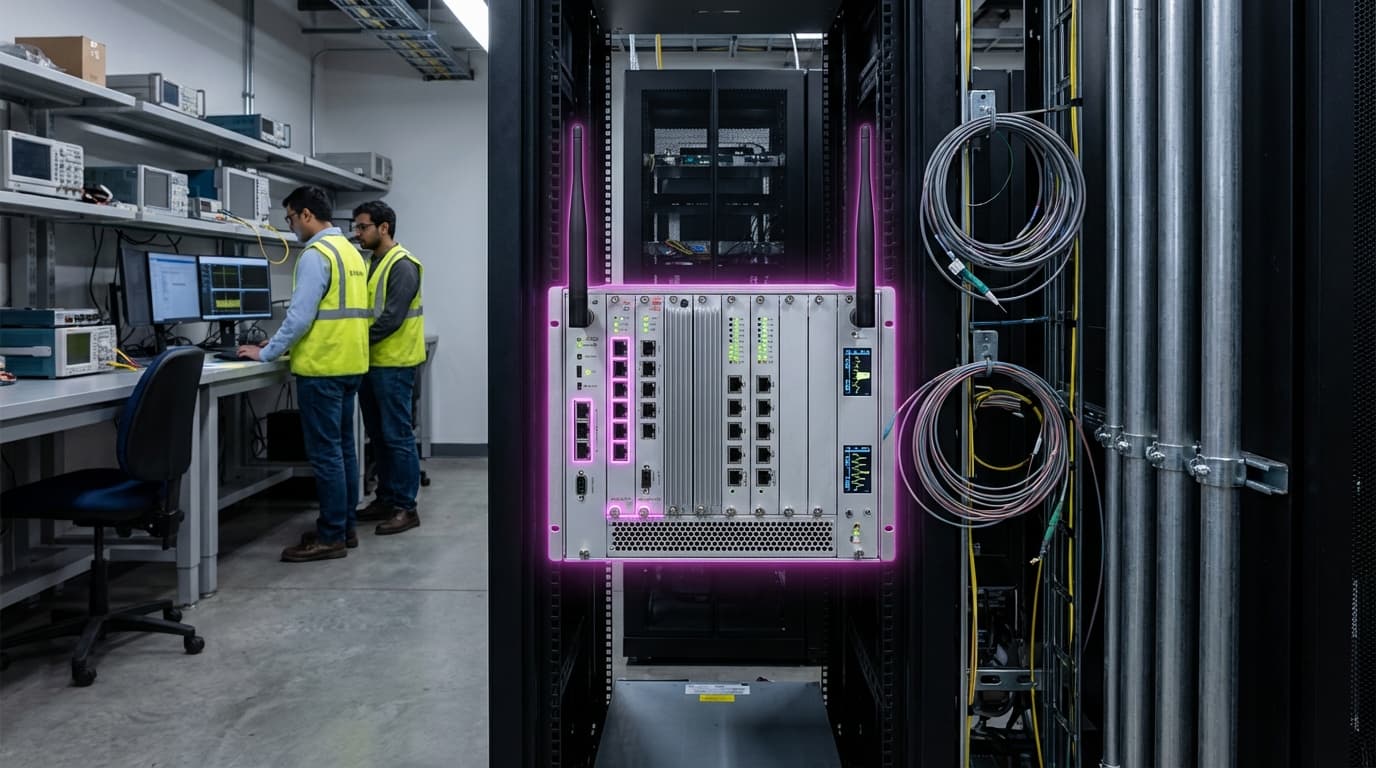
AI-Native Radio Access Networks
Radio Access Networks (RANs) form the critical link between mobile devices and core telecommunications infrastructure, managing how signals are transmitted and received across cellular towers and base stations. Traditional RANs rely on pre-configured parameters and manual optimization, requiring network engineers to periodically adjust settings based on observed performance patterns. AI-native RANs represent a fundamental architectural shift, embedding machine learning models directly into the network infrastructure itself. These systems continuously ingest data from thousands of network elements—signal strength measurements, user mobility patterns, traffic loads, interference levels—and use this information to make real-time decisions about resource allocation. The AI models operate at multiple timescales simultaneously: microsecond-level adjustments to beamforming arrays that direct radio signals toward specific users, second-by-second handover decisions as devices move between cell towers, and longer-term predictions about capacity needs across different times of day or weather conditions.
The telecommunications industry faces mounting pressure to deliver higher data speeds and lower latency while simultaneously reducing operational costs and energy consumption. Network operators currently spend significant resources on manual optimization, dispatching engineers to troubleshoot coverage gaps or capacity bottlenecks. These reactive approaches struggle to keep pace with the dynamic nature of modern mobile usage, where demand can spike unpredictably due to concerts, sporting events, or emergency situations. AI-native RANs address these challenges by enabling networks to self-optimize without human intervention. The technology can reduce energy consumption by intelligently powering down underutilized cells during low-traffic periods and dynamically reallocating spectrum resources where they're needed most. This autonomous capability becomes particularly valuable as networks grow more complex with the proliferation of small cells, massive MIMO antenna arrays, and millimeter-wave frequencies in 5G deployments. By learning from historical patterns and real-time conditions, these systems can predict and prevent network degradation before users experience service issues.
Early deployments of AI-native RAN capabilities are already underway in several markets, with mobile operators testing machine learning-driven optimization in dense urban environments and along transportation corridors. Research indicates that these systems can improve network capacity by 20-30% while reducing energy costs, though results vary based on deployment scenarios and traffic patterns. The technology proves especially valuable in disaster response situations, where AI-native networks can automatically reconfigure themselves to maintain connectivity as infrastructure is damaged or overwhelmed by sudden demand surges. Looking forward, industry analysts note that AI-native RANs will become increasingly essential as networks evolve toward 6G architectures, where the complexity and scale of optimization decisions will far exceed human management capabilities. This technology represents a broader trend toward autonomous infrastructure systems that can sense, learn, and adapt to changing conditions without constant human oversight, fundamentally transforming how telecommunications networks are designed, deployed, and operated.
Related Organizations

Pioneers in deep learning for wireless communications and signal processing.

Developing foundation models for robotics (Project GR00T) and vision-language models like VILA.

Applies Generative AI and ML to radio access network (RAN) performance and efficiency.


Develops Universal Spectrum Multiplier software for RAN intelligence.


Multinational telecommunications, information technology, and consumer electronics company.

Co-founder of 'Bleu', a joint venture to provide a sovereign cloud platform in France meeting strict security standards.
Supporting Evidence
Research this in Signals
Signals turns a topic into a sourced research record you can inspect and rerun. Your first scan is free, and this one starts with AI-Native Radio Access Networks already loaded, so edit it or scan as is.