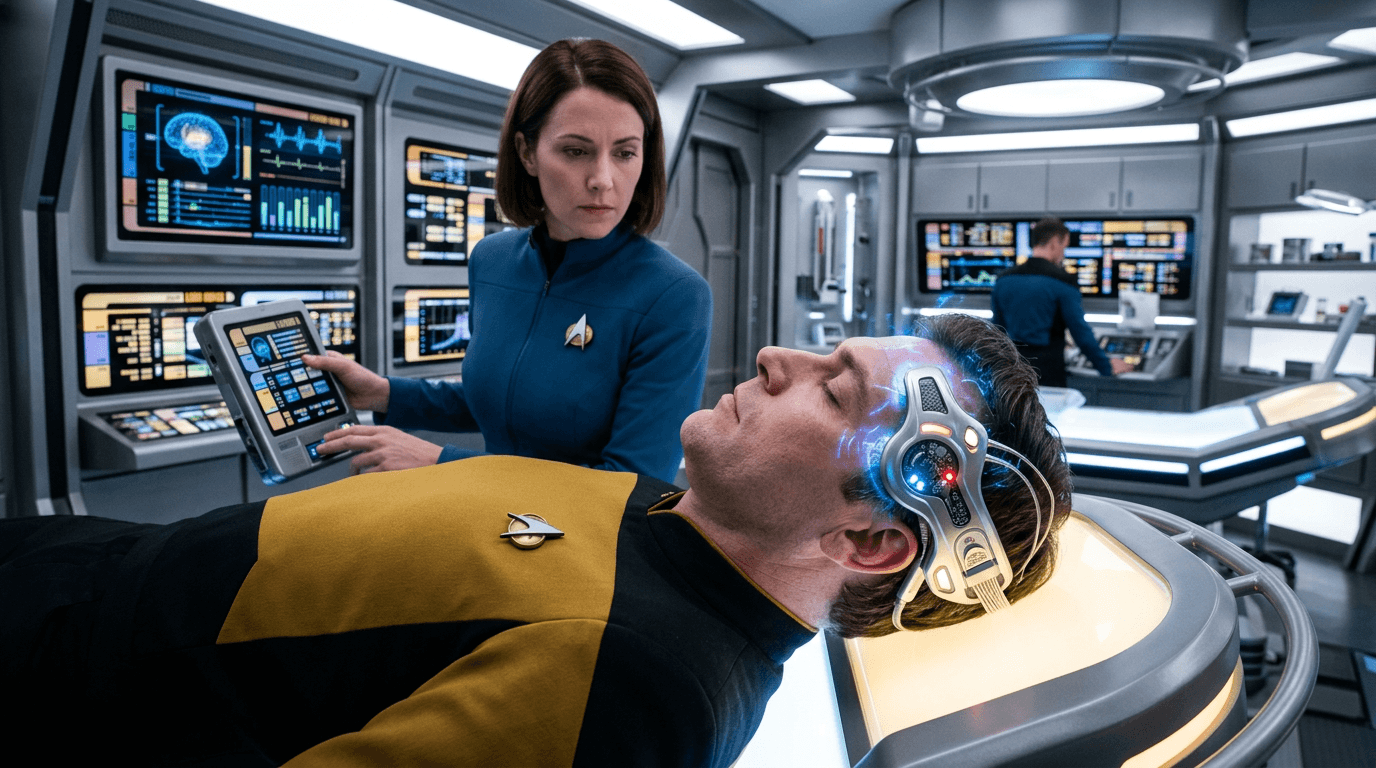
Cortical Stimulator
The cortical stimulator represents a speculative medical device designed to deliver targeted electromagnetic pulses directly to the cerebral cortex, with the dual purpose of restoring consciousness in comatose patients and augmenting specific cognitive capabilities during critical procedures. The conceptual mechanism relies on the principle that precisely modulated electrical fields can influence neural firing patterns, potentially reactivating dormant neural networks or temporarily enhancing the efficiency of specific brain regions. In fictional medical scenarios, such devices are often portrayed as emergency interventions capable of "jump-starting" neural activity in patients who have suffered severe trauma, stroke, or other conditions causing loss of consciousness. The theoretical foundation draws from real neurostimulation research, including deep brain stimulation and transcranial magnetic stimulation, but extends these concepts to a level of precision and versatility not yet achieved in clinical practice.
Within science fiction narratives and speculative medical frameworks, the cortical stimulator serves as a dramatic plot device that raises profound questions about consciousness, medical ethics, and the boundaries of cognitive enhancement. Its appearance in emergency medicine scenarios reflects broader cultural anxieties about the fragility of consciousness and the desire for technological solutions to neurological crises. The device also features prominently in discussions of cognitive augmentation, where temporary enhancement of memory, processing speed, or sensory acuity might provide tactical advantages in high-stakes situations. Contemporary neuroscience research does explore targeted brain stimulation for conditions like depression, Parkinson's disease, and epilepsy, suggesting that controlled neural modulation is scientifically plausible within narrow parameters. However, the leap from treating specific disorders to reliably restoring consciousness or enhancing cognition on demand remains firmly in the realm of speculation.
The primary scientific constraints involve the extraordinary complexity of neural networks and our incomplete understanding of how consciousness emerges from brain activity. Current neurostimulation technologies can influence localized brain regions but cannot yet achieve the patient-specific calibration and real-time adaptation that fictional cortical stimulators demonstrate. The risks of unintended neural activation, seizure induction, or permanent cognitive alteration would be substantial with any device capable of such powerful intervention. For this technology to approach plausibility, significant advances would be required in neural mapping, real-time brain imaging, closed-loop feedback systems, and our fundamental understanding of consciousness itself. While targeted neurostimulation will likely continue advancing for specific therapeutic applications, the versatile emergency revival and enhancement capabilities depicted in speculative scenarios remain distant prospects, constrained by both technical limitations and profound ethical considerations surrounding cognitive manipulation.
Research this in Signals
Signals turns a topic into a sourced research record you can inspect and rerun. Your first scan is free, and this one starts with Cortical Stimulator already loaded, so edit it or scan as is.