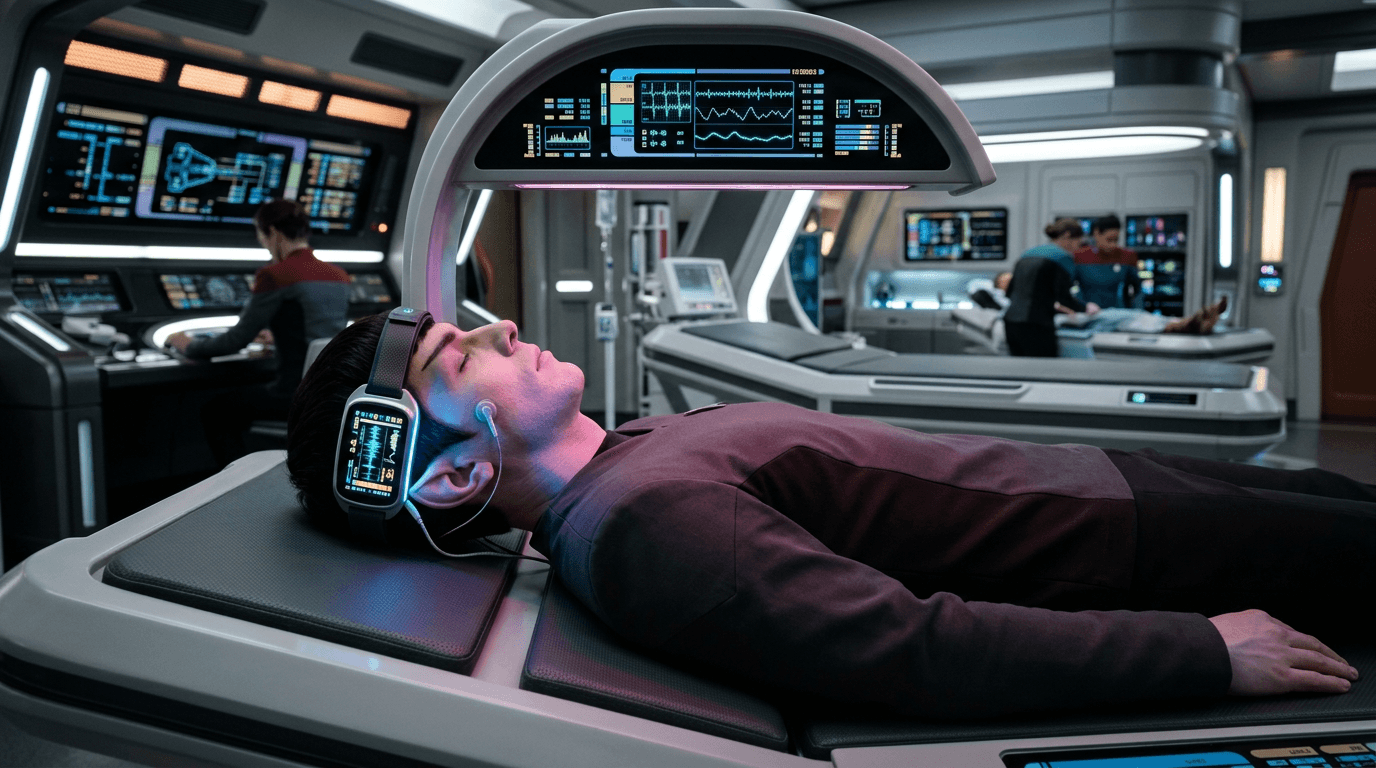
Cortical Monitor
Cortical monitors represent an advanced class of neurological devices designed to provide continuous, high-resolution surveillance of brain activity in critically ill patients. Unlike traditional electroencephalography (EEG) systems that capture surface-level electrical signals, these monitors employ sophisticated sensor arrays—potentially including intracranial electrodes, functional near-infrared spectroscopy, or advanced magnetoencephalography techniques—to map neural activity patterns across multiple cortical regions simultaneously. The technology processes vast streams of neurophysiological data in real time, using pattern recognition algorithms to identify subtle deviations from baseline activity that might indicate developing complications such as seizures, ischemic events, or increased intracranial pressure. In intensive care settings, where patients with traumatic brain injuries, stroke, or post-surgical complications require vigilant observation, these systems serve as an early warning mechanism, detecting changes in neural function minutes or hours before they manifest as observable clinical symptoms. The integration of machine learning models allows modern cortical monitors to establish individualised baselines for each patient, improving sensitivity to clinically significant changes while reducing false alarms that plague conventional monitoring approaches.
The strategic value of cortical monitoring extends beyond passive observation into the realm of active neural support, a concept that blurs the boundary between diagnostic device and therapeutic intervention. Speculative designs envision monitors capable of delivering targeted electrical stimulation, localised cooling, or even metabolic support compounds directly to compromised brain regions, essentially providing life support at the cellular level. This capability would prove particularly valuable during complex neurosurgical procedures, where maintaining neural viability in eloquent cortex—regions responsible for critical functions like language or motor control—can determine long-term patient outcomes. In trauma scenarios, such devices might sustain neural tissue through the critical hours following injury, buying time for definitive treatment while preventing the cascade of secondary damage that often determines prognosis. The concept also appears in discussions of extreme life support scenarios, from battlefield medicine to space exploration, where maintaining brain function might take precedence over other physiological systems during evacuation or treatment delays.
The plausibility of comprehensive cortical monitoring rests on established neuroscience while the therapeutic aspects remain largely speculative. Current clinical practice includes various forms of continuous brain monitoring, from standard EEG to invasive intracranial pressure sensors, demonstrating the feasibility of sustained neural surveillance. However, the leap to active neural support faces substantial challenges: delivering interventions at the precision required without causing additional damage, maintaining sterility in long-term implanted systems, and managing the enormous computational demands of real-time brain-state analysis. The blood-brain barrier presents a formidable obstacle to any chemical support mechanisms, while the brain's exquisite sensitivity to electrical and thermal perturbations constrains intervention parameters. Advances in biocompatible materials, miniaturised sensors, and neuromorphic computing architectures could incrementally expand monitoring capabilities, but transforming these devices into active support systems would require breakthroughs in our understanding of neural resilience and repair mechanisms. The technology's development trajectory will likely follow an evolutionary path, with each generation offering marginally improved detection sensitivity and perhaps limited, highly targeted intervention capabilities, rather than the revolutionary neural life support systems depicted in speculative scenarios.
Research this in Signals
Signals turns a topic into a sourced research record you can inspect and rerun. Your first scan is free, and this one starts with Cortical Monitor already loaded, so edit it or scan as is.