







Smart Helmets
This page is a narrower case of it.
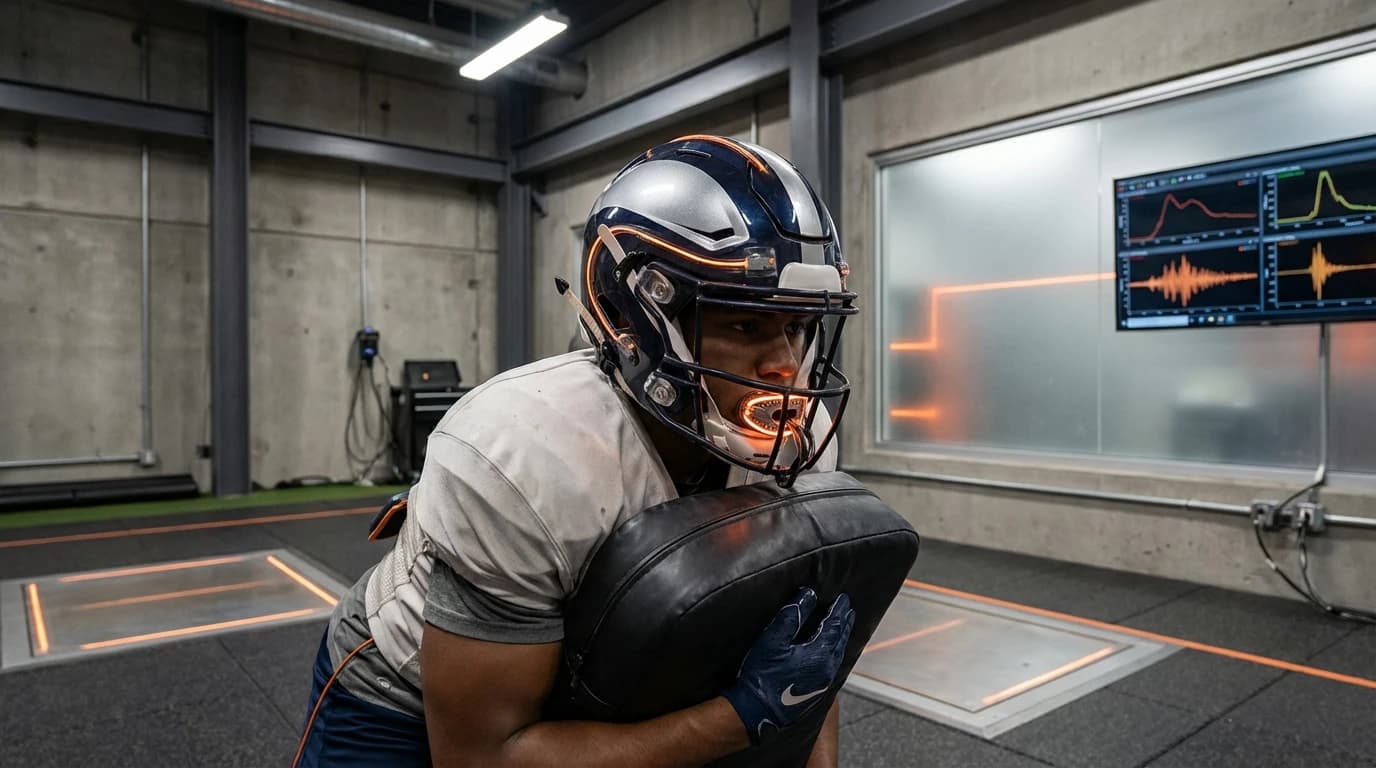
Impact-sensing helmets and mouthguards represent a critical advancement in athlete safety technology, embedding sophisticated sensor arrays directly into protective equipment to monitor head trauma in real-time. These devices integrate multi-axis accelerometers, gyroscopes, and sometimes magnetometers that capture both linear and rotational forces during impacts. The sensors typically sample at rates exceeding 1,000 Hz, enabling precise measurement of the magnitude, direction, and duration of head accelerations. In helmet-based systems, sensors are strategically positioned within the shell or padding to detect forces transmitted through the protective structure, while mouthguard sensors sit closer to the centre of mass of the skull, potentially offering more accurate readings of brain movement. The collected data is transmitted wirelessly to sideline monitoring systems, creating an immediate feedback loop between on-field events and medical oversight.
The fundamental challenge these technologies address is the invisible nature of brain injuries in contact sports. Unlike visible wounds or fractures, concussions and subconcussive impacts often go undetected during play, yet accumulate to cause significant long-term neurological damage. Traditional concussion protocols rely heavily on subjective symptom reporting and sideline assessments that athletes may downplay due to competitive pressure. Impact-sensing equipment provides objective biomechanical data that removes guesswork from injury assessment. When impact forces exceed predetermined thresholds—typically based on research correlating acceleration magnitudes with concussion risk—medical staff receive immediate alerts, enabling prompt evaluation and removal of at-risk athletes from play. This capability addresses both acute injury management and the broader challenge of tracking cumulative exposure, as repeated subconcussive hits, even those below concussion thresholds, are increasingly linked to chronic traumatic encephalopathy and other degenerative conditions.
Adoption of impact-sensing technology has expanded significantly across amateur and professional sports, with several football leagues, rugby organisations, and ice hockey programs implementing monitoring systems. Research institutions are leveraging aggregated data from these devices to better understand injury mechanisms and establish evidence-based return-to-play protocols. Beyond immediate medical applications, the technology is informing equipment design improvements and coaching interventions, as pattern analysis reveals high-risk playing techniques or positions that generate excessive head impacts. Looking forward, integration with artificial intelligence systems promises more sophisticated risk prediction models that account for individual athlete physiology, impact history, and recovery patterns. As awareness of brain injury consequences grows and regulatory bodies consider mandating impact monitoring, these sensing systems are positioned to become standard equipment across contact sports, fundamentally transforming how athletic organisations balance competitive performance with long-term player health.
Developer of the Prevent Head Impact Monitoring System, a smart mouthguard for contact sports.
A leading manufacturer of football helmets that developed the InSite smart helmet technology.
University research lab famous for its STAR rating system for helmet safety.
Australian technology company providing smart mouthguards and concussion management software.
The international governing body for the sport of rugby union.
Biocore
United States · Research Lab
Biomechanics research firm that manages the NFL's engineering roadmap.
An R&D company that originally developed the Head Impact Telemetry System (HITS).
Developed a smart mouthguard measuring heart rate and head impacts.
Developers of wearable sensors for head impact monitoring (SIM-G).
Published forecasts about this technology, graded against what happened in Hindsight.
Smart Helmets
This page is a narrower case of it.
Signals turns a topic into a sourced research record you can inspect and rerun. Your first scan is free, and this one starts with Impact-Sensing Helmets & Mouthguards already loaded, so edit it or scan as is.