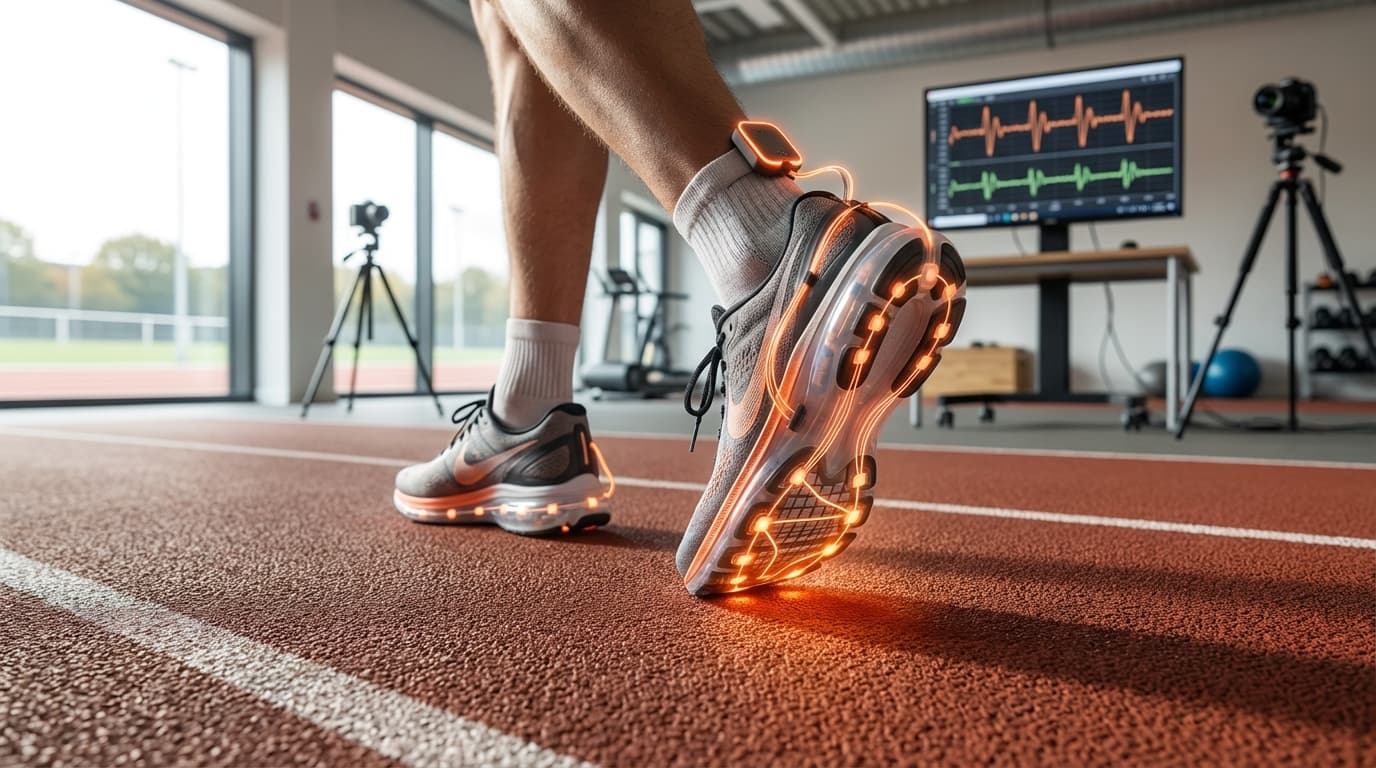
Wearable Force Sensors
Wearable force sensors represent a significant advancement in biomechanical monitoring, embedding sophisticated measurement capabilities directly into athletic footwear and insoles. These devices typically employ force-sensitive resistors (FSRs), piezoelectric sensors, or capacitive pressure sensors strategically positioned throughout the insole to capture detailed information about how forces are distributed across the foot during movement. Modern implementations often utilize flexible printed circuit boards and 3D-printed sensor arrays that conform to the foot's natural contours, allowing for continuous data collection without interfering with natural gait patterns. The sensors measure both vertical ground reaction forces—the impact forces experienced during foot strike—and shear forces that occur during lateral movements and push-off phases. This data is transmitted wirelessly to companion devices or cloud platforms, where algorithms process the raw sensor readings into actionable biomechanical insights about stride patterns, weight distribution, and force application throughout the gait cycle.
The traditional approach to gait analysis and force measurement has required expensive laboratory equipment, including force plates embedded in walkways and motion capture systems that confine athletes to controlled environments. This limitation has created a significant gap between laboratory findings and real-world athletic performance, as athletes rarely move the same way in a lab as they do during actual competition or training. Wearable force sensors address this challenge by bringing laboratory-grade measurement capabilities into natural training environments, enabling coaches and sports scientists to capture authentic biomechanical data during actual athletic activities. This technology proves particularly valuable for injury prevention, as abnormal force distribution patterns often precede overuse injuries in runners, basketball players, and other athletes who experience repetitive impact loading. By identifying asymmetries in ground reaction forces or excessive impact peaks early, training programs can be adjusted before injuries develop. Additionally, these sensors support performance optimization by revealing inefficiencies in force application during acceleration, deceleration, and directional changes.
Current deployments of wearable force sensors span professional sports teams, rehabilitation clinics, and consumer fitness applications. Professional organizations use these systems to monitor athlete workload and biomechanical stress throughout training cycles, while physical therapists employ them to track recovery progress and ensure patients are distributing forces evenly after injury. Research suggests that continuous monitoring of ground reaction forces can reduce injury rates by identifying at-risk movement patterns before they result in tissue damage. The technology has also found applications in return-to-play protocols, where objective force measurements help determine when athletes have regained symmetrical loading patterns after injury. As sensor miniaturization continues and machine learning algorithms become more sophisticated at interpreting force data, these systems are expected to become increasingly integrated into standard athletic footwear, potentially making advanced biomechanical feedback accessible to recreational athletes and everyday users seeking to optimize their movement patterns and reduce injury risk.
Related Organizations

Develops smart insoles with embedded IMUs to measure movement patterns and ground reaction forces in real-world environments.

Produces wireless sensor insoles for gait analysis and training, used heavily in research and pro sports.

Leader in intelligent dynamic sensing, providing high-speed pressure imaging insoles.

Pioneers in load distribution measurement systems, including the 'loadsol' in-shoe force sensor.

Produces ultra-thin smart insoles that slip under existing running shoe insoles to track footstrike and biomechanics.

Manufacturer of tactile pressure and force measurement sensors and systems.

Connected footwear company offering smart insoles for healthcare and sport.

Running technology company that developed NURVV Run, a smart insole system.

Spin-off from Samsung C-Lab, creating smart insoles specifically for golf balance and posture analysis.

Creates smart socks and garments with textile pressure sensors.
Supporting Evidence
Research this in Signals
Signals turns a topic into a sourced research record you can inspect and rerun. Your first scan is free, and this one starts with Wearable Force Sensors already loaded, so edit it or scan as is.