Smart Playing Surfaces
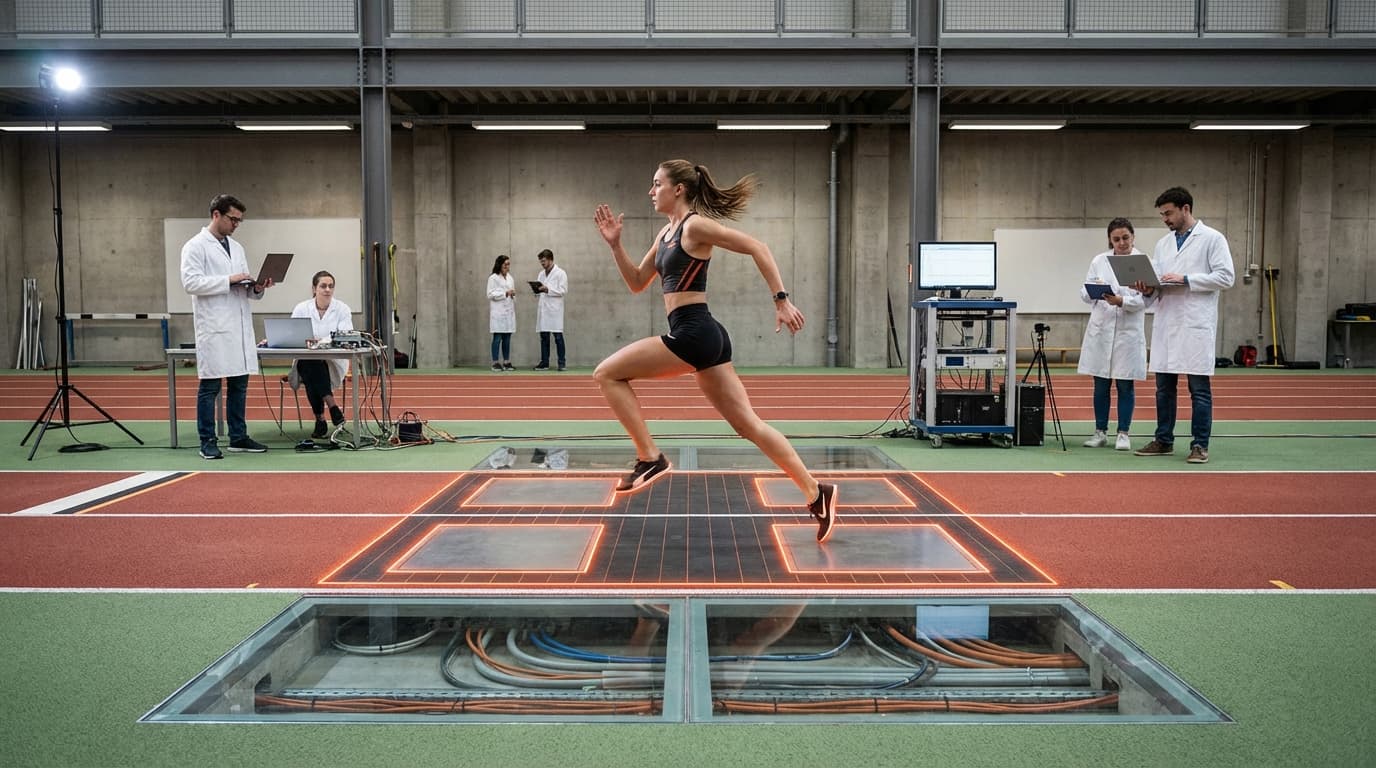
Smart playing surfaces represent a fundamental reimagining of athletic infrastructure, transforming passive fields, courts, and tracks into active data-gathering systems. These surfaces incorporate networks of embedded sensors—including piezoelectric force sensors, capacitive pressure arrays, and optical position trackers—distributed throughout the playing area to capture detailed biomechanical information during athletic activity. The technology builds upon principles from laboratory force plate systems, which have long been used to measure ground reaction forces in controlled settings, but scales these capabilities across entire playing surfaces. Advanced materials science enables these sensors to be integrated directly into synthetic turf fibers, court flooring substrates, or track surfaces without compromising the mechanical properties athletes expect. The sensor networks connect to edge computing systems that process incoming data streams in real time, converting raw measurements into actionable insights about force distribution, contact timing, acceleration patterns, and movement trajectories across the entire playing area.
The athletic performance industry faces persistent challenges in balancing training intensity with injury prevention, particularly as competitive pressures push athletes toward higher workloads. Traditional monitoring approaches rely on wearable devices or periodic laboratory assessments, creating gaps in understanding how athletes actually load their bodies during competition and practice. Smart playing surfaces address this limitation by providing continuous, unobtrusive monitoring that captures every foot strike, cut, jump, and landing without requiring athletes to wear additional equipment. This comprehensive data collection enables coaches and sports scientists to identify asymmetries in loading patterns that may indicate injury risk, track cumulative stress across training sessions, and optimize surface characteristics for specific sports or athlete populations. The technology also supports more sophisticated approaches to return-to-play protocols, allowing medical staff to objectively measure whether recovering athletes are moving with their typical biomechanical patterns before clearing them for full competition.
Early implementations of instrumented surfaces have appeared in elite training facilities and research institutions, where the technology supports both athlete development and scientific investigation into sport-specific biomechanics. Professional teams are beginning to explore installations in practice facilities, recognizing the potential to gain competitive advantages through better load management and injury prevention. The surfaces generate particularly valuable insights for sports involving repetitive high-impact movements—such as basketball, soccer, and track and field—where cumulative loading contributes significantly to overuse injuries. Beyond individual athlete monitoring, the aggregated data from smart surfaces is advancing broader understanding of how surface properties influence performance and injury risk, potentially informing future standards for playing surface design and maintenance. As sensor costs decline and data analytics capabilities improve, this technology is positioned to extend beyond elite athletics into recreational facilities, rehabilitation centers, and research applications, contributing to a more evidence-based approach to athletic surface design and training load management across all levels of sport.
Related Organizations

Manufactures glass sports flooring with embedded LEDs and sensor capabilities.

Transforms standard tennis courts into smart courts using an AI-kiosk system.

Creates mixed reality gaming platforms like ValoJump (trampolines) and ValoClimb.

Gym flooring manufacturer known for 'PRAMA', an interactive fitness flooring system.

Smart sports video technology connecting courts and fields.


Supporting Evidence
Research this in Signals
Signals turns a topic into a sourced research record you can inspect and rerun. Your first scan is free, and this one starts with Smart Playing Surfaces already loaded, so edit it or scan as is.