Artisanal Mining Formalization Platforms
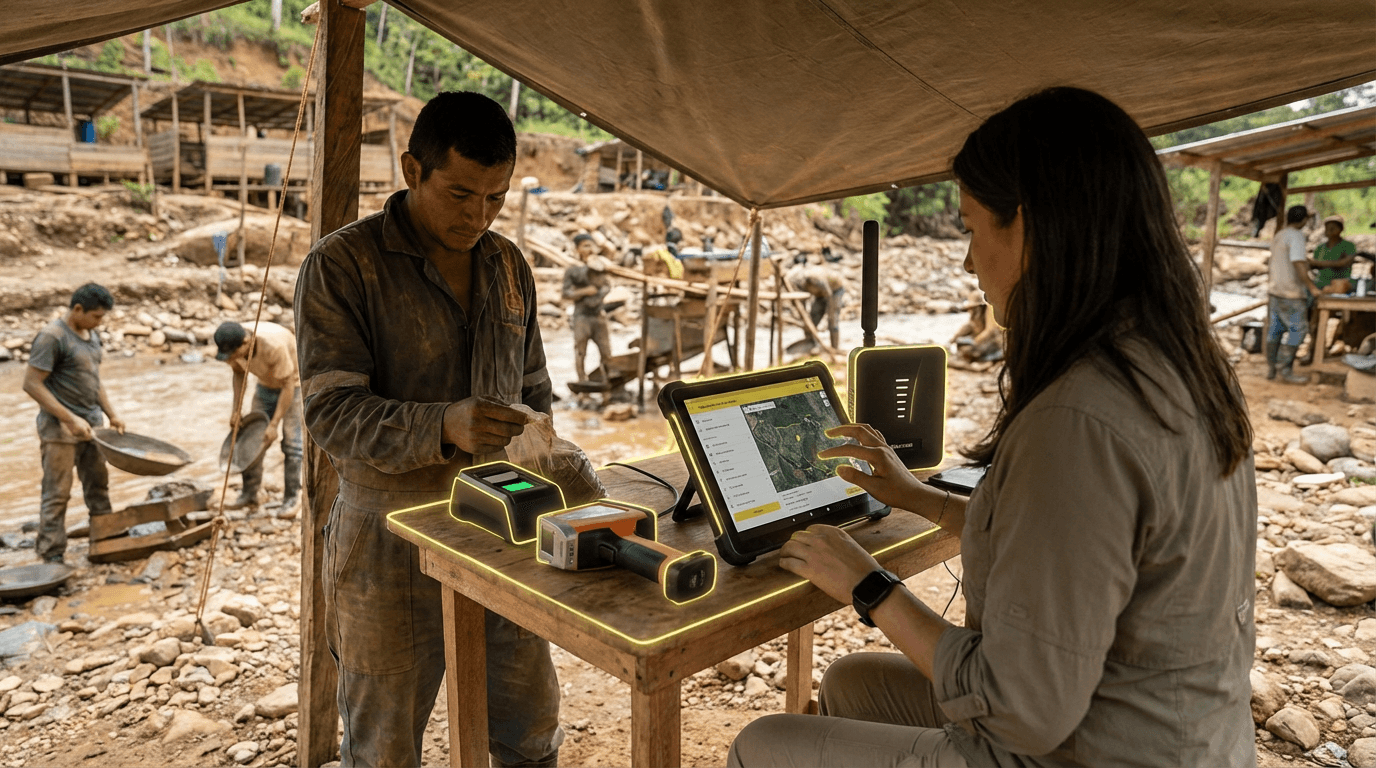
Artisanal and small-scale mining (ASM) represents a critical yet largely informal sector of the global extractives industry, employing over 40 million people worldwide in the extraction of minerals ranging from gold and cobalt to tin and tantalum. These operations typically lack formal registration, regulatory oversight, and access to modern safety equipment or technical training. Formalization platforms address this challenge through integrated digital systems that provide miners with verifiable digital identities, production tracking capabilities, and access to structured support services. The technology typically combines mobile applications with cloud-based databases to create transparent records of mining activities, enabling individual miners or cooperatives to document their operations, track mineral outputs, and demonstrate compliance with emerging responsible sourcing standards. These platforms often incorporate geolocation features to map mining sites, blockchain or distributed ledger technologies to ensure traceability of extracted materials, and digital payment systems that reduce reliance on exploitative intermediaries.
The fundamental problem these platforms solve is the exclusion of artisanal miners from formal supply chains and the protections that come with recognized economic activity. Without formal status, small-scale miners face numerous challenges: they cannot access fair market prices for their minerals, lack workplace safety protections, have no recourse against exploitative buyers, and remain vulnerable to displacement or criminalization. Formalization platforms create pathways out of this informality by connecting miners to responsible buyers who require transparent sourcing, providing access to safety training modules and equipment rental marketplaces that would otherwise be unavailable, and establishing digital records that can support eventual regulatory compliance. By documenting production and creating auditable supply chains, these systems help address persistent issues including child labor, mercury pollution from gold processing, and the financing of conflict through mineral sales. The platforms also enable miners to demonstrate their commitment to improved practices, potentially commanding premium prices from buyers seeking conflict-free or responsibly sourced materials.
Several pilot programs and commercial deployments have emerged across major ASM regions in sub-Saharan Africa, Southeast Asia, and Latin America, often supported by international development organizations, technology companies, and downstream manufacturers seeking supply chain transparency. Early implementations indicate that formalization platforms can significantly improve miners' incomes by reducing intermediary exploitation and connecting producers directly to certified supply chains for electronics, jewelry, and battery manufacturing. The technology aligns with broader industry trends toward supply chain due diligence, driven by regulations such as conflict minerals legislation and increasing corporate commitments to responsible sourcing. As global demand for critical minerals intensifies—particularly for battery materials like cobalt and lithium—the formalization of artisanal mining becomes increasingly important not only for social and environmental reasons but also for securing diverse, resilient supply chains that can meet the needs of the energy transition while improving conditions for millions of workers in the informal mining sector.
Related Organizations

Establishes standards and support systems for artisanal and small-scale mining (ASM).

A blockchain protocol for tracking responsible mineral sourcing in the supply chain.
Connects miners to markets through a digital platform that ensures fair pay and traceability.
International development organization implementing the 'Mines to Markets' program for ASM formalization.

Provides supply chain traceability and battery passports to ensure ethical sourcing and recycling verification.

NGO transforming how natural resources are managed in areas where security and human rights are at risk.

Blockchain-based supply chain transparency platform focusing on the 'first mile' of supply chains.

A partnership between the Swiss government and gold industry to improve ASM conditions.

Electronics manufacturer focused on modular, repairable, and ethically sourced devices.
Supporting Evidence
Research this in Signals
Signals turns a topic into a sourced research record you can inspect and rerun. Your first scan is free, and this one starts with Artisanal Mining Formalization Platforms already loaded, so edit it or scan as is.