Supply Chain Blockchain
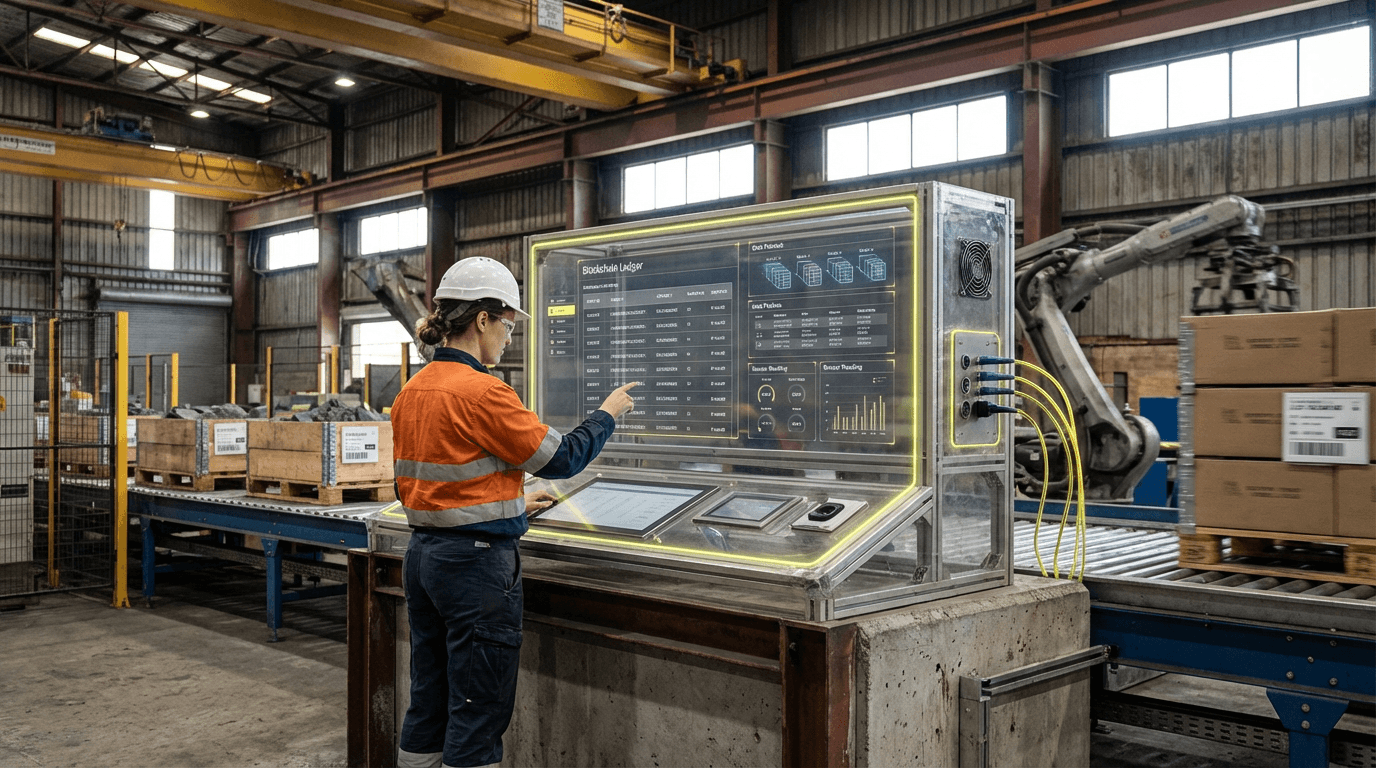
The extractives and heavy industry sectors face mounting pressure to demonstrate ethical sourcing and environmental compliance, yet traditional supply chain documentation remains vulnerable to manipulation, loss, and fragmentation across multiple parties. Supply chain blockchain addresses these challenges by creating distributed, immutable ledgers that record every transaction and movement of materials from mine to market. Unlike conventional databases controlled by single entities, blockchain technology distributes identical copies of transaction records across a network of participants, with each new entry cryptographically linked to previous ones. This architecture makes retroactive tampering virtually impossible, as any alteration would require consensus from the majority of network participants and would be immediately visible to all stakeholders. For extractive industries handling minerals, metals, and petrochemical products, this means creating an unbroken chain of custody that can verify the origin of materials, document handling procedures, and prove compliance with environmental and labor standards at every stage.
The technology directly confronts critical industry challenges including conflict mineral regulations, carbon accounting requirements, and growing consumer demand for ethical sourcing verification. Mining companies can now provide auditable proof that cobalt, tantalum, or rare earth elements were extracted without funding armed conflict or employing child labor. Petrochemical processors can document the carbon intensity of their operations with tamper-proof records that satisfy increasingly stringent regulatory frameworks. This capability transforms compliance from a costly administrative burden into a competitive advantage, as companies with transparent supply chains gain preferential access to markets and investors prioritizing environmental, social, and governance criteria. The shared nature of blockchain networks also enables new forms of collaboration, allowing competitors to collectively verify industry-wide standards without revealing proprietary operational details.
Early deployments in the mining sector demonstrate the technology's practical value, with industry consortia developing blockchain platforms specifically for tracking precious metals, industrial minerals, and battery materials. These systems integrate data from mine operators, smelters, refiners, and manufacturers, creating end-to-end visibility that was previously impossible to achieve. Research suggests that blockchain-based supply chain tracking can reduce documentation costs while simultaneously improving audit accuracy and stakeholder confidence. As regulatory requirements for supply chain transparency intensify globally and as investors increasingly screen for ethical sourcing practices, blockchain adoption in extractive industries is transitioning from experimental pilots to operational infrastructure. The technology aligns with broader industry movements toward digitalization and sustainability reporting, positioning it as a foundational element of next-generation supply chain management in resource-intensive sectors.
Related Organizations

Provides supply chain traceability and battery passports to ensure ethical sourcing and recycling verification.

A digital platform using blockchain to digitize the supply chain for mining and metals, handling trade finance and logistics.

Uses blockchain to create digital records of provenance for high-value assets like diamonds, art, and minerals.

An industry initiative that provides tools and resources to help companies make sourcing decisions that improve regulatory compliance.
Major commodity trader investing heavily in circularity partnerships (e.g., with Li-Cycle and circular supply chains).
Provides watsonx.governance for managing AI risk and compliance.
Automotive and energy company developing custom AI silicon for autonomous driving.
Automotive manufacturer that was the first to implement blockchain traceability for cobalt globally across its model line.
Canadian mining company known for its detailed closure planning and financial transparency.
Supporting Evidence
Research this in Signals
Signals turns a topic into a sourced research record you can inspect and rerun. Your first scan is free, and this one starts with Supply Chain Blockchain already loaded, so edit it or scan as is.