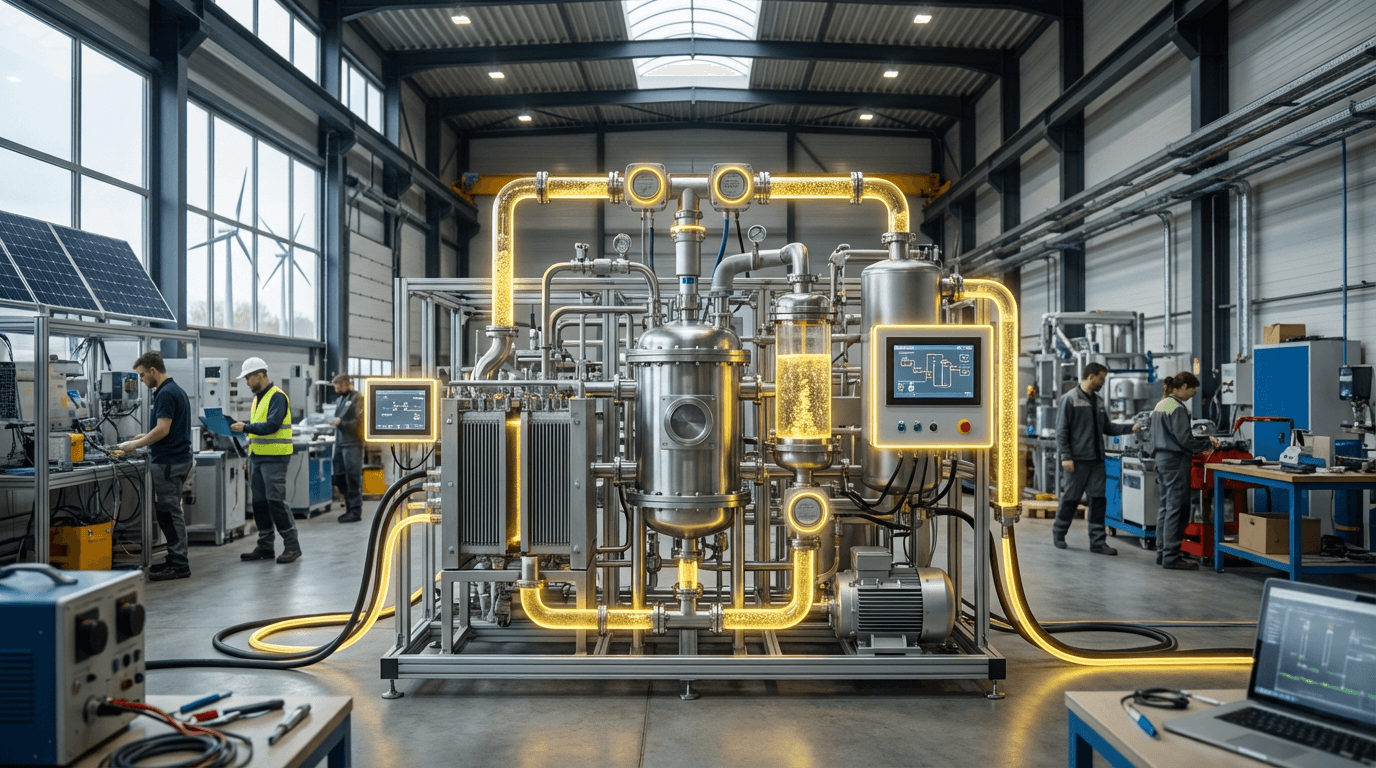
Green Ammonia Production
Green ammonia production represents a fundamental reimagining of one of the chemical industry's most energy-intensive processes, addressing both the carbon footprint of global agriculture and the challenge of storing renewable energy at scale. Traditional ammonia synthesis, developed over a century ago through the Haber-Bosch process, relies on hydrogen derived from natural gas through steam methane reforming, making it responsible for approximately 1-2% of global carbon dioxide emissions and consuming roughly 2% of the world's energy supply. Green ammonia eliminates these emissions by substituting fossil-fuel-derived hydrogen with green hydrogen produced through water electrolysis powered entirely by renewable electricity sources such as wind, solar, or hydropower. This hydrogen is then combined with nitrogen extracted directly from the atmosphere using the same high-temperature, high-pressure catalytic process that has underpinned industrial ammonia production for decades. The result is a chemically identical product with a dramatically reduced carbon intensity, transforming ammonia from a major emissions source into a potential cornerstone of the decarbonized economy.
The implications for heavy industry extend far beyond fertilizer manufacturing, though agriculture remains the primary driver given that ammonia-based fertilizers feed approximately half the world's population. Green ammonia addresses multiple industrial challenges simultaneously: it provides a pathway to decarbonize the $70 billion global ammonia market, offers a carbon-free fuel alternative for hard-to-electrify sectors like maritime shipping, and functions as a dense energy carrier that can store renewable electricity for weeks or months. Unlike batteries or compressed hydrogen, ammonia can be stored and transported using modified versions of existing infrastructure, requiring pressures of only 8-10 bar at ambient temperature or remaining liquid at -33°C. This makes it particularly attractive for long-duration energy storage and international energy trade, potentially enabling countries with abundant renewable resources to export energy in chemical form. The technology also solves a critical problem for renewable energy systems: the need to productively utilize excess generation during periods of high wind or solar output, converting otherwise curtailed electricity into a valuable chemical commodity.
Early commercial deployments are already underway, with pilot facilities operating in Denmark, Australia, and Japan demonstrating the technical viability of renewable-powered ammonia synthesis. Industry analysts note that production costs remain 2-3 times higher than conventional ammonia, primarily due to the expense of green hydrogen, but project that costs will decline substantially as electrolyzer technology matures and renewable electricity prices continue their downward trajectory. Several major fertilizer producers and energy companies have announced plans for large-scale green ammonia facilities targeting operation in the mid-to-late 2020s, while shipping companies are developing ammonia-fueled vessels as part of decarbonization commitments. The technology aligns with broader industrial trends toward sector coupling—integrating renewable electricity with chemical production—and the development of hydrogen economies. As renewable energy capacity expands globally and pressure mounts to decarbonize both agriculture and heavy industry, green ammonia production is positioned to transition from niche demonstration projects to a mainstream industrial process, potentially becoming one of the largest consumers of renewable electricity and a critical enabler of deep decarbonization across multiple sectors.
Related Organizations

A joint venture building the world's largest utility-scale, commercial-based hydrogen facility powered entirely by renewable energy.

Specialist in high-efficiency alkaline water electrolysis technology for large-scale industrial applications.

Chemical engineering company providing solid oxide electrolyzers and synthesis technologies for e-fuels.

A global crop nutrition company and a provider of environmental solutions.

World's largest producer of ammonia, currently retrofitting plants for green and blue ammonia production.

Global metals and green energy company developing massive green hydrogen and ammonia projects worldwide through its energy division.

Develops modular, distributed green ammonia production systems (Rapid Ramp) that work well with variable renewables.

Developing containerized green ammonia production systems for on-farm use.

A company providing science, technology, and engineering solutions to governments and companies.
Supporting Evidence
Research this in Signals
Signals turns a topic into a sourced research record you can inspect and rerun. Your first scan is free, and this one starts with Green Ammonia Production already loaded, so edit it or scan as is.