Green Steel Production (H2-DRI)
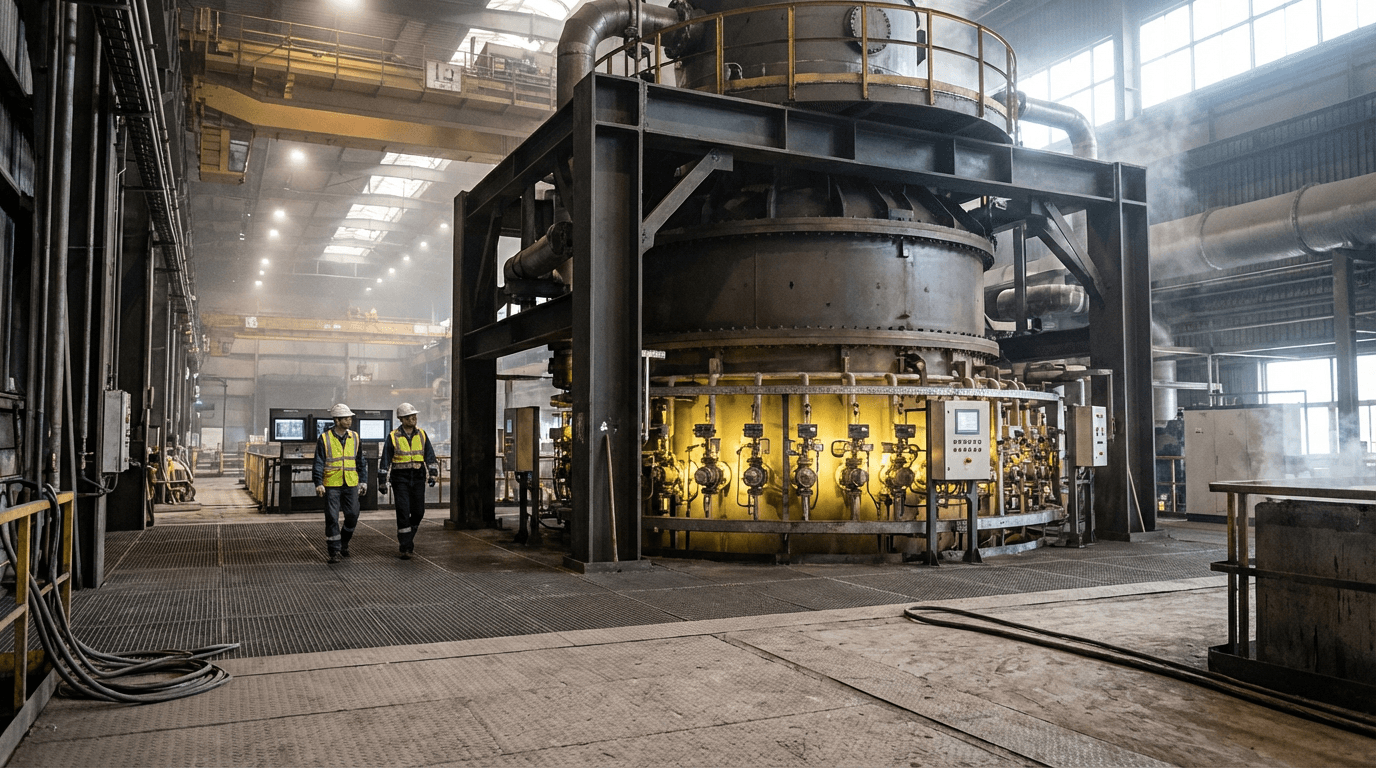
Green steel production through hydrogen-based direct reduction of iron (H2-DRI) represents a fundamental reimagining of steelmaking chemistry that has remained largely unchanged for over a century. Traditional blast furnace steelmaking relies on coking coal to chemically reduce iron ore into metallic iron, a process that generates massive quantities of CO2 as carbon bonds with oxygen stripped from the ore. H2-DRI technology replaces this carbon-based reduction with hydrogen gas, which bonds with oxygen to produce water vapor instead of carbon dioxide. The process begins with iron ore pellets or lumps heated in a shaft furnace where hydrogen gas flows through, stripping oxygen atoms and leaving behind porous metallic iron known as direct reduced iron (DRI) or sponge iron. This DRI is then melted in electric arc furnaces powered by renewable electricity to produce finished steel. The hydrogen itself must be produced through electrolysis using renewable energy—so-called "green hydrogen"—to achieve the full decarbonization potential of the process.
The steel industry accounts for approximately 7-9% of global CO2 emissions, making it one of the most carbon-intensive manufacturing sectors and a critical target for industrial decarbonization efforts. Conventional integrated steel mills are capital-intensive facilities with operational lifespans exceeding fifty years, creating significant technological lock-in that has hindered emissions reduction. H2-DRI technology addresses this challenge by offering a pathway to near-zero emissions steelmaking that can be implemented in new facilities or, in some configurations, retrofitted to existing infrastructure. The technology solves the fundamental chemical constraint of traditional steelmaking: the need for a reducing agent to separate oxygen from iron ore. By substituting hydrogen for carbon, it eliminates the stoichiometric CO2 generation inherent to blast furnace operations. This transformation also reduces dependency on metallurgical coal supplies and the associated supply chain vulnerabilities, while potentially enabling steel production in regions with abundant renewable energy resources but limited coal reserves.
Several pioneering facilities have moved beyond pilot scale toward commercial deployment, with industry analysts noting that the technology has reached a critical inflection point. HYBRIT in Sweden, a collaboration involving SSAB, LKAB, and Vattenfall, has produced the world's first fossil-free steel using this process and is scaling toward commercial production. In the Middle East, projects are leveraging abundant solar energy and planned green hydrogen infrastructure to position the region as a future hub for low-carbon steel exports. Australian mining companies are exploring H2-DRI routes to add value to iron ore domestically while accessing renewable energy resources. Early deployments indicate that the primary economic challenge remains the cost differential between green hydrogen and fossil fuels, though this gap is narrowing as electrolyzer costs decline and carbon pricing mechanisms strengthen. The trajectory of H2-DRI technology is closely tied to broader developments in renewable energy deployment, hydrogen infrastructure, and regulatory frameworks that value or mandate emissions reductions. As these enabling conditions mature, green steel production is positioned to transition from niche demonstration projects to a mainstream steelmaking route, fundamentally reshaping one of the world's most emissions-intensive industries and demonstrating that even century-old industrial processes can be reimagined for a decarbonized future.
Related Organizations

Formerly H2 Green Steel, Stegra is building the world's first large-scale green steel plant powered by green hydrogen.
Technology provider for direct reduction ironmaking; developing MIDREX H2 for 100% hydrogen operation.

Global steel company leading the HYBRIT initiative to replace coking coal with fossil-free hydrogen in steelmaking.


Consortium-backed startup planning a hydrogen-based direct reduced iron plant in Fos-sur-Mer, France.

German steel group implementing the SALCOS program to convert production to hydrogen-based processes.
Engineering firm offering the ENERGIRON Direct Reduction technology (with Danieli) capable of using up to 100% hydrogen.

Implementing the tkH2Steel project to replace blast furnaces with hydrogen-capable direct reduction plants.

Developing an integrated green steel value chain in the Nordics using hydrogen-based reduction.

Developing HyREX technology, a hydrogen-based reduction process utilizing fluidized bed reactors.
Supporting Evidence
Research this in Signals
Signals turns a topic into a sourced research record you can inspect and rerun. Your first scan is free, and this one starts with Green Steel Production (H2-DRI) already loaded, so edit it or scan as is.