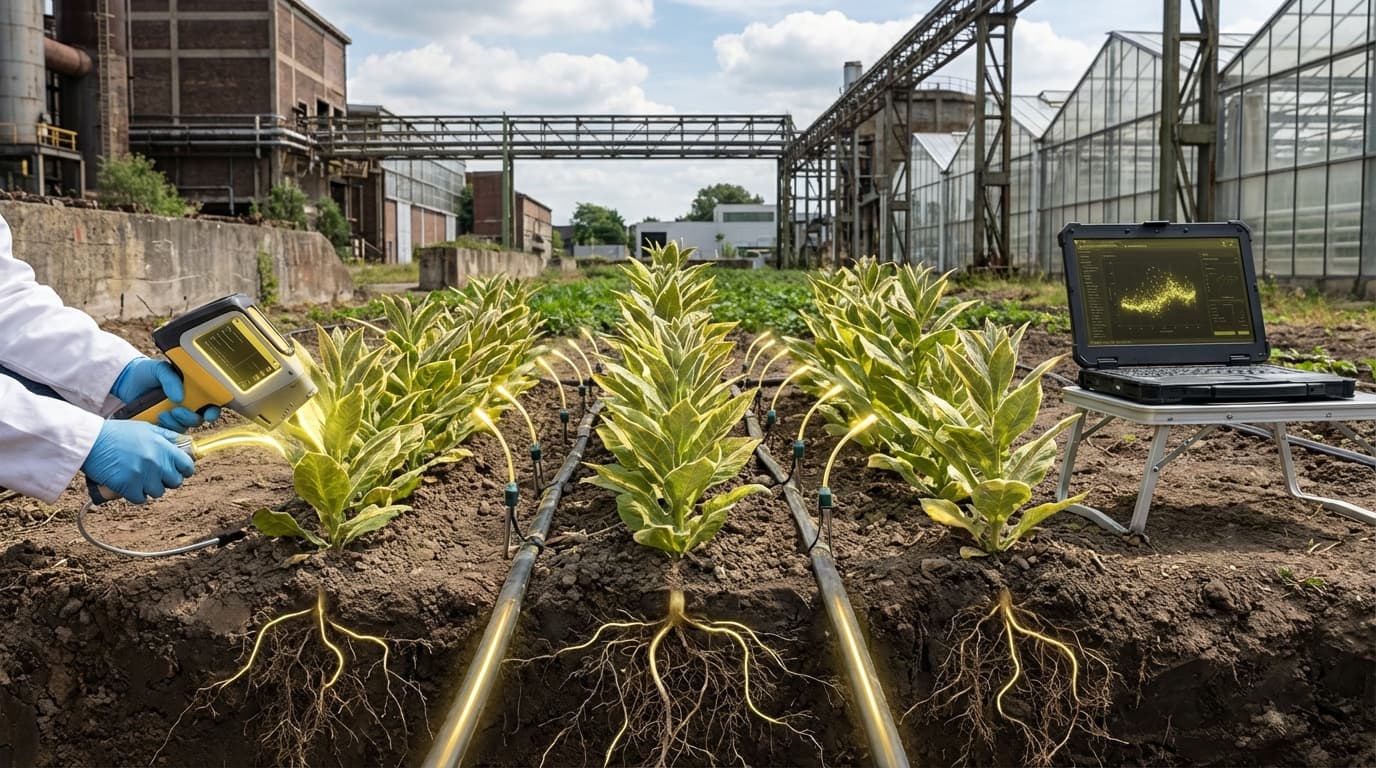
Phytomining and Agromining
Phytomining and agromining represent a biological approach to metal extraction that leverages the natural capabilities of hyperaccumulator plants—species that have evolved to absorb and concentrate metals in their tissues at levels far exceeding those found in ordinary vegetation. These specialized plants, such as Alyssum species for nickel or Noccaea caerulescens for zinc and cadmium, can accumulate metal concentrations of 1% or more of their dry weight, compared to typical plants that contain only trace amounts. The process begins with cultivating these hyperaccumulators on metal-rich soils, whether naturally occurring ultramafic substrates, low-grade ore deposits, or contaminated sites. As the plants grow, they draw metals from the soil through their root systems and transport them to above-ground biomass. After harvest, the plant material undergoes thermal processing—typically incineration or pyrolysis—to produce a metal-enriched ash or "bio-ore" that can be further refined using conventional metallurgical techniques to recover pure metals.
This technology addresses several critical challenges facing the extractive industries. Traditional mining operations often bypass low-grade deposits because conventional extraction methods are economically unviable or environmentally destructive at such concentrations. Phytomining offers a pathway to access these otherwise stranded resources without the extensive earthmoving, chemical processing, or energy consumption associated with conventional mining. Additionally, the approach provides a solution for remediating contaminated sites, including abandoned mine tailings and industrial brownfields, where metal pollution poses environmental and health risks. By extracting metals while simultaneously decontaminating soil, phytomining transforms liabilities into assets. The agricultural nature of the operation also means lower capital requirements compared to traditional mining infrastructure, potentially enabling smaller-scale operations and creating new economic opportunities in regions with suitable soils but limited mining capacity.
Current implementations remain primarily at the pilot and demonstration scale, with the most advanced projects focusing on nickel extraction from ultramafic soils in regions like Albania, Southeast Asia, and parts of North America. Research suggests that yields can reach 100-200 kilograms of nickel per hectare annually, with economic viability depending on metal prices, soil conditions, and agricultural efficiency. The technology shows particular promise as demand intensifies for battery metals like nickel and cobalt, where supply constraints and environmental concerns are driving interest in alternative extraction methods. Beyond metal recovery, agromining operations can generate additional revenue streams through carbon credits, as the growing biomass sequesters atmospheric carbon, and through the sale of non-metal plant components for bioenergy or other applications. As the technology matures and breeding programs develop higher-yielding hyperaccumulator varieties, phytomining is positioned to complement conventional mining in the transition toward more sustainable resource extraction, offering a genuinely renewable approach where crops can be replanted season after season on the same metal-bearing soils.
Related Organizations

A leading research center within the Sustainable Minerals Institute focused on the social aspects of resource extraction, including Indigenous agreement making and cultural heritage protection.

Biotech startup producing eco-responsible nickel, cobalt, and zinc from hyperaccumulator plants grown on difficult soils.

Home to the Laboratoire Sols et Environnement, a pioneer in agromining research.
Startup focused on extracting nickel from soil using hyperaccumulator plants.

France's National Research Institute for Agriculture, Food and Environment.

Government body mapping geological resources in Albania.

Multinational mining and metals processing group.
Supporting Evidence
Research this in Signals
Signals turns a topic into a sourced research record you can inspect and rerun. Your first scan is free, and this one starts with Phytomining and Agromining already loaded, so edit it or scan as is.