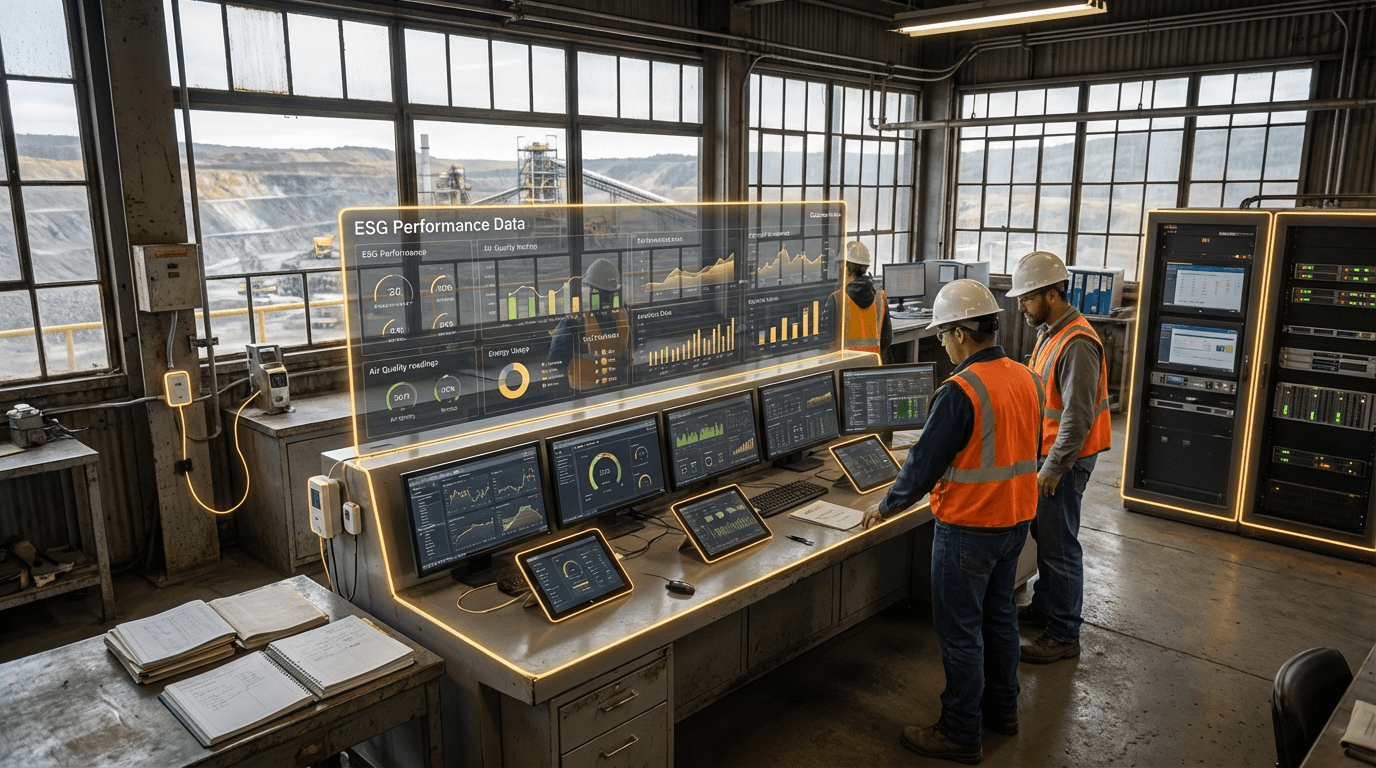
ESG Performance Analytics Platforms
ESG Performance Analytics Platforms represent a critical evolution in how extractive and heavy industries measure, manage, and communicate their environmental, social, and governance impacts. These integrated systems function as comprehensive data aggregation and analysis frameworks, pulling information from diverse sources across mining operations, processing facilities, supply chains, and surrounding communities. At their technical core, these platforms employ advanced data integration architectures that connect operational technology systems—such as emissions monitoring equipment, water quality sensors, and energy management systems—with enterprise resource planning software, human resources databases, and community engagement records. The platforms utilize standardized metrics aligned with frameworks like the Task Force on Climate-related Financial Disclosures (TCFD), Global Reporting Initiative (GRI), and Sustainability Accounting Standards Board (SASB), transforming raw operational data into meaningful sustainability indicators. Key performance metrics tracked include Scope 1, 2, and 3 carbon emissions, water consumption and discharge quality, land disturbance and rehabilitation progress, workplace safety incident rates, local employment statistics, and community investment outcomes.
The extractive and heavy industry sectors face mounting pressure from multiple stakeholders—investors, regulators, communities, and customers—to demonstrate tangible progress on sustainability commitments. Traditional approaches to ESG reporting have been fragmented, labor-intensive, and prone to inconsistencies, often requiring manual data collection across disparate systems and locations. This creates significant challenges for companies operating multiple sites across different jurisdictions, each with varying regulatory requirements and stakeholder expectations. ESG Performance Analytics Platforms address these challenges by automating data collection and validation processes, reducing the risk of reporting errors and enabling more frequent, granular analysis of sustainability performance. These systems provide decision-makers with actionable intelligence, identifying operational inefficiencies that simultaneously impact both environmental performance and cost structures—such as energy waste, water losses, or material inefficiencies. Furthermore, these platforms support access to sustainability-linked financing instruments and green bonds by providing the transparent, auditable data that investors and lenders require to verify ESG claims and track progress against sustainability-linked key performance indicators.
Major mining companies and industrial operators are increasingly deploying these platforms as sustainability reporting transitions from voluntary disclosure to regulatory requirement in many jurisdictions. Early implementations demonstrate the value of real-time visibility into ESG performance, enabling proactive management of environmental incidents, faster response to community concerns, and more strategic allocation of sustainability investments. The platforms are evolving beyond retrospective reporting tools to become predictive systems, incorporating scenario modeling capabilities that help companies anticipate regulatory changes, assess climate-related risks to operations, and evaluate the ESG implications of strategic decisions such as mine expansion or technology adoption. As the global transition toward decarbonization accelerates and social license considerations become increasingly material to operational continuity, these analytics platforms are becoming essential infrastructure for extractive industries. The integration of artificial intelligence and machine learning capabilities promises to enhance their predictive power, while emerging standards for biodiversity accounting and circular economy metrics will expand their scope, positioning ESG Performance Analytics Platforms as central nervous systems for sustainable industrial operations in an era of heightened accountability.
Related Organizations

ESG reporting and predictive analytics software specifically designed for the resource and mining sector.

Provides an ESG disclosure platform tailored for the mining industry to help companies access capital.

International Council on Mining and Metals, setting global performance expectations.

Provides enterprise software for heritage management and land access, specifically designed to integrate Indigenous land use agreements and cultural heritage data into mining workflows.

Assurance framework to promote responsible practices in the copper, molybdenum, nickel, and zinc value chains.

Integrated risk management software with strong modules for EHS and ESG in high-risk industries.

Provides supply chain traceability and battery passports to ensure ethical sourcing and recycling verification.

Consultancy and data provider focused on mining sector GHG intensity curves and ESG benchmarking.

Wolters Kluwer business providing enterprise-scale EHS and ESG software.

Provides data analytics and sensor systems (BeltSense) for real-time ore grading on conveyors.
Supporting Evidence
Research this in Signals
Signals turns a topic into a sourced research record you can inspect and rerun. Your first scan is free, and this one starts with ESG Performance Analytics Platforms already loaded, so edit it or scan as is.