







Indoor Farms
This page is a narrower case of it.
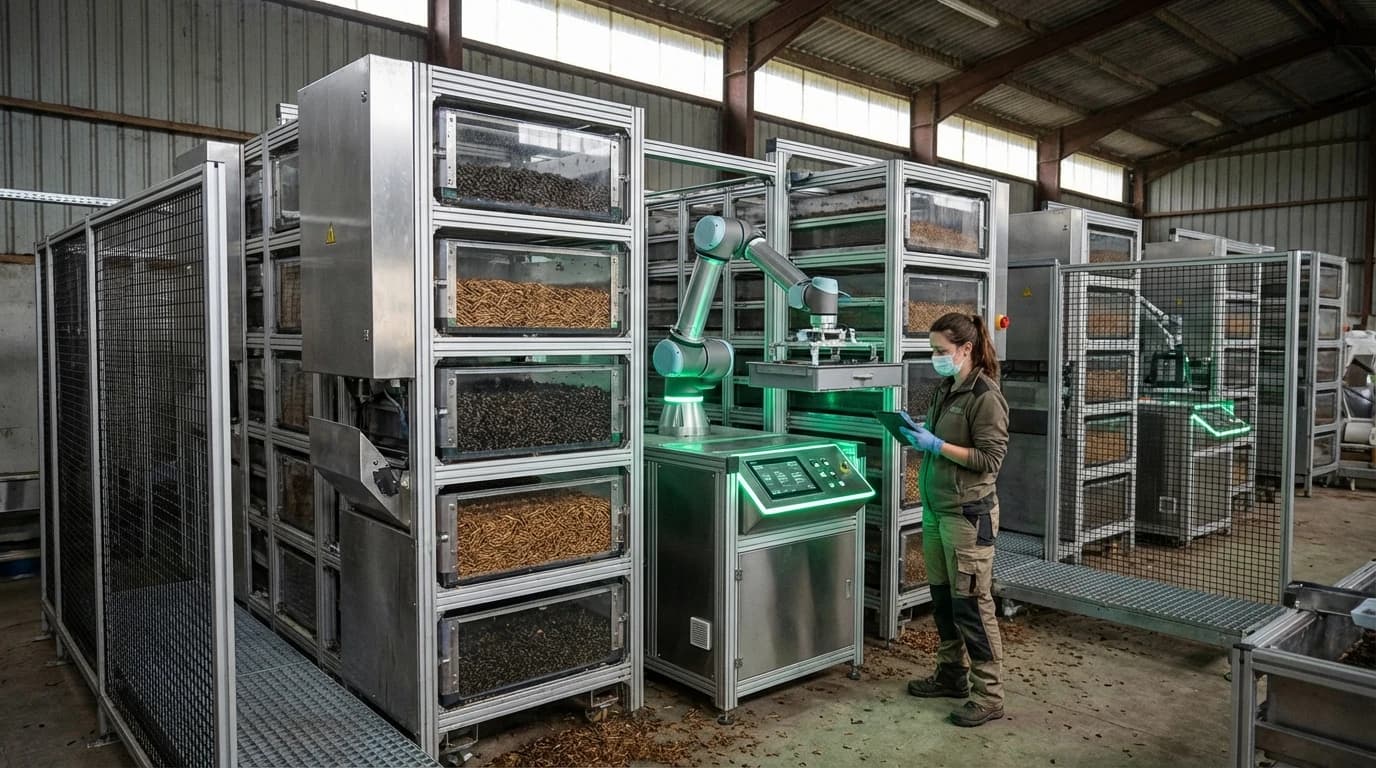
Insect farming bioreactors are climate-controlled vertical stacks that automate feeding, environment, and harvesting of mealworms, crickets, or black soldier fly larvae. Conveyor systems combine food waste or brewer’s grains with precision-dosed nutrients, while IoT sensors manage humidity, temperature, and CO₂ to maximize feed conversion ratios. Automated sieves separate larvae from frass, which is packaged as organic fertilizer.
Feed ingredient suppliers, pet food brands, and aquaculture operations use these bioreactors to produce high-protein meal and oil with lower land, water, and methane footprints compared with soy or fishmeal. Companies like Ÿnsect and Innovafeed integrate their plants next to industrial food waste sources, closing nutrient loops and qualifying for circularity incentives.
Future facilities will leverage AI vision for disease detection, robotic bin handling, and genetics programs that breed larvae optimized for specific feedstocks. Scaling remains constrained by regulatory approvals for livestock feed, odor management in urban sites, and capital requirements for food-grade facilities. Partnerships with waste-management firms and green finance instruments are addressing those barriers.
Biotech company producing insect protein (Black Soldier Fly) for animal and plant nutrition.
Operates the world's largest vertical insect farms for mealworm production.
Deploys the 'X1' decentralized insect mini-farm, an AI-powered shipping container unit.
Produces sustainable ingredients from insects (Black Soldier Fly) using high-tech breeding facilities.
Builds automated cricket farming facilities using IoT and robotics.
Produces black soldier fly larvae for animal feed in large-scale US facilities.
Biotech company focusing on the industrial breeding of Tenebrio molitor (mealworm).
Industrial plant equipment manufacturer that provides complete processing lines for insect protein.
Published forecasts about this technology, graded against what happened in Hindsight.
Indoor Farms
This page is a narrower case of it.
Signals turns a topic into a sourced research record you can inspect and rerun. Your first scan is free, and this one starts with Insect Farming Bioreactors already loaded, so edit it or scan as is.