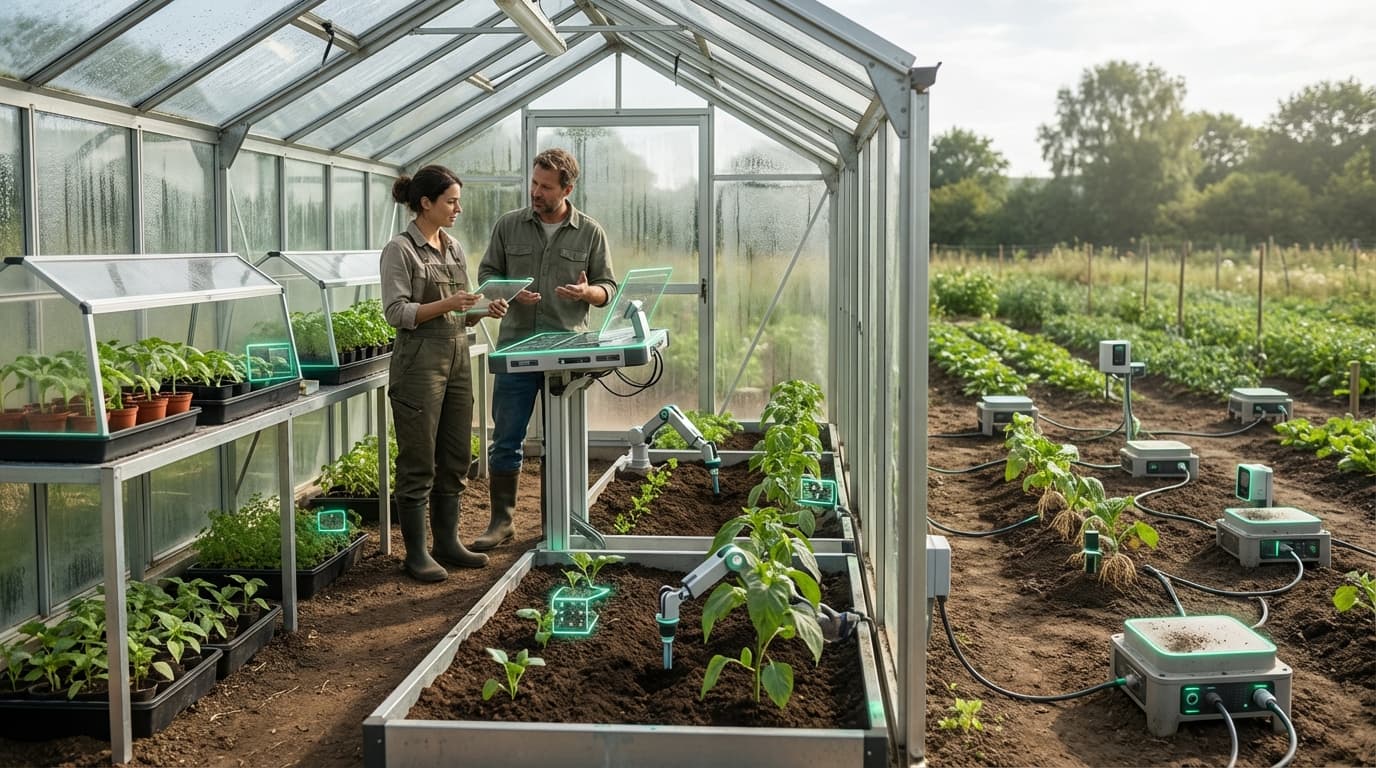
Food Sovereignty & Power Dynamics
Food sovereignty represents a critical framework for addressing the growing concentration of control over agricultural inputs and biological resources in the hands of a few multinational corporations. At its core, this approach seeks to preserve the rights of farmers, communities, and nations to determine their own food and agricultural systems without external dependencies or coercive market structures. The technical challenge lies in the increasing consolidation of seed genetics, breeding technologies, and agricultural data platforms, where proprietary systems can create dependency relationships that limit farmer autonomy. This concentration has intensified with the rise of synthetic biology platforms and precision agriculture tools, which often require ongoing subscriptions, proprietary inputs, or data-sharing arrangements that transfer knowledge and control away from food producers. The mechanisms for maintaining sovereignty include open-source seed libraries, community-controlled breeding programs, and transparent data governance frameworks that ensure farmers retain ownership of the genetic resources and agronomic information they generate.
The agricultural industry faces a fundamental tension between innovation and equity, where advanced biotechnologies and digital platforms promise productivity gains but risk creating new forms of dependency. Traditional seed-saving practices and farmer-led breeding programs have been undermined by intellectual property regimes that restrict the use and exchange of genetic material, while data-intensive farming systems can extract valuable information from smallholders without proportional benefit-sharing. Food sovereignty initiatives address these challenges by establishing alternative models of technology development and distribution that prioritize farmer agency and community control. This includes developing open-access breeding platforms, creating cooperative ownership structures for agricultural technologies, and implementing data sovereignty protocols that prevent extractive relationships. These approaches enable smallholder farmers to access high-performance varieties and precision tools while maintaining the freedom to save seeds, share innovations, and adapt technologies to local conditions without perpetual licensing fees or vendor lock-in.
Current implementations of food sovereignty principles can be observed in various regional seed networks, open-source breeding collaboratives, and farmer-controlled data cooperatives that are emerging as counterweights to corporate consolidation. Indigenous communities and smallholder organizations are increasingly asserting rights over traditional crop varieties and associated knowledge, while some governments are establishing legal frameworks that recognize farmers' rights to save, exchange, and sell seeds from protected varieties. Research institutions are also developing participatory breeding programs that engage farmers as co-creators rather than passive recipients of technology. These efforts connect to broader movements for agricultural justice and climate resilience, recognizing that diverse, locally-adapted food systems are essential for both ecological sustainability and social equity. As synthetic biology and digital agriculture continue to advance, the principles of food sovereignty will become increasingly important in ensuring that these powerful technologies serve to democratize rather than concentrate agricultural power, creating pathways for innovation that strengthen rather than undermine the autonomy of food producers worldwide.
Related Organizations

The international peasant movement defending small-scale sustainable agriculture and food sovereignty.

Monitors the impact of emerging technologies and corporate consolidation on biodiversity and human rights.
A movement for biodiversity conservation and farmers' rights, establishing community seed banks across India.

Maintains a pledge and licensing framework to keep seeds in the public domain, preventing patent restrictions.
A small international non-profit organization that supports small farmers and social movements in their struggles for community-controlled food systems.
The International Panel of Experts on Sustainable Food Systems provides independent scientific reports on food system reform.
A non-profit organization dedicated to saving and sharing heirloom seeds to preserve garden heritage and biodiversity.
Manages the Svalbard Global Seed Vault and supports gene banks worldwide to ensure the conservation of crop diversity.

Developing the Global Village Construction Set, a set of open source industrial machines (including tractors) for civilization building.
Supporting Evidence
Research this in Signals
Signals turns a topic into a sourced research record you can inspect and rerun. Your first scan is free, and this one starts with Food Sovereignty & Power Dynamics already loaded, so edit it or scan as is.