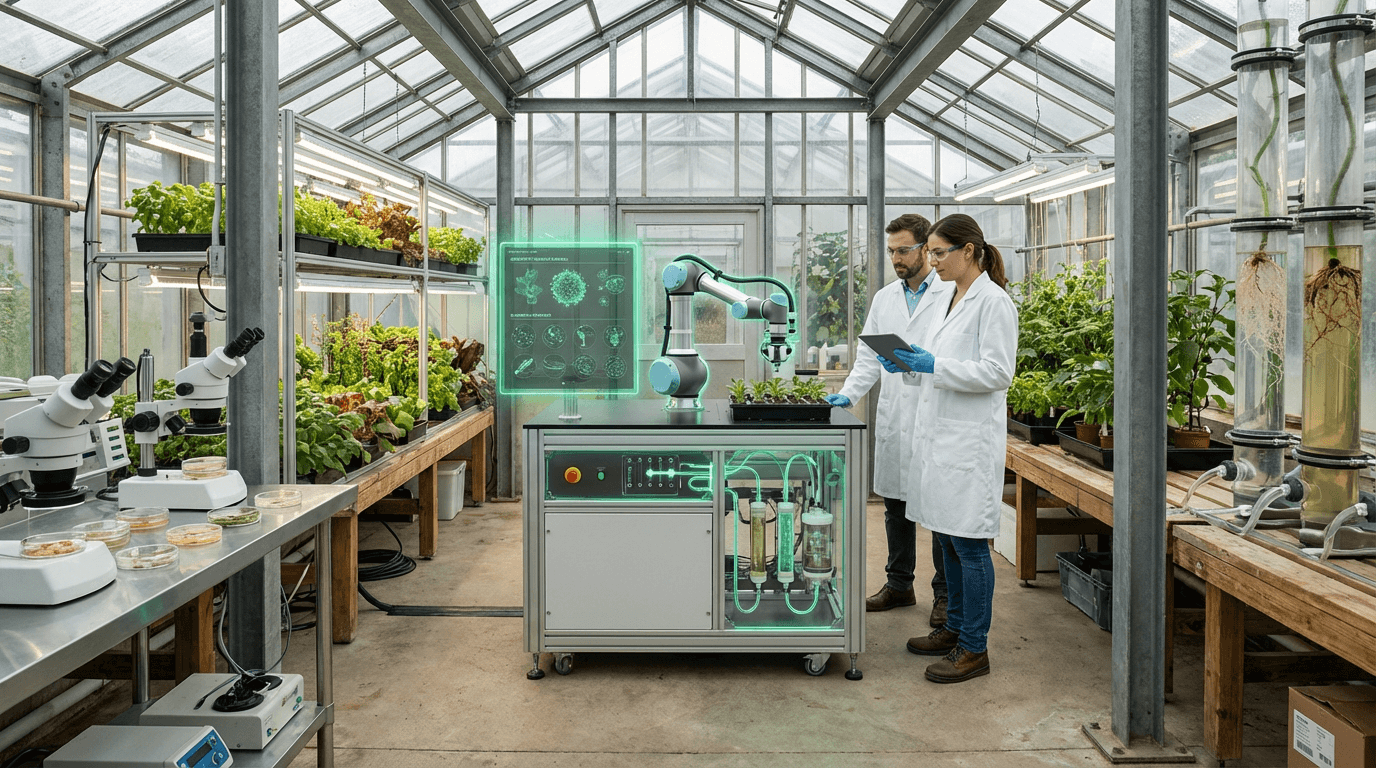
Genomic & Microbial Design Platforms
Genomic and microbial design platforms blend generative AI, multi-omics datasets, and high-throughput lab automation to engineer symbiotic microbes or edit crop genomes for traits like drought tolerance, nutrient density, and biological nitrogen fixation. Cloud pipelines simulate metabolic pathways, predict off-target effects, and output CRISPR guide sequences or microbe chassis designs ready for robotic testing.
Ag biotech companies, input suppliers, and sovereign food-security initiatives leverage these platforms to shorten breeding cycles from years to months, tailoring microbial consortia or edited seeds to precise soil chemistries and climate scenarios. Players such as Inari, Benson Hill, and Pivot Bio already use AI models to prioritize constructs before expensive greenhouse runs, reducing R&D spend.
Regulatory clarity on gene-edited crops, transparent data sharing with growers, and ethical governance for bioengineered organisms will determine how widely these tools roll out. Advances in synthetic biology foundries, digital twin field trials, and licensing marketplaces could make custom microbes or cultivars available as software-like subscriptions.
Related Organizations

A horizontal platform for cell programming that enables other companies to develop precision fermentation strains.

Uses the SEEDesign platform to edit genes and modulate expression for higher yield and water use efficiency.

An agricultural tech company producing microbial nitrogen fertilizers.

A food tech company unlocking the natural genetic diversity of plants to create healthier and more sustainable food options.

Develops microbial seed coatings that increase soil carbon sequestration in cropping systems.

An agriculture technology company using CRISPR to develop new varieties of fruits and vegetables.

Provides AI-driven bioinformatics services that integrate multi-omics data, including epigenomics, to predict plant traits.

Develops a super-charged microbe fertilizer that boosts nitrogen fixation and prevents runoff.

A subsidiary of Evogene, using computational biology to discover and develop microbiome-based ag-biologicals.

Uses gene editing and advanced breeding tools to improve tropical crops like banana and coffee.
Supporting Evidence
Research this in Signals
Signals turns a topic into a sourced research record you can inspect and rerun. Your first scan is free, and this one starts with Genomic & Microbial Design Platforms already loaded, so edit it or scan as is.