Autonomous Field Robotics
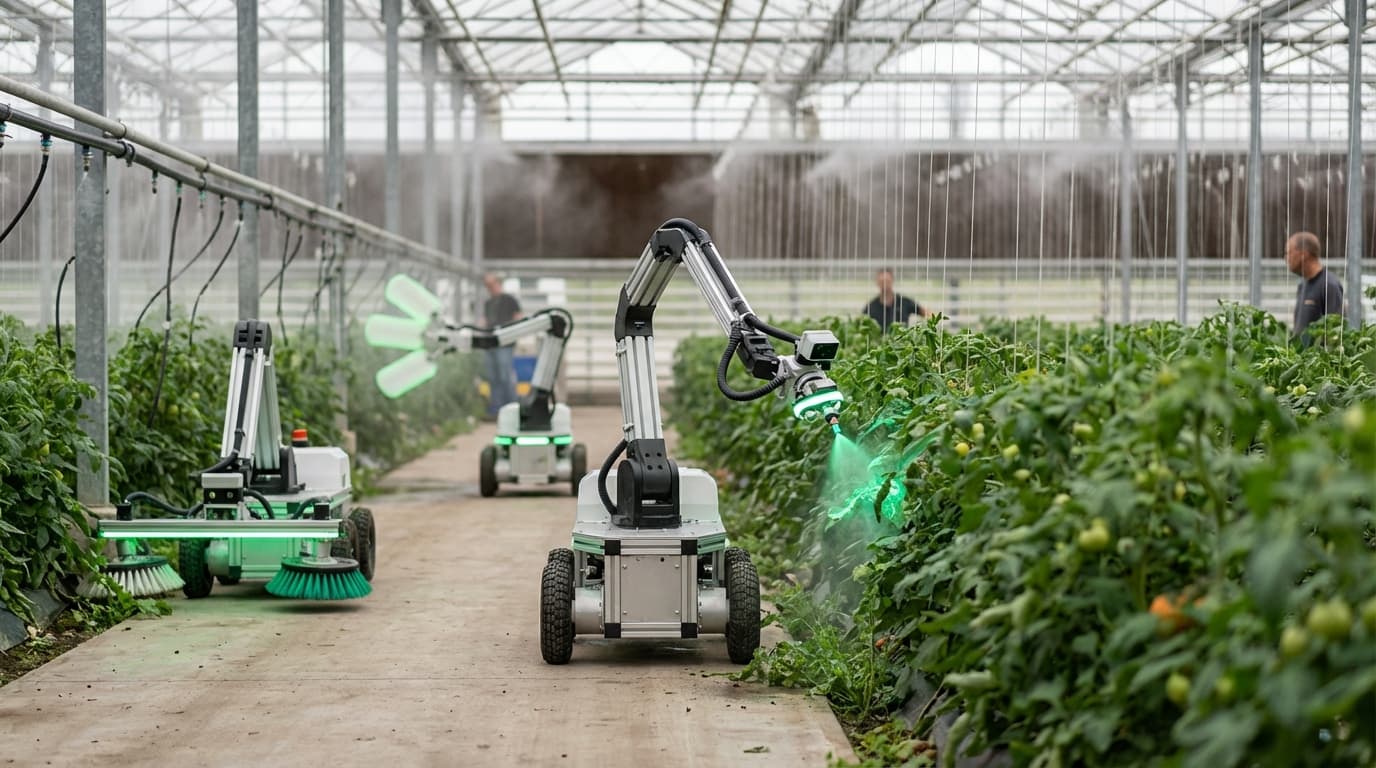
Autonomous field robotics deploy fleets of lightweight, multi-agent robots that navigate row crops with RTK-level precision, using multispectral cameras, LIDAR, and AI vision models to identify weeds, monitor plant vigor, and carry out micro-fertigation or mechanical harvesting with centimeter accuracy. Platforms are typically solar-assisted or battery-swappable, and their low ground pressure prevents compaction compared with tractor passes, enabling 24/7 operations across diverse field conditions while sharing task assignments over mesh networks.
Replacing broadacre equipment with robotic swarms unlocks new agronomic playbooks: growers can spot-treat weeds, apply foliar nutrients on a per-plant basis, and harvest delicate specialty crops with minimal bruising. Companies like FarmWise, Naïo, and Carbon Robotics report double-digit reductions in herbicide use and labor hours, while allowing in-season data collection for digital twins of each field.
In the next five years, autonomy stacks will integrate soil-health sensors and variable-depth implements, letting robots close the loop between sensing and actuation without human supervision. Key challenges remain around ruggedizing sensors against dust/water ingress, ensuring cybersecurity for fleet coordination, and building financing models accessible to mid-size farms. If addressed, autonomous field robotics could become the baseline equipment category for regenerative, labor-light agriculture.
Related Organizations

Produces the Autonomous LaserWeeder, which uses AI and lasers to eliminate weeds without chemicals.

Builds autonomous mechanical weeders (Vulcan) powered by AI and computer vision.

Develops and markets autonomous electric robots for weeding and hoeing in vegetable farming.
Develops autonomous agricultural robots that work in swarms to apply crop protection products and manage farmland efficiently.

Produces ultra-high precision sprayers (ARA) that use AI to target individual weeds.

Manufacturer of ROBOTTI, an autonomous tool carrier for arable farming.

Builds autonomous collaborative robots that follow pickers and carry produce in vineyards and nurseries.


Builds autonomous harvesting robots for table-top strawberry production in controlled environments.

Provides a platform to retrofit existing tractors into autonomous vehicles.
Supporting Evidence
Research this in Signals
Signals turns a topic into a sourced research record you can inspect and rerun. Your first scan is free, and this one starts with Autonomous Field Robotics already loaded, so edit it or scan as is.