







Robotic farm swarms
This page is a narrower case of it.
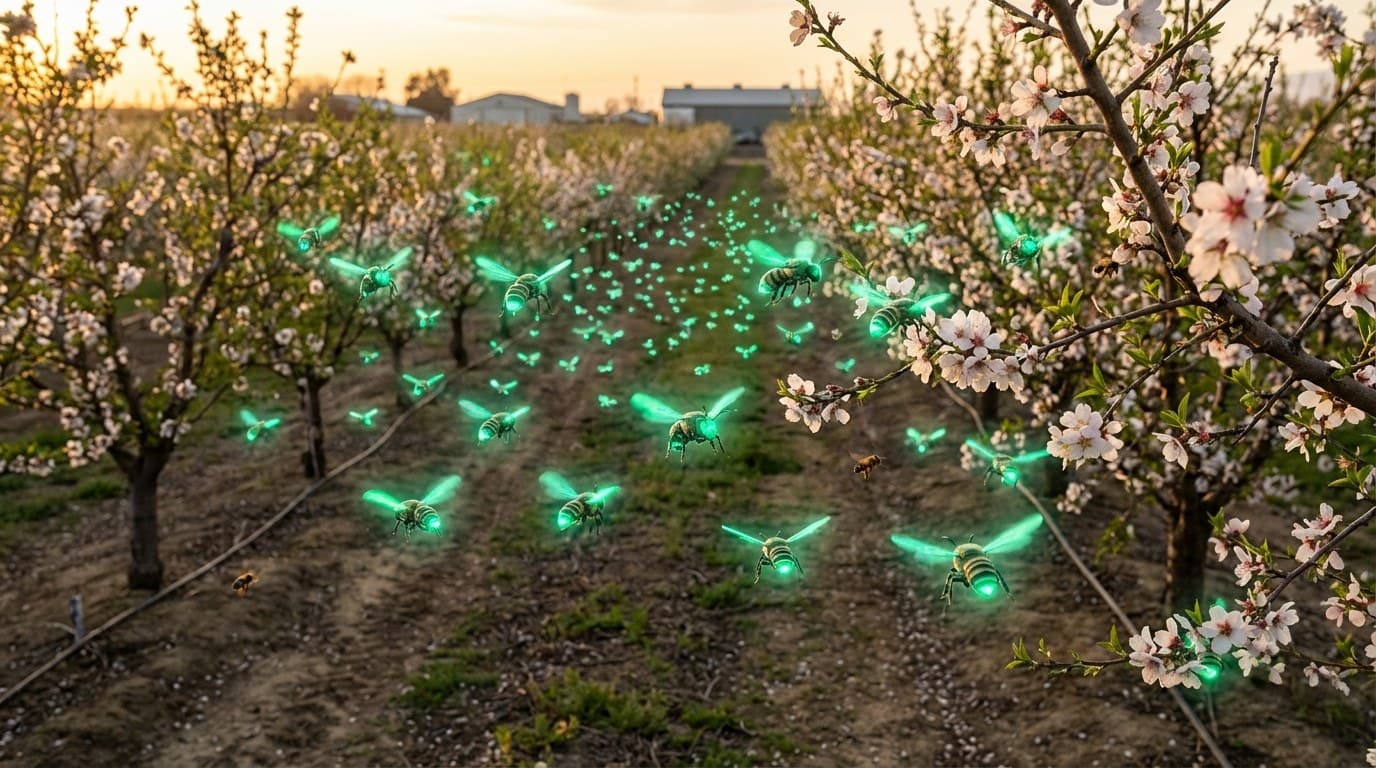
Swarm-based pollinator drones are micro UAVs outfitted with pollen-coated hair gels, electrostatic pads, or biodegradable adhesive fibers that mimic the pollen transfer of bees. Computer vision models running on edge processors identify bloom stages, track flower visitation, and coordinate swarm flight paths so thousands of drones can cover orchards with millimeter precision while avoiding collisions and minimizing energy use.
Growers of almonds, apples, greenhouse tomatoes, and seed production crops deploy these robotic swarms to hedge against declining natural pollinator populations, bee rental shortages, or biosecurity restrictions. Pilot programs by companies such as Arugga and Dropcopter have shown improved fruit set during poor weather windows, and governments are studying robotic pollination as part of national food security strategies.
Looking forward, integrating real-time bloom phenology data, autonomous charging hives, and regulatory frameworks for low-altitude swarms will be critical for commercial scale. Key challenges include ensuring gentle flower contact, managing energy density in micro airframes, and addressing ecological ethics so robotic systems complement rather than replace conservation of natural pollinators. Hybrid models that combine habitat restoration with robotic augmentation are likely to lead adoption.
A premier bio-inspired engineering lab developing soft robotics and adaptive materials.
Research lab led by Eijiro Miyako that developed soap-bubble-blowing drones for gentle pollination.
Uses micro-drones to autonomously pollinate crops in controlled environments by controlling airflow to vibrate flowers (buzz pollination).
Developers of the 'DelFly', a flapping-wing micro air vehicle (MAV) inspired by fruit flies.
Uses drones to dispense pollen over orchards (almonds, cherries, apples) to supplement natural pollinators.
Industrial automation company known for its Bionic Learning Network, creating pneumatic artificial muscles and soft-robotic animals.
Develops autonomous ground robots that use air pressure to pollinate tomatoes in greenhouses, replacing bumblebees.
Operates 'Community Notes' (formerly Birdwatch), the most prominent collaborative verification system at scale.
Published forecasts about this technology, graded against what happened in Hindsight.
Robotic farm swarms
This page is a narrower case of it.
Signals turns a topic into a sourced research record you can inspect and rerun. Your first scan is free, and this one starts with Swarm-Based Pollinator Drones already loaded, so edit it or scan as is.