







Agricultural robots
This page is a narrower case of it.
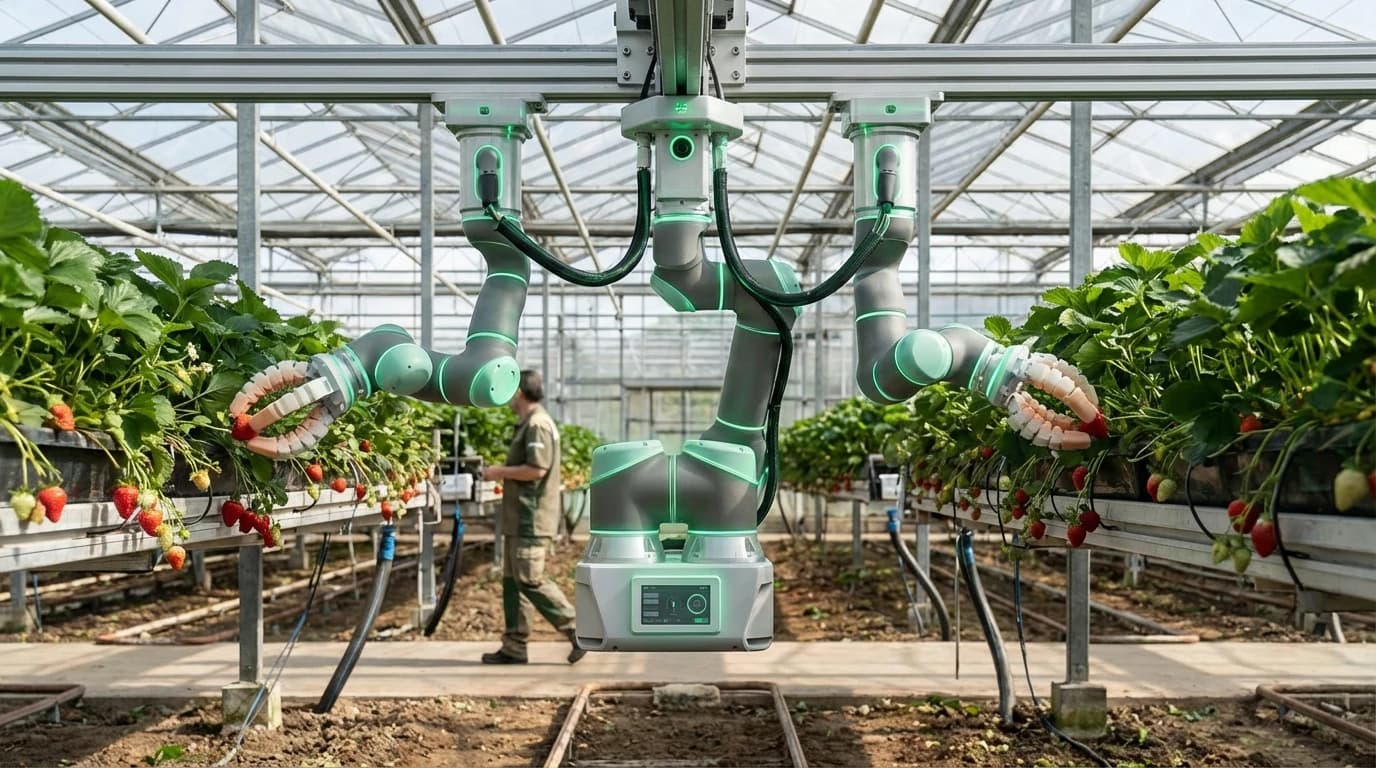
Robotic strawberry harvesters combine SLAM navigation, hyperspectral imaging, and deep learning classifiers to detect ripeness, predict occluded fruit, and maneuver end-effectors through dense greenhouse foliage. Soft, compliant grippers or suction cups pluck berries without bruising and place them into punnet trays while simultaneously logging size, color, and quality data for packhouse analytics.
Indoor vertical farms and protected-culture growers deploy these robots to buffer chronic labor shortages, extend picking windows to night shifts, and maintain consistent quality for export markets. Systems from firms like Fieldwork Robotics and Traptic already achieve human-comparable pick rates while reducing repetitive strain injuries and enabling real-time yield forecasting.
Future harvesters will integrate swarm coordination, autonomous cart handling, and on-robot pollination modules, but challenges such as reducing capex, handling cultivar variability, and complying with sanitary design standards remain. Partnerships with breeders to create robot-friendly plant architecture and subscription pricing models will accelerate adoption across specialty crop regions.
Develops robotic harvesting solutions for strawberries and apples using soft grippers and computer vision.
Spanish robotics company known for the E-Series strawberry harvester designed for raised beds.
Builds autonomous harvesting robots for table-top strawberry production in controlled environments.
Develops autonomous robots for harvesting soft fruits like strawberries, focusing on grading and packaging in-field.
The world's largest berry company, actively investing in and piloting robotic harvesters (e.g., with abundant robotics/others).

Octinion
Belgium · Company
Engineering company that developed 'Rubion', a fully autonomous strawberry picking robot for greenhouses.
German startup developing 'BERRY', a harvesting robot for strawberries in vertical farms and greenhouses.
A top-tier university for agricultural research, specifically in greenhouse and vertical farming innovation.
Dutch greenhouse technology firm offering the GRoW tomato harvesting robot, expanding capabilities into other crops.
Japanese machinery manufacturer that developed a strawberry harvesting robot in collaboration with NARO.
Published forecasts about this technology, graded against what happened in Hindsight.
Agricultural robots
This page is a narrower case of it.
Signals turns a topic into a sourced research record you can inspect and rerun. Your first scan is free, and this one starts with Robotic Strawberry Harvesters already loaded, so edit it or scan as is.