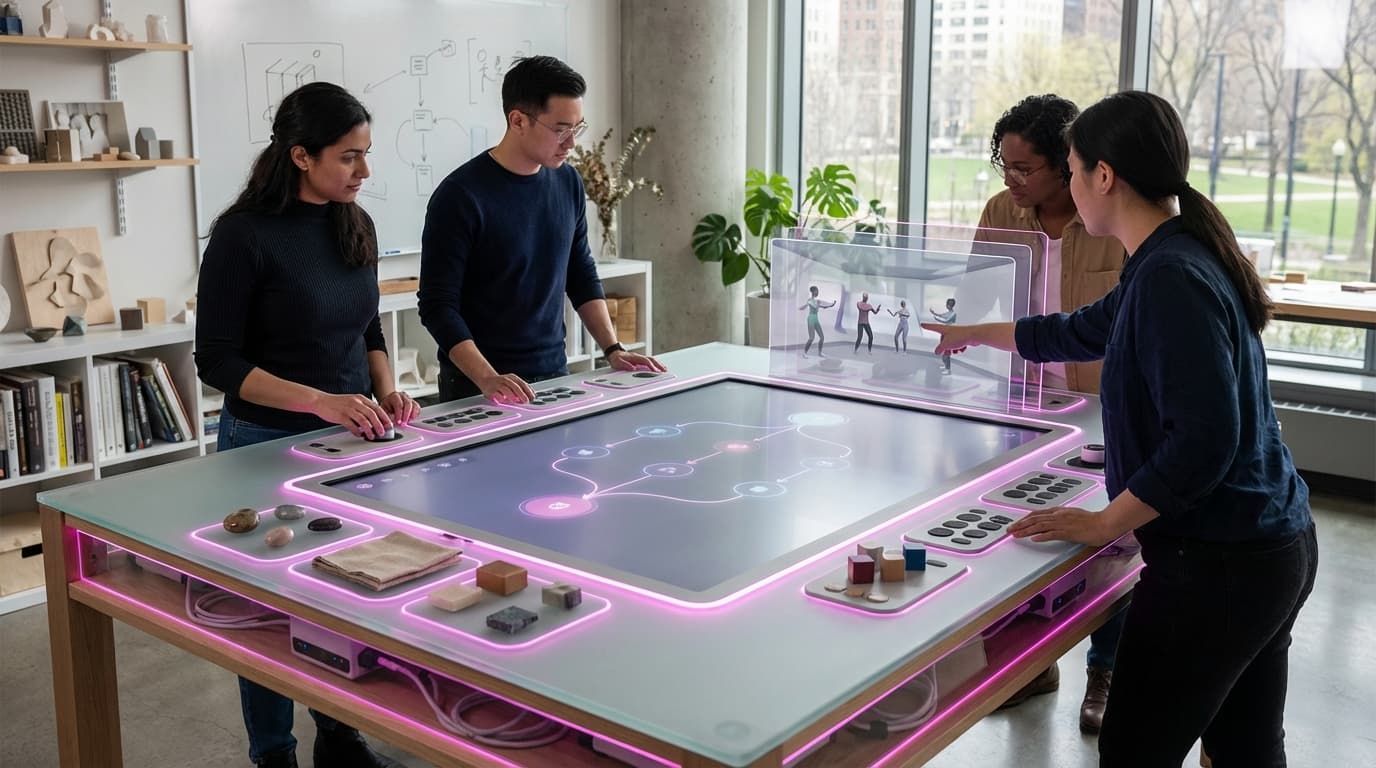
Ritual and Ceremony Design Tools
Ritual and Ceremony Design Tools represent a new category of digital platforms that enable communities to create and conduct meaningful ceremonial experiences in virtual and hybrid environments. These systems draw on anthropological research into ritual structures, theatrical staging principles, and social psychology to provide scaffolding for designing collective experiences that foster deep connection and shared meaning. At their core, these tools offer modular frameworks that guide users through the essential elements of ritual design—threshold moments, symbolic actions, temporal rhythms, and communal witnessing—while allowing for cultural customization and creative expression. The technical architecture typically combines spatial computing interfaces, synchronized multi-user interactions, environmental controls for atmosphere and sensory cues, and procedural systems that can adapt ceremonial sequences to participant responses and group dynamics.
The emergence of these tools addresses a growing challenge in digitally-mediated society: the erosion of shared ceremonial experiences that traditionally marked life transitions, seasonal cycles, and collective grief or celebration. As communities become increasingly distributed and traditional institutions lose their central role in providing ritual frameworks, many people report feeling disconnected from meaningful rites of passage and communal practices. Research suggests that the absence of structured ritual experiences can contribute to social fragmentation and individual disorientation during major life transitions. These design tools respond by democratizing the creation of ceremonial experiences, allowing communities to craft rituals that reflect their specific values, cultural backgrounds, and needs without requiring specialized knowledge of ritual theory or theatrical production. They enable groups to establish new traditions appropriate to digital-native contexts while maintaining the psychological and social functions that anthropologists have identified as central to human ritual practice.
Early implementations of these systems have appeared in virtual worlds and immersive platforms, where communities have used them to design digital weddings, memorial services, coming-of-age ceremonies, and seasonal celebrations that participants describe as surprisingly emotionally resonant. Some platforms now offer templates based on cross-cultural ritual patterns—such as separation, transition, and incorporation phases—that communities can adapt to their contexts. The tools are finding applications beyond purely social contexts, with organizations exploring their use for team transitions, project milestones, and collective processing of organizational change. As immersive technologies become more sophisticated and accessible, these design systems are likely to play an increasingly important role in helping distributed communities maintain the social cohesion and meaning-making functions that ritual has provided throughout human history, while evolving ceremonial forms to suit contemporary digital life.
Related Organizations
A research and design consultancy dedicated to creating products and experiences that support the human soul and community ritual.

A platform connecting people who have experienced significant loss, providing frameworks for peer-led grief rituals.

A video conferencing platform built specifically for workshops and facilitation, enabling structured, ritualized interactions.

A Slack/Zoom integration that automates social connection rituals, such as random coffees, watercooler chats, and celebrations.

Provides case management software for funeral homes, including features for livestreaming services and collaborative family planning.

A global design company known for human-centered design, including the design of organizational rituals and culture.

A Zoom app that provides bio-cards and icebreakers to humanize business meetings and create opening rituals.

A digital whiteboard platform that provides templates for team building, icebreakers, and agile ceremonies.

Fosters long-term thinking and responsibility through projects like the 10,000 Year Clock.

A leading mindfulness and meditation app that offers 'Headspace for Educators', providing free access to K-12 teachers.
Supporting Evidence
Research this in Signals
Signals turns a topic into a sourced research record you can inspect and rerun. Your first scan is free, and this one starts with Ritual and Ceremony Design Tools already loaded, so edit it or scan as is.