Intergenerational Experience Design
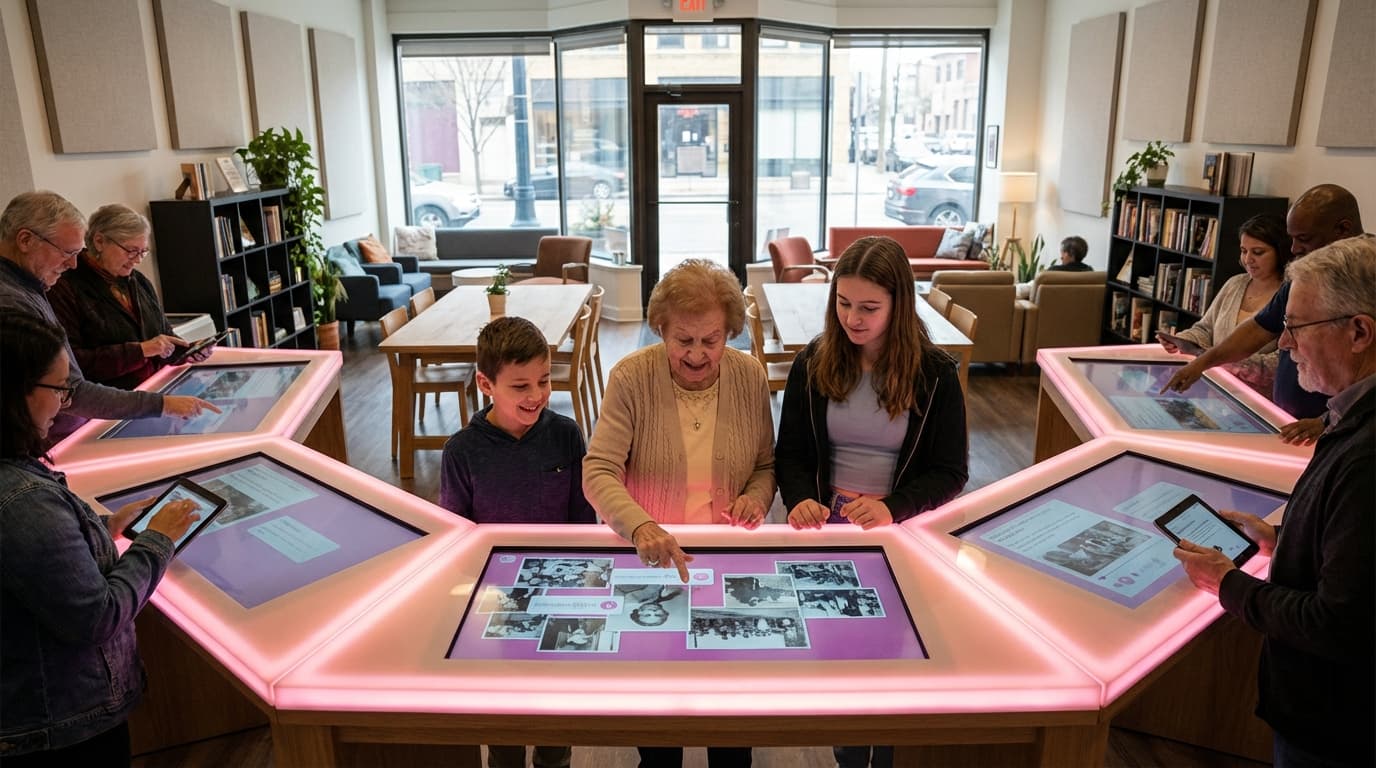
Intergenerational Experience Design represents a deliberate approach to creating digital and physical environments that foster meaningful connections between people of different age groups. At its core, this design philosophy recognizes that modern society has become increasingly age-segregated, with younger and older generations often occupying separate physical and digital spaces. The technical foundation involves creating interfaces, interaction patterns, and shared activities that accommodate varying levels of technological literacy, physical ability, and cognitive preferences. These platforms typically employ multimodal interaction design—combining touch, voice, gesture, and traditional input methods—to ensure accessibility across age ranges. The systems often incorporate adaptive interfaces that adjust complexity based on user capability, while maintaining shared goals and outcomes that require collaborative effort. Key design principles include reducing cognitive load through familiar metaphors, providing multiple pathways to accomplish tasks, and creating emotionally resonant experiences that transcend generational cultural references.
The fundamental challenge this approach addresses is the erosion of natural intergenerational knowledge transfer that historically occurred within extended families and community structures. As societies have become more mobile and digitally divided, valuable tacit knowledge, cultural narratives, and practical wisdom risk being lost between generations. Traditional digital platforms often inadvertently exclude older adults through design assumptions that favor speed over clarity, or privilege digital-native interaction patterns. Conversely, younger generations miss opportunities to develop empathy, historical perspective, and benefit from accumulated life experience. Intergenerational Experience Design solves these problems by creating neutral ground where both age groups can contribute meaningfully. Research suggests that such interactions reduce age-based stereotypes, combat social isolation among elderly populations, and provide younger participants with enhanced problem-solving perspectives. These platforms enable new forms of mentorship, collaborative creativity, and mutual learning that would be difficult to achieve through age-homogeneous environments.
Early implementations have emerged in various contexts, from community centers deploying shared digital storytelling tools to educational programs pairing students with elder community members for oral history projects. Some platforms facilitate collaborative creative activities—such as intergenerational music composition or digital art creation—where different skill sets complement rather than compete. Healthcare settings have begun exploring these approaches to improve elder care by involving younger volunteers in meaningful activities with patients, reducing both isolation and caregiver burden. Museums and cultural institutions are developing exhibits that require cross-generational collaboration to fully experience, transforming passive viewing into active knowledge exchange. As demographic shifts create societies with unprecedented age diversity, and as digital divides continue to evolve with each technological wave, Intergenerational Experience Design offers a framework for building more cohesive communities. The approach aligns with broader movements toward inclusive design and social connection technologies, suggesting a future where age becomes a source of complementary strength rather than division in both digital and physical spaces.
Related Organizations
VR platform designed specifically for seniors and hospice care to reduce isolation.

An organization dedicated to recording, preserving, and sharing the stories of Americans from all backgrounds.

A global mentoring platform that connects children with vetted older mentors for virtual story time and conversation.

An initiative by the Annenberg Foundation creating physical spaces designed to combat social isolation through intergenerational programming.
A multidisciplinary research program working with business, government, and NGOs to improve the quality of life of older people and those who care for them.

Connects older adults with 'Papa Pals' for companionship and assistance with everyday tasks.

Digital therapeutic company (formerly MyndVR) focusing on aging adults.
Accelerator and innovation arm of AARP that funds and supports startups building AgeTech, including social connection tools.

Acquired Caribu, a video-calling app that integrates books and games to allow children and grandparents to read and play together remotely.

Creator of ElliQ, an AI care companion robot for older adults.
Supporting Evidence
Research this in Signals
Signals turns a topic into a sourced research record you can inspect and rerun. Your first scan is free, and this one starts with Intergenerational Experience Design already loaded, so edit it or scan as is.