Collective Memory Systems
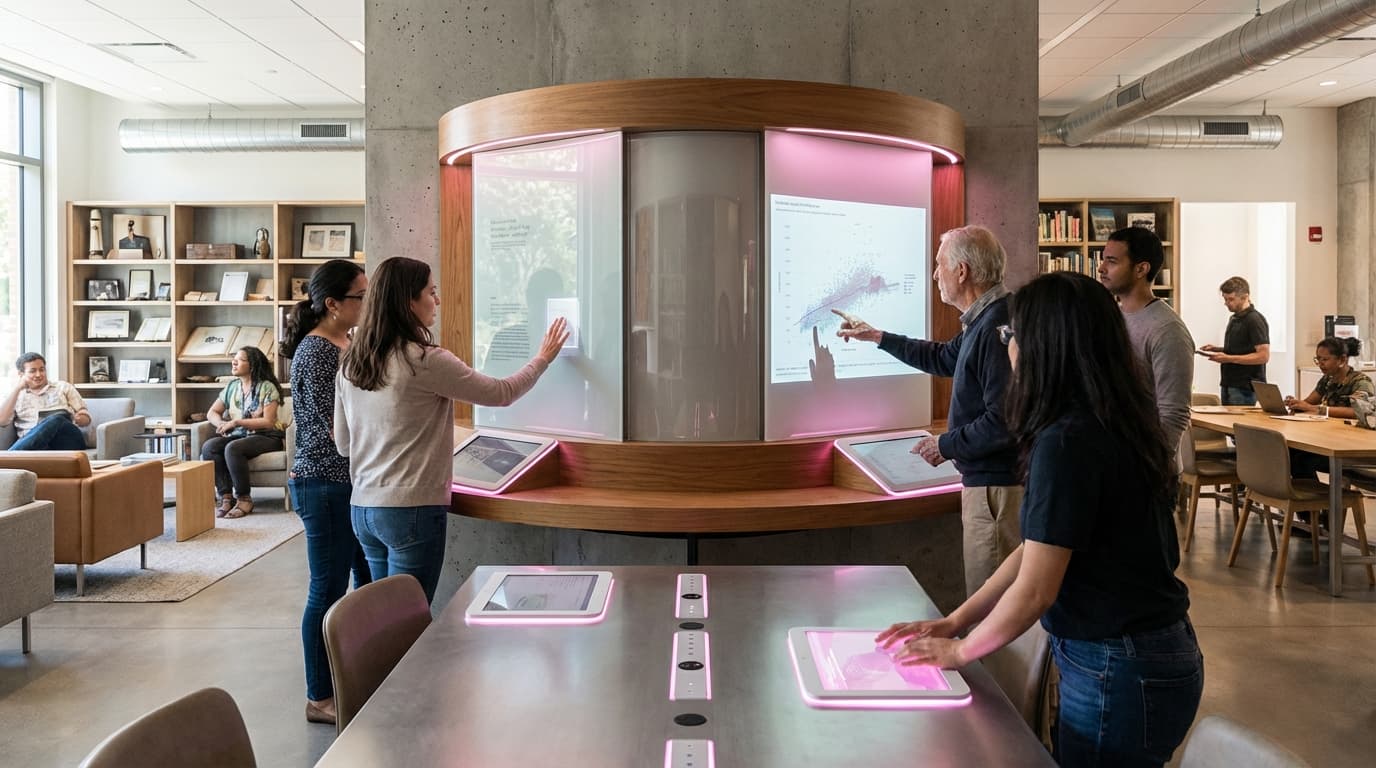
Collective Memory Systems represent a convergence of distributed database architectures, natural language processing, and participatory design frameworks to address a fundamental challenge in cultural preservation: the fragmentation and loss of community knowledge across generations. Traditional archival methods often centralise control, impose external categorisation schemes, and struggle to capture the living, evolving nature of oral traditions and community narratives. These systems instead employ decentralised storage protocols and collaborative interfaces that allow community members to contribute stories, photographs, audio recordings, and contextual metadata in their own voices and languages. Advanced AI algorithms work in the background to identify thematic connections, temporal relationships, and semantic patterns across contributions, creating dynamic knowledge graphs that reveal how individual memories interconnect to form collective understanding. Machine learning models trained on linguistic patterns can also help transcribe and translate oral histories, while computer vision techniques extract contextual information from historical photographs and documents, making previously inaccessible materials searchable and discoverable.
The cultural heritage sector faces mounting pressure as indigenous languages disappear at alarming rates, elder knowledge-holders pass away, and diaspora communities struggle to maintain connections to ancestral traditions. Collective Memory Systems address these challenges by lowering barriers to participation—community members need not possess archival expertise to contribute meaningful content. The technology enables communities to define their own taxonomies and metadata schemas rather than conforming to external classification systems that may not reflect their worldviews. This participatory approach proves particularly valuable for marginalised groups whose histories have been systematically excluded from official archives. Museums, cultural centres, and indigenous organisations are beginning to deploy these platforms to reclaim narrative authority over their own stories. The systems also solve practical problems around intergenerational knowledge transfer, allowing younger community members to explore their heritage through intuitive search interfaces, recommendation algorithms that surface relevant stories, and interactive timelines that contextualise individual memories within broader historical movements.
Early implementations have emerged in indigenous communities seeking to preserve endangered languages, refugee populations documenting displacement experiences, and neighbourhood organisations capturing rapidly changing urban landscapes before gentrification erases physical landmarks. Some platforms incorporate blockchain-based provenance tracking to ensure communities maintain sovereignty over their cultural data, while others integrate with existing social media ecosystems to meet people where they already share stories. Research suggests these systems are most effective when designed through co-creation processes that centre community needs and values rather than imposing technological solutions. As concerns about digital colonialism and data sovereignty intensify, Collective Memory Systems offer a model for how technology can support rather than extract from communities. The trajectory points toward increasingly sophisticated AI capabilities for pattern recognition and connection-surfacing, while maintaining human agency in curation and interpretation—ensuring that collective memory remains a living practice rather than a static archive.
Related Organizations
Hosts the 'Internet Arcade' and massive collections of abandonware, utilizing browser-based emulation (Emularity) to keep software accessible.
An organization dedicated to recording, preserving, and sharing the stories of Americans from all backgrounds.

A decentralized storage network designed for permanent data storage, often used to archive historical records and internet content immutably.
Europeana
Netherlands · Consortium
The EU's digital platform for cultural heritage, providing access to millions of books, music, and artworks.

An app that records personal stories and uses AI to let loved ones ask questions about those memories later.

A digital platform that allows communities to pin historical photos, videos, and audio recordings to a global map, creating a user-generated archive of place.

A nonprofit providing secure, permanent cloud storage for individuals and organizations to preserve their digital legacy.
Memria
United States · Company
A platform helping organizations collect, curate, and share stories.
Rhizome
United States · Startup
An arts organization dedicated to the creation, presentation, preservation, and critique of emerging artistic practices that engage technology.

Fosters long-term thinking and responsibility through projects like the 10,000 Year Clock.
Supporting Evidence
Research this in Signals
Signals turns a topic into a sourced research record you can inspect and rerun. Your first scan is free, and this one starts with Collective Memory Systems already loaded, so edit it or scan as is.