Flow State Optimization
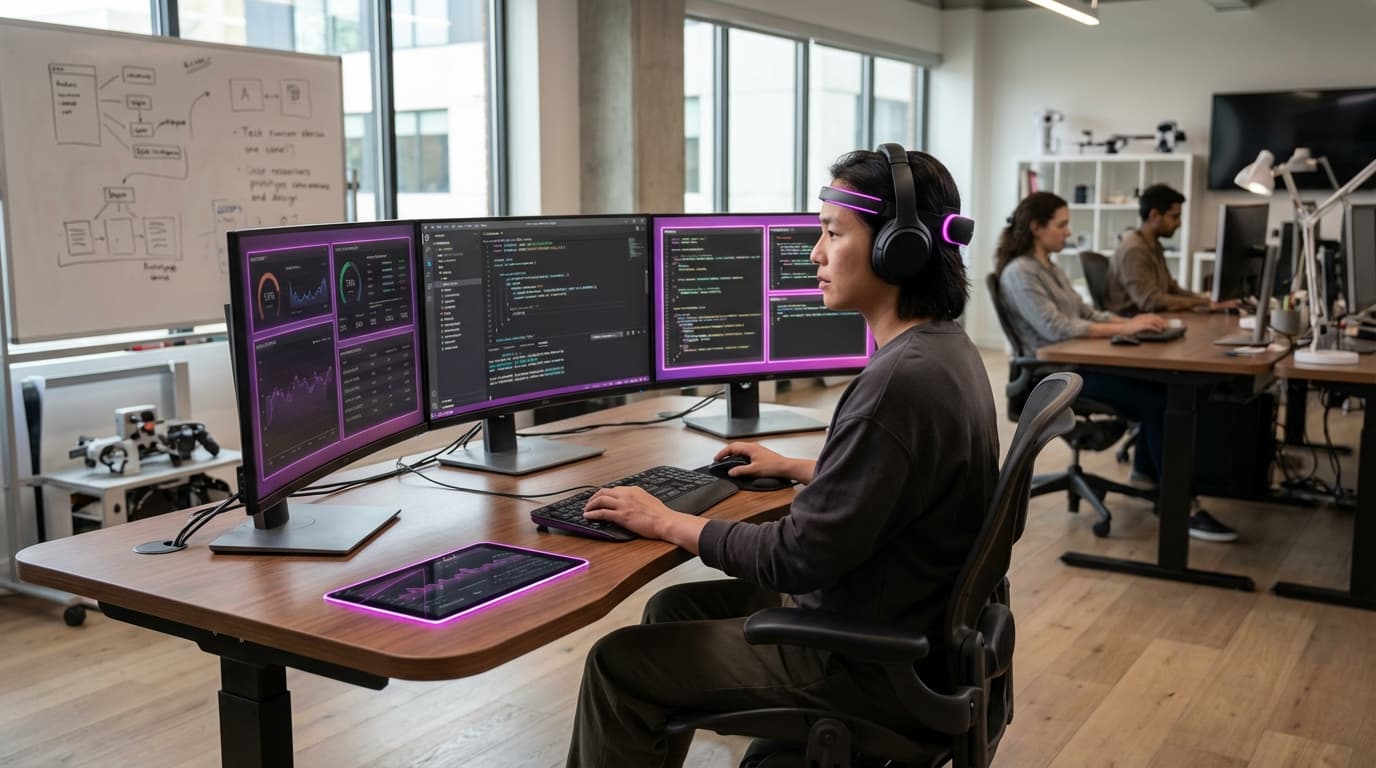
Flow state optimization represents a convergence of neuroscience, biometric sensing, and adaptive computing designed to identify and sustain periods of peak human performance and engagement. The technology operates through continuous monitoring of multiple physiological and behavioral indicators—including heart rate variability, electroencephalogram (EEG) patterns, eye tracking data, keystroke dynamics, and task completion metrics—to detect when users enter the psychological state known as "flow," characterized by complete absorption in an activity and optimal performance. Machine learning algorithms analyze these biosignals in real-time to establish individual baselines and recognize the distinctive patterns associated with flow states, which typically manifest as specific brainwave frequencies in the alpha and theta ranges, reduced cortical arousal in self-monitoring brain regions, and steady physiological markers indicating focused calm rather than stress. Once flow is detected, the system employs dynamic difficulty adjustment mechanisms, modulating task complexity, pacing, feedback frequency, and environmental factors to maintain the delicate equilibrium between challenge and skill level that sustains this optimal state.
The fundamental challenge these systems address is the fragility and unpredictability of flow states in modern work and learning environments, where constant interruptions, poorly calibrated task difficulty, and suboptimal environmental conditions frequently disrupt deep engagement. Traditional approaches to productivity and skill development rely on static structures that cannot adapt to individual variations in capability, energy levels, or contextual factors throughout the day. Flow state optimization overcomes these limitations by creating responsive environments that continuously recalibrate themselves to each user's current capacity and engagement level. This capability is particularly valuable in domains where sustained concentration and peak performance directly impact outcomes—from software development and creative production to surgical training and competitive gaming. By reducing the cognitive load of self-regulation and environmental management, these systems allow individuals to spend more time in highly productive states, potentially transforming how organizations approach knowledge work, skill acquisition, and human performance optimization.
Early implementations of flow state optimization have emerged primarily in gaming, educational technology, and workplace productivity tools, where the technology shows promise for addressing engagement and performance challenges. Adaptive learning platforms are incorporating these principles to personalize educational experiences, adjusting content difficulty and presentation style based on real-time engagement indicators. In professional contexts, some organizations are piloting flow-optimized workspaces that integrate environmental controls—lighting, sound, temperature—with software interfaces that minimize interruptions during detected flow periods and schedule collaborative activities for natural transition points. The gaming industry has been particularly active in developing sophisticated difficulty adjustment systems that maintain player engagement by keeping challenges appropriately matched to skill progression. Looking forward, as wearable biosensors become more sophisticated and less intrusive, and as our understanding of the neurological signatures of flow states deepens, these systems are likely to become increasingly integrated into everyday digital environments. This trajectory suggests a future where technology actively supports rather than disrupts human cognitive performance, potentially reshaping workplace design, educational methodologies, and our broader relationship with digital tools to prioritize sustained engagement and meaningful productivity over mere activity.
Related Organizations
An interdisciplinary research organization dedicated to decoding the science of flow states and training individuals to access them.
Develops BCI-enabled headphones that detect focus and intent to control digital experiences.

Creates personalized soundscapes using AI that adapt in real-time to inputs like heart rate, weather, and circadian rhythm to help users focus, relax, or sleep.

Developer of the Muse brain-sensing headband used in meditation and wellness retreats.
Brain.fm
United States · Startup
Uses functional music designed with strong neural phase locking to steer the brain into productive flow states.

Produces EEG headsets and the BCI-OS platform, allowing developers to build applications that respond to cognitive stress and facial expressions.
Provides virtual reality and augmented reality stories that change visually based on the user's heart rate (via Apple Watch) or brainwaves (via Muse).
Creates open-source brain-computer interface tools and the Galea headset (integrating with VR) for researching physiological responses.

Thync
United States · Company
Pioneers in consumer neurostimulation devices that shift mental states (calm/energy) using electrical stimulation.

Maker of the Oura Ring, a smart ring that tracks sleep, readiness, and stress.
Supporting Evidence
Research this in Signals
Signals turns a topic into a sourced research record you can inspect and rerun. Your first scan is free, and this one starts with Flow State Optimization already loaded, so edit it or scan as is.