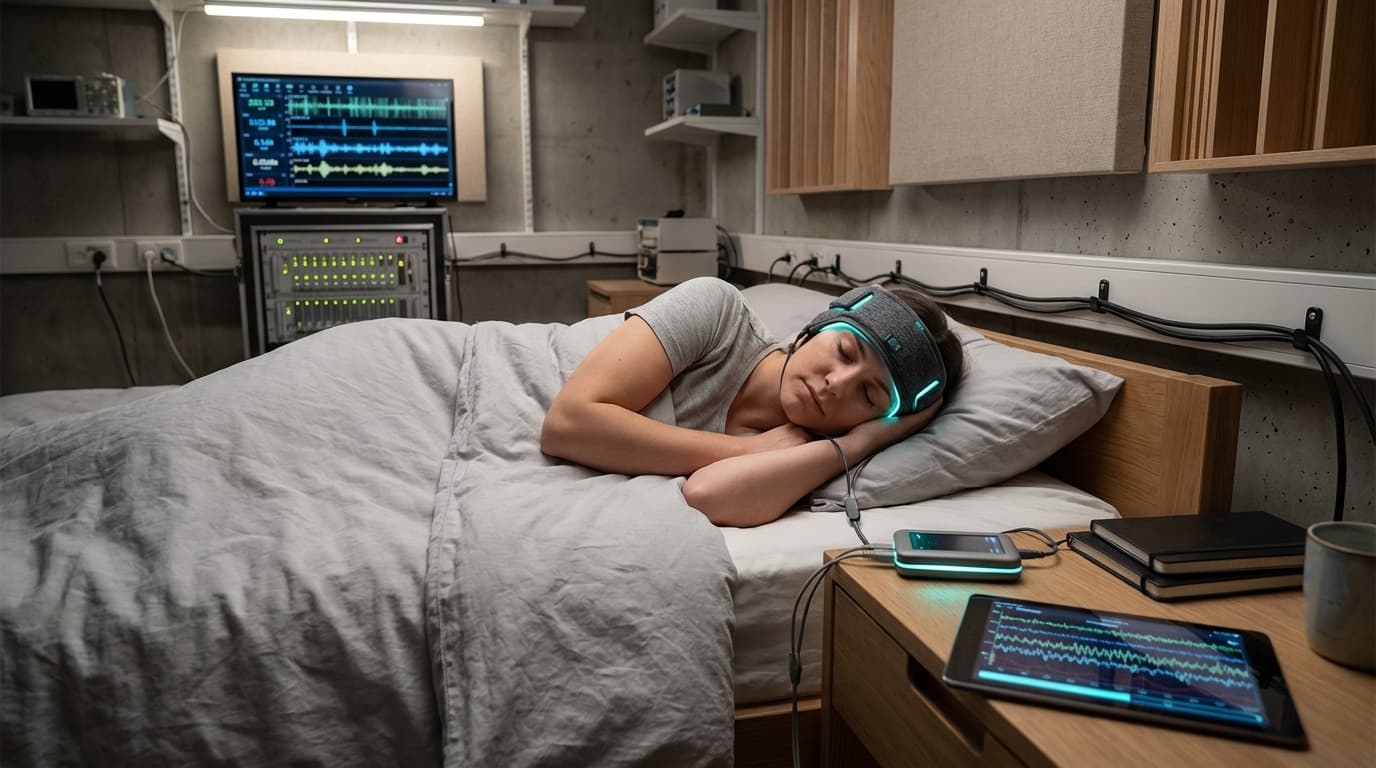
Targeted Memory Reactivation (TMR) Headbands
Targeted Memory Reactivation represents a convergence of sleep neuroscience and wearable technology, built on the principle that memories undergo active consolidation during specific sleep stages. These specialized headbands incorporate miniaturized EEG sensors capable of detecting neural signatures associated with REM sleep and slow-wave sleep phases, when memory processing is most active. The devices work by monitoring brainwave patterns in real-time and delivering precisely timed sensory cues—typically subtle auditory tones, scents, or haptic vibrations—that were previously associated with specific memories or emotional states during waking hours. This process leverages the brain's natural tendency to reactivate and reconsolidate memories during sleep, allowing external cues to influence which memories are strengthened, modified, or potentially neutralized. The technology builds on decades of sleep research demonstrating that memory traces remain malleable during consolidation, creating a window for therapeutic intervention without requiring conscious awareness or effort from the user.
The clinical applications of TMR headbands address a significant gap in mental health treatment, particularly for conditions where traumatic memories or maladaptive emotional patterns resist traditional therapeutic approaches. For individuals with PTSD, recurring nightmares often perpetuate trauma cycles that conventional treatments struggle to interrupt. Research suggests that TMR technology can help patients gradually reshape the emotional valence of traumatic memories by pairing them with calming sensory cues during sleep, effectively creating new associative pathways that reduce distress upon waking recall. Beyond trauma treatment, these devices show promise for anxiety disorders, phobias, and depression, where negative thought patterns become entrenched through repeated activation. The technology also opens possibilities for enhancing positive psychological states, such as reinforcing therapeutic gains from daytime counseling sessions or strengthening memories associated with wellbeing and resilience. This approach represents a shift toward passive, sleep-based interventions that work alongside the brain's natural processes rather than requiring active cognitive engagement during vulnerable emotional states.
Early clinical trials and pilot programs have demonstrated encouraging results, with some sleep research centers and specialized mental health clinics beginning to incorporate TMR protocols into treatment plans. The technology remains largely in the research and early adoption phase, though several neurotechnology companies have developed consumer-grade prototypes aimed at stress reduction and sleep quality improvement. Current applications focus primarily on controlled clinical settings where trained professionals can customize cue protocols and monitor patient responses, though the trajectory points toward more accessible home-use devices as the science matures. The development of TMR headbands aligns with broader trends in digital therapeutics and personalized medicine, where interventions are tailored to individual neurological patterns and delivered with minimal disruption to daily life. As our understanding of sleep's role in emotional regulation deepens, these devices may become integral components of comprehensive mental health care, offering a gentler, more naturalistic complement to traditional psychotherapy and pharmacological treatments while respecting the fundamental human need for restorative sleep.
Related Organizations
Northwestern University (Paller Lab)
United States · University
The Cognitive Neuroscience Laboratory led by Ken Paller, the primary pioneer of Targeted Memory Reactivation research.
Home of the Affective Computing research group led by Rosalind Picard.

Neurotechnology company that acquired Dreem, a developer of a headband-based home EEG sleep monitoring solution.

Develops the Muse EEG headband and software platform that adapts audio soundscapes in real-time based on the user's brain state (meditation/focus).

Prophetic
United States · Startup
Developing 'The Halo', a non-invasive neurostimulation headband designed to induce and stabilize lucid dreams.

Develops the FRENZ Brainband, a wearable that tracks EEG and vital signs to monitor focus and stress levels.
A sleep improvement platform that integrates with various wearables to deliver smart sound environments.
Supporting Evidence
Research this in Signals
Signals turns a topic into a sourced research record you can inspect and rerun. Your first scan is free, and this one starts with Targeted Memory Reactivation (TMR) Headbands already loaded, so edit it or scan as is.