






Reactive furniture
This page is a narrower case of it.
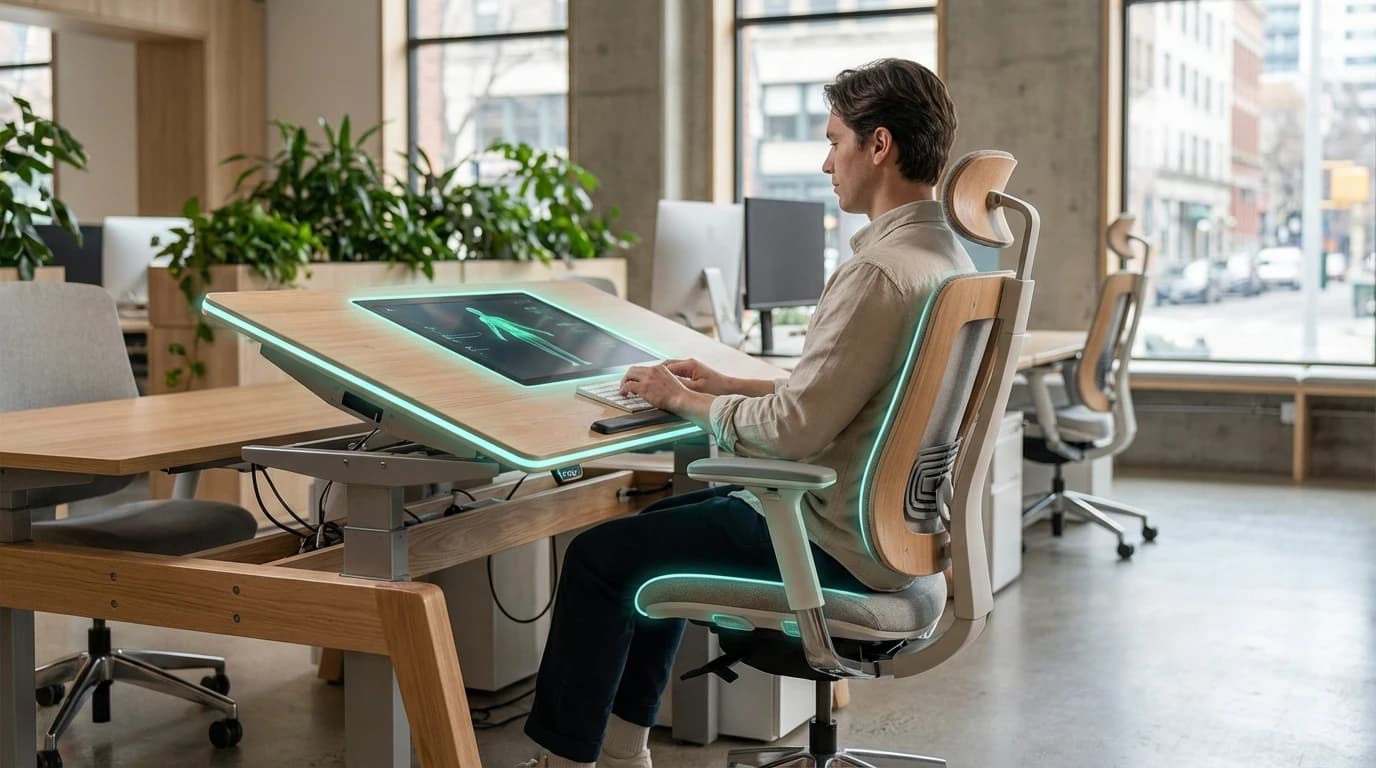
Adaptive ergonomic furniture represents a convergence of sensor technology, biomechanics, and human-centered design to address the growing epidemic of musculoskeletal disorders in modern work environments. These intelligent systems embed networks of pressure sensors, accelerometers, and capacitive touch arrays directly into the structural components of desks and chairs, creating a continuous feedback loop between the user's body and the furniture itself. The sensors monitor multiple parameters simultaneously: weight distribution across seat surfaces, spinal alignment through backrest contact points, micro-movements that indicate fidgeting or discomfort, and even subtle shifts in posture that precede fatigue. Advanced systems incorporate machine learning algorithms that build individual user profiles over time, learning to distinguish between healthy postural variation and potentially harmful static positions. The furniture responds through a combination of mechanical adjustments—such as incremental changes to seat tilt, lumbar support depth, or armrest height—and ambient feedback mechanisms like gentle vibrations, temperature shifts, or LED indicators that guide users toward healthier positions without disrupting workflow.
The sedentary nature of knowledge work has created a silent health crisis, with research suggesting that prolonged sitting and poor posture contribute to chronic back pain, repetitive strain injuries, and reduced productivity across industries. Traditional ergonomic furniture requires manual adjustment and relies on users to remember and implement best practices, a burden that often fails in the face of deadline pressure and cognitive load. Adaptive ergonomic furniture solves this problem by automating the ergonomic intervention process, removing the decision-making burden from users while maintaining their autonomy and comfort. For employers, this technology addresses the substantial costs associated with workplace injuries and lost productivity, while also demonstrating commitment to employee wellbeing in an era where talent retention increasingly depends on holistic workplace health initiatives. The systems can integrate with broader workplace wellness programs, providing anonymized aggregate data that helps organisations identify environmental stressors and optimise office layouts for long-term health outcomes.
Early deployments of adaptive ergonomic furniture have appeared primarily in technology companies and progressive corporate environments, where the intersection of employee wellness and productivity optimization drives adoption. Some systems now offer integration with calendar applications and productivity software, automatically adjusting furniture configurations based on the type of work being performed—raising desks for standing meetings, optimising chair positions for focused deep work, or prompting movement breaks between tasks. Industry analysts note growing interest from healthcare systems and educational institutions, where prolonged sitting affects both staff and students. The technology aligns with broader trends toward preventive health interventions and the quantified self movement, where individuals increasingly seek data-driven insights into their physical wellbeing. As sensor costs decline and machine learning models become more sophisticated, adaptive ergonomic furniture is positioned to evolve from a premium workplace amenity into a standard component of health-conscious environments, potentially reducing the long-term burden of preventable musculoskeletal conditions while fostering work cultures that prioritize sustained human performance over short-term productivity gains.
Furniture giant that developed 'Live OS', a system of connected desks that track usage and encourage posture changes.
Developer of an AI-powered smart standing desk with posture correction sensors and presence detection.
Offers 'Workplace Advisor' sensors and analytics to monitor space utilization and environmental conditions in offices.
Direct-to-consumer smart office brand producing motorized desks and ergonomic chairs.
Creators of a zero-gravity workstation that allows users to work while lying down, standing, or sitting.
One of Europe's largest workspace solution providers, focusing heavily on holistic ergonomics.
Published forecasts about this technology, graded against what happened in Hindsight.
Reactive furniture
This page is a narrower case of it.
Signals turns a topic into a sourced research record you can inspect and rerun. Your first scan is free, and this one starts with Adaptive Ergonomic Furniture already loaded, so edit it or scan as is.