Privacy-Preserving Ambient Sensors
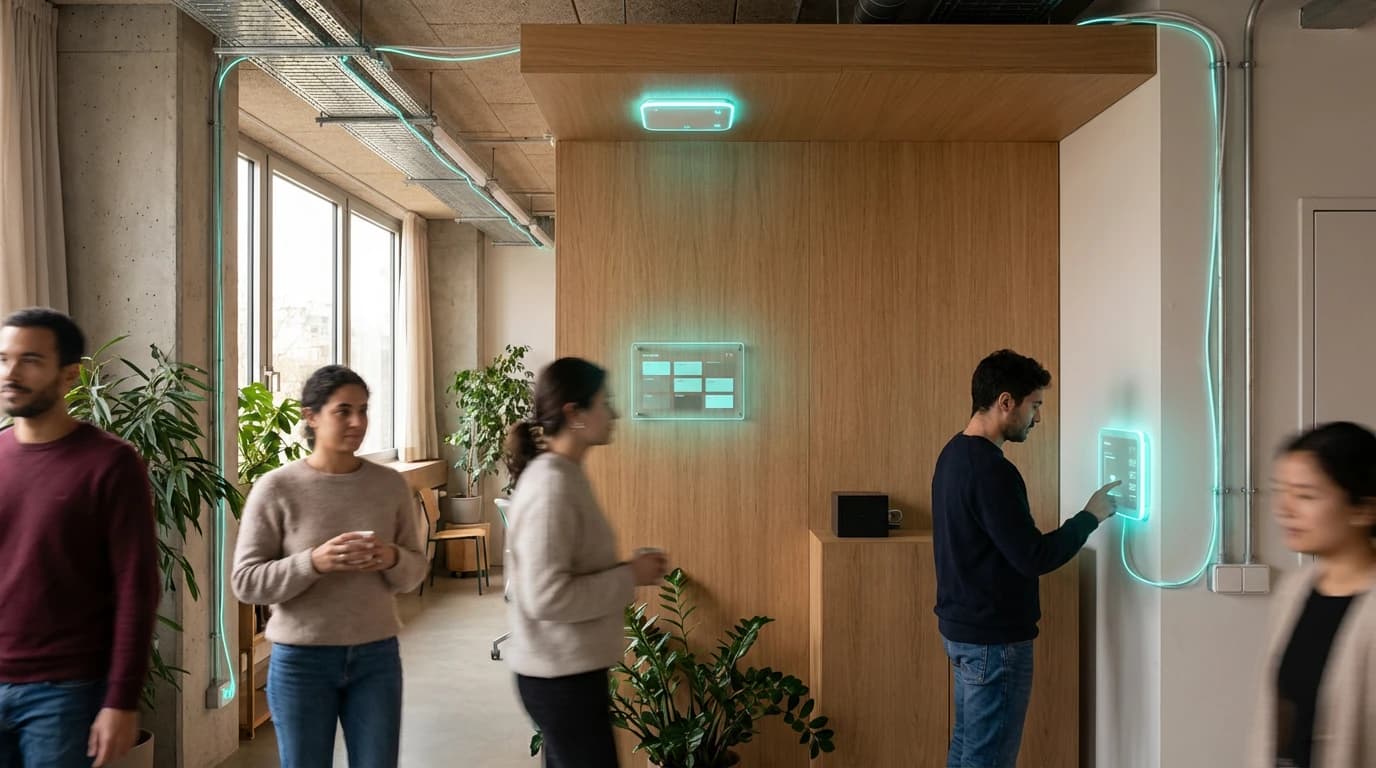
Privacy-preserving ambient sensors represent a fundamental shift in how we approach environmental monitoring and occupancy detection in shared spaces. Unlike traditional surveillance systems that capture high-resolution images or personally identifiable information, these sensors employ deliberately constrained sensing modalities—such as low-resolution thermal imaging, millimeter-wave radar, or passive infrared detection—that are physically incapable of identifying individuals. The technology works by detecting heat signatures, movement patterns, or presence through methods that intentionally blur or aggregate data at the hardware level, often reducing human forms to simple blob-like thermal patterns or anonymous motion vectors. Some implementations incorporate differential privacy algorithms that add mathematical noise to the data, ensuring that even if raw sensor outputs were somehow accessed, individual behaviors could not be reconstructed. By combining multiple low-fidelity sensing approaches—air quality monitors tracking CO2 levels, acoustic sensors measuring ambient noise without recording speech, and occupancy detectors counting bodies without identifying them—these systems create a comprehensive picture of space utilization and environmental conditions while maintaining an insurmountable barrier to personal surveillance.
The wellness and facility management sectors face a persistent tension between optimizing spaces for human comfort and respecting privacy rights. Traditional approaches to understanding how people use buildings—whether through cameras, WiFi tracking, or badge systems—create extensive digital trails that raise legitimate concerns about surveillance, data breaches, and behavioral monitoring. Privacy-preserving sensors address this challenge by enabling evidence-based decisions about HVAC optimization, lighting adjustments, and space reallocation without creating exploitable datasets. Organizations can now answer critical questions about whether conference rooms are underutilized, whether air quality degrades during peak occupancy, or whether noise levels in open offices exceed healthy thresholds—all without knowing who was present or what they were doing. This capability is particularly valuable in healthcare settings, where patient privacy is paramount, and in workplaces increasingly focused on psychological safety and employee wellbeing. The technology also supports compliance with data protection regulations by implementing privacy by design, where the inability to collect personal data is built into the hardware architecture rather than relying solely on policy or software controls.
Early deployments of privacy-preserving sensors have appeared in progressive office environments, university buildings, and healthcare facilities, where administrators seek to balance operational efficiency with ethical data practices. Some implementations focus on optimizing building systems in real-time, automatically adjusting ventilation when CO2 levels rise or dimming lights in unoccupied zones, creating energy savings while maintaining comfort. Others support longer-term space planning decisions, revealing that certain areas remain consistently underutilized while others suffer from overcrowding and poor air quality. Research institutions have begun exploring these sensors as tools for studying human behavior and environmental health without the ethical complications of traditional observation methods. As awareness grows around the psychological impact of surveillance—even when benign—and as regulations around biometric data tighten globally, privacy-preserving sensing approaches are likely to become standard practice in human-centered building design. The trajectory points toward increasingly sophisticated systems that can infer complex environmental and occupancy patterns while maintaining mathematical guarantees of anonymity, supporting a future where optimized spaces and personal privacy coexist rather than conflict.
Related Organizations

Develops 4D imaging radar sensors used for elderly care fall detection and vital sign monitoring without cameras.

Provides FDA-cleared radar solutions for contactless health monitoring and occupancy detection in healthcare and smart buildings.

Uses thermal sensors to detect occupancy and body heat without capturing personally identifiable information (PII).

Pioneers in AI-powered WiFi sensing for home security, health monitoring, and automation.

Provides elder care monitoring using radar technology to track sleep and vitals without wearables or cameras.

Builds anonymous people-counting sensors and software to help organizations measure how space is used.

A major semiconductor manufacturer developing secure chips with hardware support for PQC algorithms.

Produces smart lamps equipped with optical sensors and edge AI processing to detect falls and irregular patterns in elderly care settings.

Develops smart sensing solutions for building automation, utilizing edge-analytics sensors.

Provides AI-powered sensors to measure occupancy and space utilization in real-time.
Supporting Evidence
Research this in Signals
Signals turns a topic into a sourced research record you can inspect and rerun. Your first scan is free, and this one starts with Privacy-Preserving Ambient Sensors already loaded, so edit it or scan as is.