







Generative Design AI
This page is a narrower case of it.
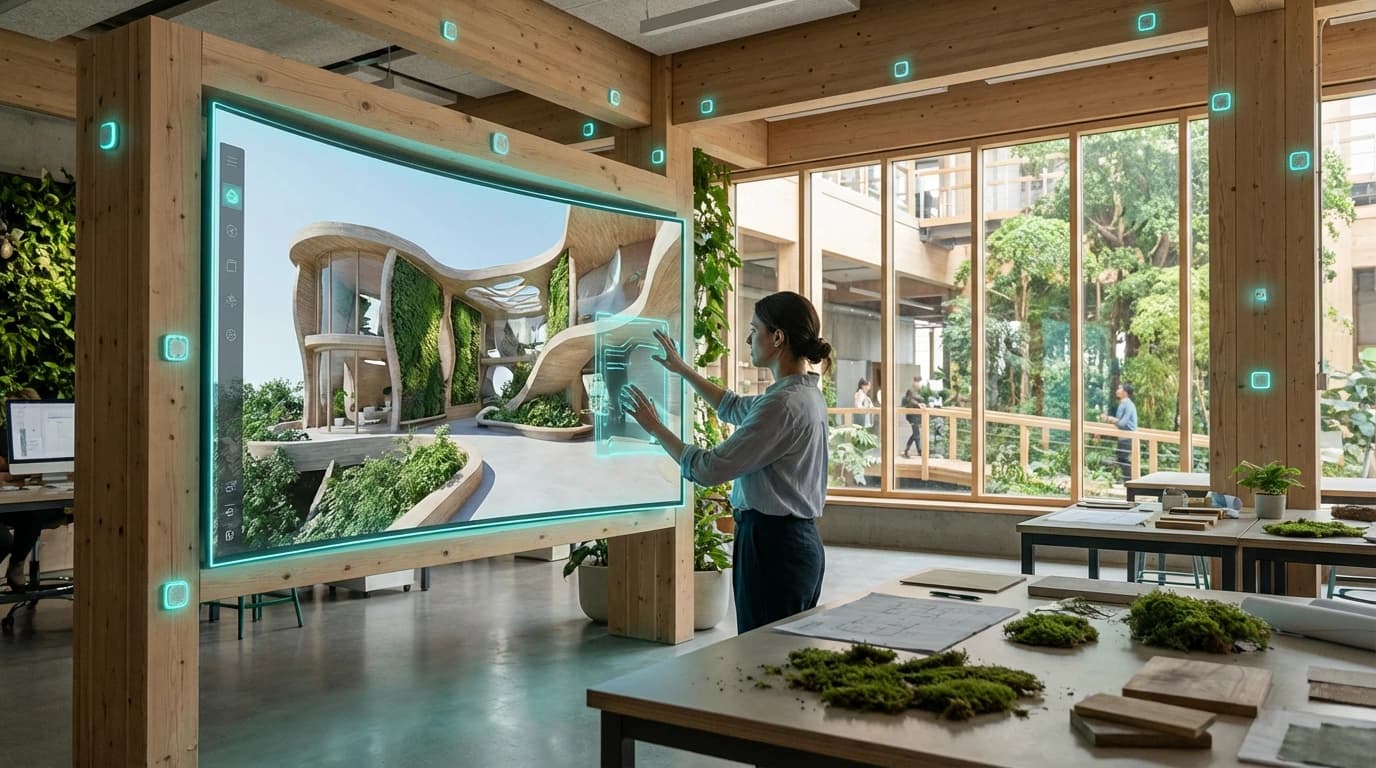
Biophilic Generative Design represents an emerging intersection of artificial intelligence, architectural software, and environmental psychology, fundamentally reimagining how buildings are conceived and constructed. Unlike traditional computer-aided design tools that simply digitize human decisions, these systems employ algorithms inspired by natural patterns—fractal geometries, branching structures, and organic flow dynamics—to generate architectural solutions that inherently align with human biological needs. The technology works by encoding principles from biophilic design theory into computational rules, allowing AI to explore thousands of design variations that maximize exposure to natural light, optimize air circulation patterns, and create spatial complexity that mirrors the varied environments in which humans evolved. Advanced implementations incorporate physiological data, using machine learning models trained on research linking environmental features to measurable health outcomes such as stress hormone levels, attention restoration, and circadian rhythm regulation. The generative process considers multiple variables simultaneously—window placement for optimal daylight penetration, ceiling heights that balance openness with psychological comfort, circulation paths that encourage movement and social interaction—producing designs that would be extraordinarily time-consuming for human architects to develop through conventional iterative methods.
The built environment profoundly impacts human health and productivity, yet conventional architectural practice often prioritizes aesthetic preferences, construction costs, and spatial efficiency over occupant wellbeing. Research consistently demonstrates that environments lacking natural elements contribute to elevated stress, reduced cognitive function, and decreased overall satisfaction among building users, whether in office settings, healthcare facilities, or residential spaces. Biophilic Generative Design addresses this gap by making evidence-based wellness optimization a core constraint rather than an afterthought in the design process. The technology enables architects to meet client requirements for square footage and functionality while simultaneously ensuring that resulting spaces support psychological restoration and physiological health. This approach proves particularly valuable in dense urban contexts where access to nature is limited, allowing designers to incorporate nature-inspired patterns, materials, and spatial relationships that provide some of the restorative benefits of natural environments. By automating the complex calculations required to balance competing design objectives, these systems make biophilic principles accessible to projects that might otherwise lack the budget or expertise for specialized wellness-focused design consultation.
Early implementations of biophilic generative design tools have appeared primarily in high-end commercial and institutional projects, where building operators recognize the business case for improved occupant wellbeing through reduced absenteeism and enhanced performance. Several architecture firms have begun integrating these capabilities into their workflows, using them during early conceptual phases to establish spatial frameworks that are then refined through traditional design processes. The technology shows particular promise in healthcare architecture, where environmental factors directly influence patient recovery outcomes, and in educational facilities, where spatial design affects learning effectiveness. As computational power increases and the underlying algorithms become more sophisticated through machine learning, these systems are expected to incorporate real-time environmental data, allowing buildings to adapt their configurations based on seasonal changes, occupancy patterns, and individual user preferences. The broader trajectory points toward a future where biophilic principles become standard practice rather than luxury features, supported by design tools that make creating health-promoting environments both technically feasible and economically viable across diverse building types and budgets.
Environmental consulting firm that authored the seminal '14 Patterns of Biophilic Design' and consults on its implementation.
Owner of the Arnold renderer, which integrates AI denoising to optimize high-end VFX workflows for film and TV.
A cloud platform for generating building designs using open standards and community-contributed generative functions.
Operates the Living Building Challenge and Biophilic Design Initiative, setting the standards for what constitutes a biophilic building.
Developed 'Delve', a generative design tool for urban planning that optimizes for quality of life metrics (now integrated into Google).
Their computation and design research group (ZHA CODE) actively develops and applies generative algorithms for complex urban geometries.
Manufactures smart glass that automatically tints to control heat and glare.
Published forecasts about this technology, graded against what happened in Hindsight.
Generative Design AI
This page is a narrower case of it.
Signals turns a topic into a sourced research record you can inspect and rerun. Your first scan is free, and this one starts with Biophilic Generative Design already loaded, so edit it or scan as is.