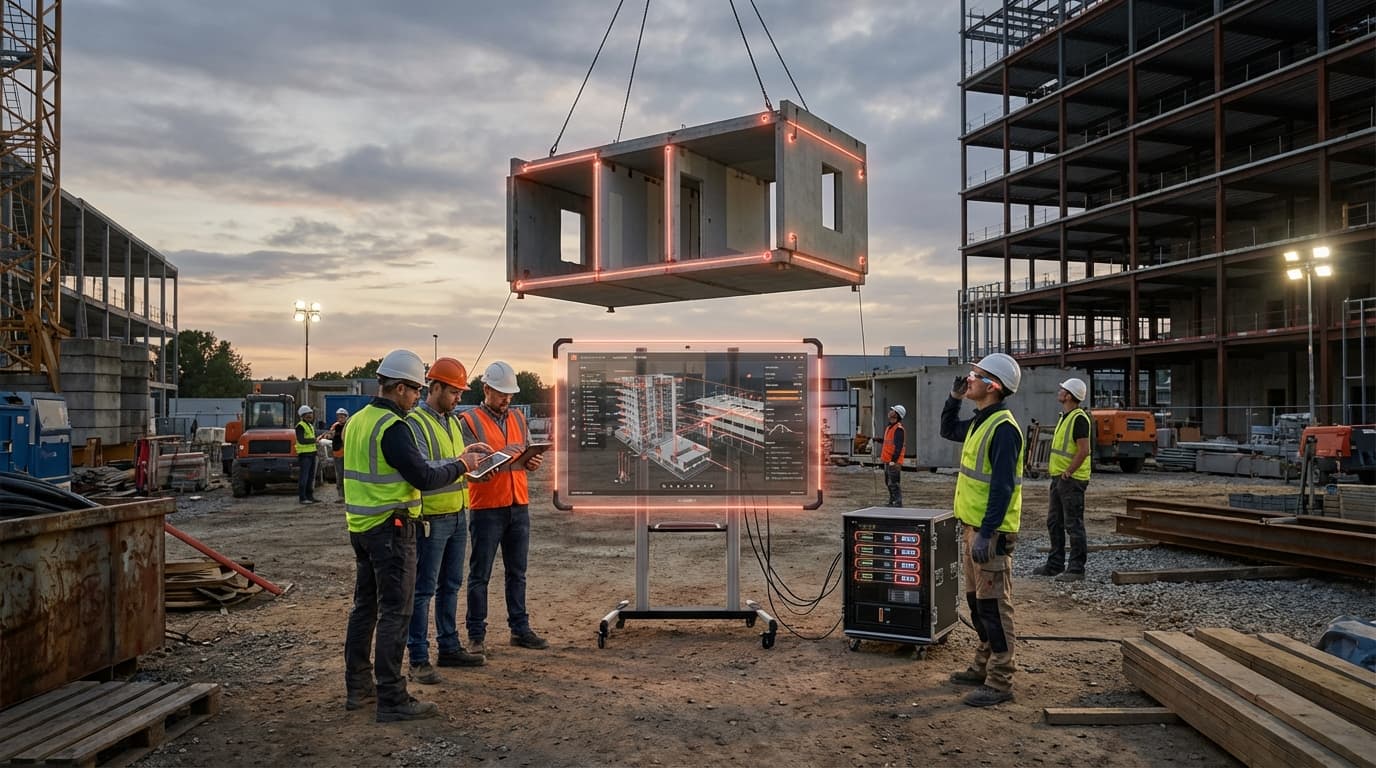
Open BIM Interoperability & Digital Thread
Building Information Modeling (BIM) has transformed how structures are designed and documented, yet the construction industry continues to struggle with a fundamental challenge: information silos. When architects, engineers, contractors, and facility managers rely on proprietary software ecosystems that cannot communicate effectively, critical data becomes trapped in incompatible formats. Drawings drift out of sync with three-dimensional models, cost estimates fail to reflect design changes, and the rich digital information created during design evaporates by the time a building enters operation. Open BIM interoperability addresses this fragmentation through standardized data exchange protocols, most notably the Industry Foundation Classes (IFC) schema developed by buildingSMART International. IFC provides a vendor-neutral format for representing building geometry, spatial relationships, material properties, and system specifications in a way that any compliant software can read and write. Complementary standards such as the Information Delivery Specification (IDS) define what data must be included at specific project milestones, while the Construction Operations Building Information Exchange (COBie) format ensures that asset information flows seamlessly into facility management systems. Together, these open standards create a common language that allows diverse software tools to participate in a unified digital ecosystem.
The business case for open BIM interoperability extends far beyond technical elegance. Construction projects routinely experience costly delays and errors when information must be manually re-entered across platforms or when design intent is lost in translation between software packages. By establishing a persistent digital thread—a continuous, traceable flow of data from initial concept through decades of building operation—open standards eliminate redundant data entry, reduce coordination errors, and preserve the intellectual investment made during design. Application programming interfaces (APIs) built on these standards enable automated workflows that were previously impossible: quantity takeoffs that update instantly when geometry changes, clash detection that runs continuously rather than at scheduled intervals, and maintenance schedules that reference the exact equipment specifications established during procurement. Perhaps most significantly, open interoperability breaks the cycle of vendor lock-in that has historically forced organizations to maintain expensive software subscriptions simply to access their own project data. When information lives in open formats, owners retain control over their digital assets and can select the best tools for each task rather than accepting whatever a single vendor provides.
Early adopters of open BIM workflows report measurable improvements in project delivery efficiency, though widespread implementation remains uneven across the industry. Public sector clients in several European countries now mandate IFC-compliant deliverables for major infrastructure projects, creating market pressure that is gradually shifting software vendors toward better standards compliance. The digital thread concept is gaining particular traction in facility management, where building owners are discovering that structured, standards-based data collected during construction can dramatically reduce the cost of commissioning and ongoing operations. As the construction industry faces mounting pressure to improve productivity and reduce its environmental footprint, the ability to automate analysis and optimize building performance throughout the lifecycle becomes increasingly valuable. The maturation of cloud-based collaboration platforms and the growing adoption of digital twins for building operations suggest that open BIM interoperability will evolve from a technical nicety to a fundamental requirement, enabling the data continuity that modern construction and facility management demand.
Related Organizations

The international authority for openBIM standards, responsible for developing and maintaining the Industry Foundation Classes (IFC) data standard.

An open-source data platform for the AEC industry that enables interoperability between different software silos via a web-based digital thread.

A leading vendor of software for the AEC industry, owning major BIM brands like Graphisoft (Archicad), Allplan, and Vectorworks.

A non-profit technology consortium that develops SDKs for engineering data access, including full support for IFC and BIM interoperability.


Develops Catenda Hub (formerly Bimsync), a Common Data Environment (CDE) built entirely around open standards and APIs.


A cloud platform for generating building designs using open standards and community-contributed generative functions.

An integrated collaboration platform for 3D and 2D workflows, specializing in issue tracking and clash detection.

Developing foundation models for robotics (Project GR00T) and vision-language models like VILA.
Supporting Evidence
Research this in Signals
Signals turns a topic into a sourced research record you can inspect and rerun. Your first scan is free, and this one starts with Open BIM Interoperability & Digital Thread already loaded, so edit it or scan as is.