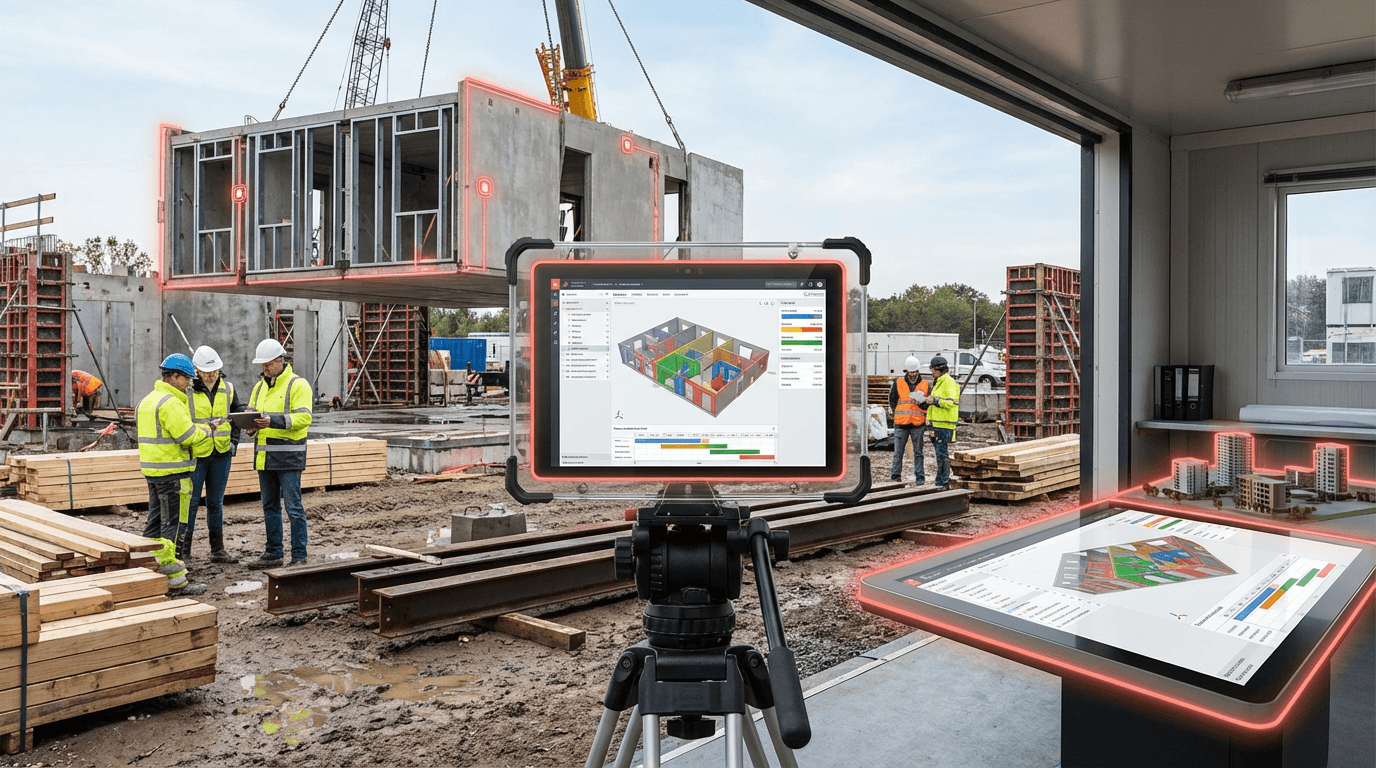
4D/5D BIM Scheduling & Costing
Building Information Modeling (BIM) has evolved far beyond static 3D representations of structures, now incorporating temporal and financial dimensions that transform how construction projects are planned, executed, and controlled. 4D BIM adds the dimension of time by linking each model element—walls, beams, mechanical systems, and finishes—to specific activities in the construction schedule. This creates a visual simulation of how a building will be assembled over weeks or months, allowing project teams to identify sequencing conflicts, space constraints, and resource bottlenecks before breaking ground. 5D BIM extends this further by associating cost data with both the model elements and their scheduled activities, enabling real-time tracking of expenditures against budgets as the project progresses. The technical foundation relies on structured data schemas that map geometric objects to schedule tasks and cost codes, often using standardized classification systems that ensure consistency across disciplines and software platforms. Advanced implementations incorporate production rates and labor productivity metrics, allowing the system to calculate not just when work should occur, but how long it will realistically take based on crew sizes, equipment availability, and site conditions.
The construction industry has long struggled with projects that run over budget and behind schedule, often due to poor coordination between design, planning, and execution teams. Traditional methods rely on separate tools for modeling, scheduling, and cost estimation, creating information silos that obscure the interdependencies between design decisions, construction sequences, and financial performance. 4D/5D BIM addresses these challenges by creating a single source of truth where changes in one dimension automatically propagate through the others. When a structural engineer modifies a beam size, the system can immediately recalculate the impact on material costs, installation duration, and downstream activities like fireproofing or ceiling installation. This integrated approach enables sophisticated scenario planning, where project managers can test alternative construction methods, evaluate the financial implications of schedule compression, or assess the ripple effects of design changes before committing resources. The technology also supports more effective communication with stakeholders who may lack technical expertise, as visual simulations of construction progress are far more intuitive than Gantt charts or spreadsheets.
Current adoption of 4D/5D BIM varies widely across the construction sector, with large infrastructure projects and complex commercial developments leading the way, while smaller builders often face barriers related to software costs and the learning curve required for effective implementation. When integrated with field data capture systems—such as drone surveys, laser scanning, or mobile reporting apps—these models transition from planning tools to active project controls, comparing planned versus actual progress and flagging deviations in real time. Early deployments indicate that this integration can reduce cost overruns by providing early warning when labor productivity falls below expectations, material deliveries lag behind schedule, or trade coordination issues threaten critical path activities. The technology also facilitates more transparent relationships with owners and financiers, as stakeholders can access current cost and schedule projections rather than waiting for monthly reports. As the construction industry continues its digital transformation, 4D/5D BIM represents a critical step toward data-driven project delivery, where decisions are informed by comprehensive simulations rather than experience and intuition alone, ultimately contributing to more predictable outcomes and reduced waste in an industry that has historically lagged other sectors in productivity gains.
Related Organizations

Owner of the Arnold renderer, which integrates AI denoising to optimize high-end VFX workflows for film and TV.


Creators of the iTWO platform, which integrates 3D BIM with 4D (time) and 5D (cost) in a unified environment.

AI-powered construction simulation and scheduling platform.

A web-based platform for 4D site logistics planning and simulation.

A digital building platform service provider, focusing on the entire lifecycle of construction projects primarily in the Asian market.

Develops BEXEL Manager, a software solution for 3D/4D/5D/6D BIM management.

Provider of Powerproject, a scheduling tool that includes BIM integration for 4D planning.

Kalloc Studios (Fuzor)
United States · Company
Develops Fuzor, a VDC software that offers real-time 4D construction simulation and bi-directional syncing with Revit.

Supporting Evidence
Research this in Signals
Signals turns a topic into a sourced research record you can inspect and rerun. Your first scan is free, and this one starts with 4D/5D BIM Scheduling & Costing already loaded, so edit it or scan as is.