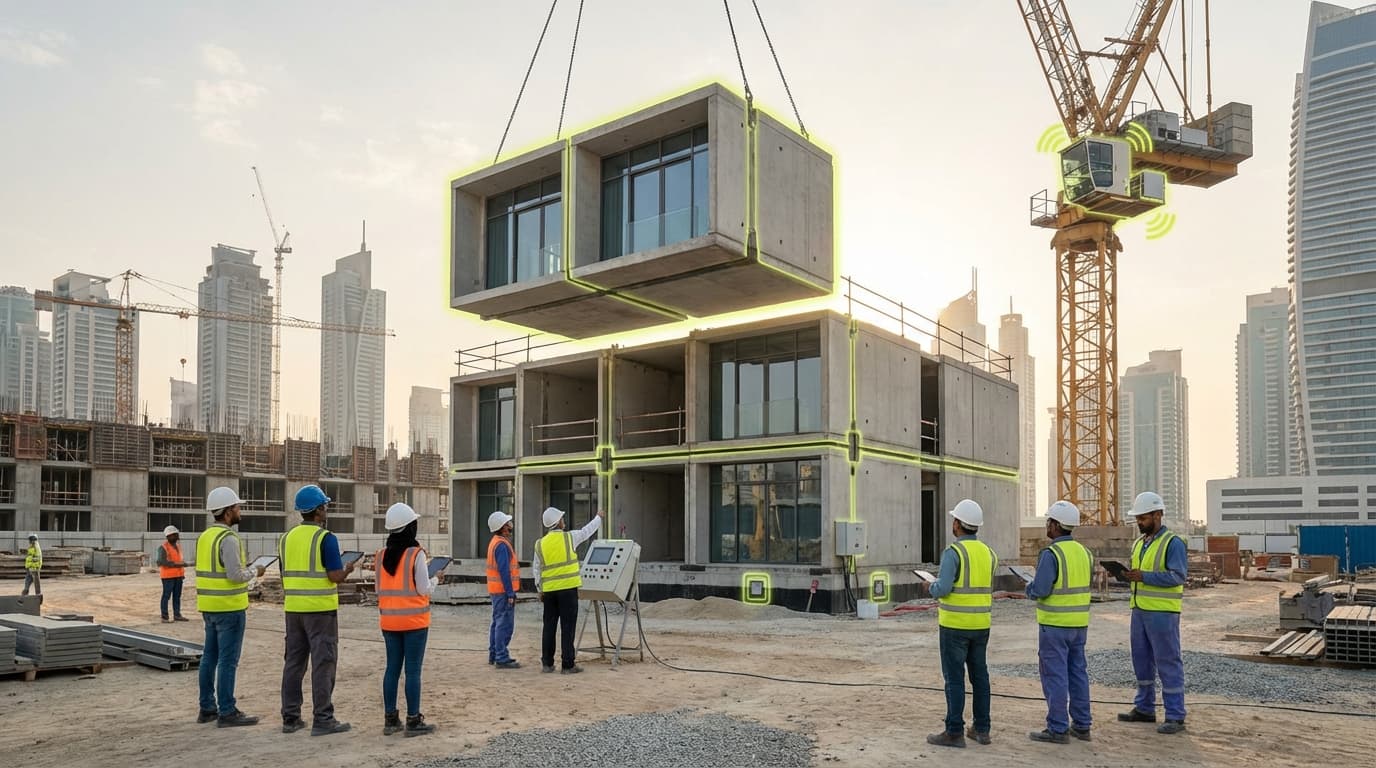
Modular Construction Systems
The Gulf's unprecedented wave of mega-projects—from Saudi Arabia's NEOM to UAE's Expo City extensions—faces a fundamental tension: how to deliver massive infrastructure volumes at speed while managing extreme heat, labor constraints, and quality control demands. Traditional stick-built construction struggles under these pressures, with on-site productivity declining in temperatures exceeding 45°C and skilled labor shortages driving up costs and timelines. Modular construction systems emerge as a strategic response to this delivery crisis, shifting the majority of building fabrication into climate-controlled factory environments where precision, speed, and worker conditions can be optimized. This approach represents more than an efficiency gain; it signals the industrialization of construction itself, transforming building delivery from craft-based site work into manufacturing-led assembly processes.
The technology works by fabricating entire room modules—complete with MEP systems, finishes, and fixtures—in off-site factories, then transporting these units to project sites for rapid assembly onto prepared foundations. Early GCC deployments indicate construction timelines can compress by 30-50% compared to conventional methods, with quality metrics improving through controlled factory conditions and reduced weather exposure. Saudi Arabia's giga-projects have embraced modular approaches as essential to meeting 2030 Vision deadlines, while UAE developers increasingly specify modular systems for hotels, labor accommodation, and healthcare facilities where speed-to-occupancy drives financial returns. The model also addresses labor market realities: factory-based production requires fewer on-site workers in harsh conditions, while enabling year-round fabrication regardless of outdoor temperatures. However, the approach demands significant upfront investment in manufacturing facilities, sophisticated logistics networks capable of moving oversized modules across desert terrain, and design standardization that can conflict with architectural ambition.
The implications extend beyond project delivery speed. If modular construction becomes the default for GCC development, it could reshape regional supply chains, driving investment in domestic manufacturing capacity and reducing reliance on imported labor for on-site assembly. This transition may favor larger developers with capital to build factory infrastructure while challenging smaller contractors. Key monitoring points include the emergence of regional modular manufacturing hubs, regulatory frameworks adapting to factory-built certification processes, and whether design standardization limits architectural innovation or evolves into mass-customization models. The technology's success in extreme-climate mega-projects could position the Gulf as a testing ground for construction industrialization models applicable to other high-growth, resource-constrained markets globally.
Related Organizations

Part of AMANA Group, specializing in offsite volumetric concrete modular construction.

A leading GCC contractor that established DuBox, a modular construction subsidiary, integrating design-build finance models to accelerate project delivery in the region.

A region in northwest Saudi Arabia being built as a living laboratory for future technologies.

Red Sea Global
Saudi Arabia · Company
Developer of The Red Sea and Amaala projects, implementing high-standard modular housing for construction staff.

A major multi-disciplinary construction company in the GCC, parent company of LINQ Modular.

A global construction group with a massive Middle East presence, actively exploring 3D printing and modular techniques.

International engineering and construction enterprise, a leader in Design for Manufacture and Assembly (DfMA).

A Saudi manufacturing and construction group with significant capabilities in pre-engineered steel buildings and structural steel.

Modon
Saudi Arabia · Government Agency
The Saudi Authority for Industrial Cities and Technology Zones, developing integrated industrial cities.