Adaptive Reuse of Buildings
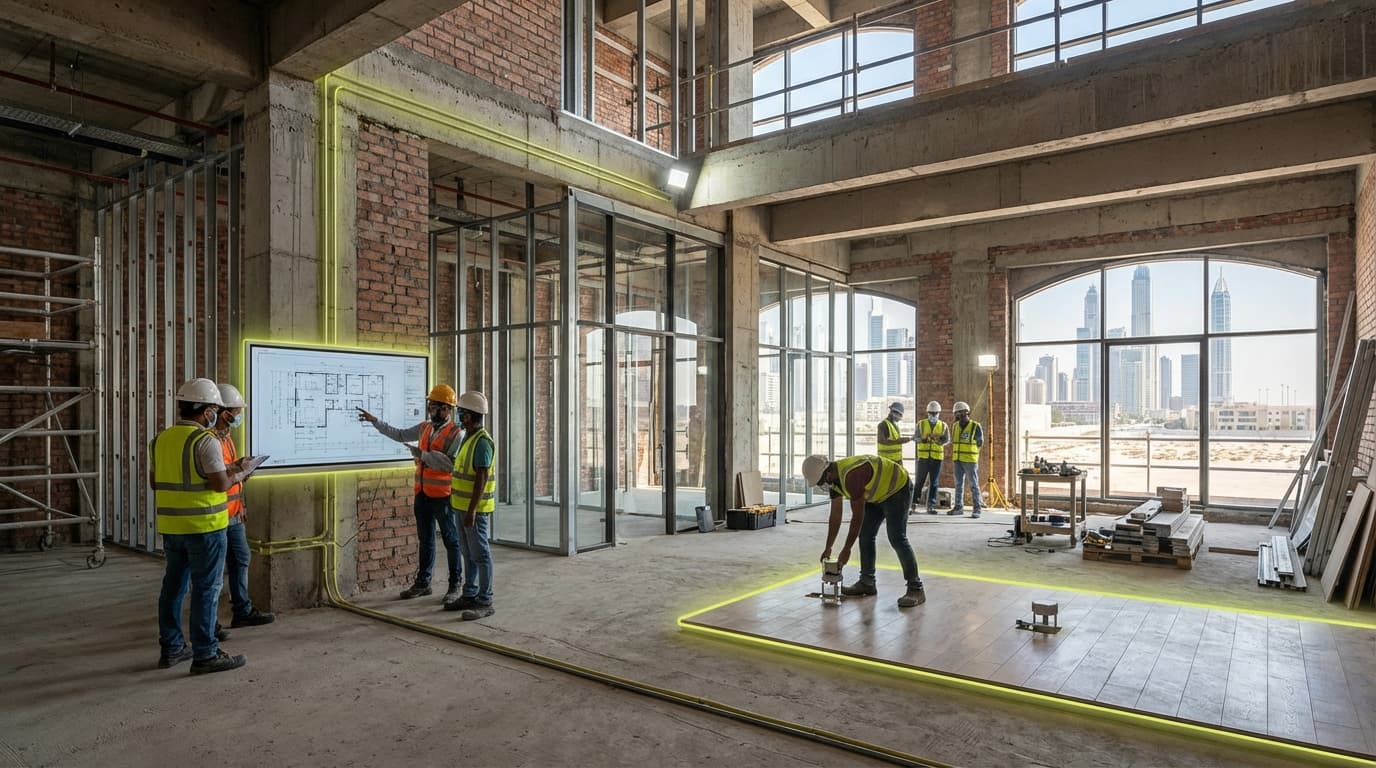
Adaptive reuse addresses a fundamental tension in urban development: the environmental and economic costs of demolition versus the opportunity to transform existing structures for contemporary needs. Rather than razing buildings that no longer serve their original purpose, this approach converts commercial towers into residential units, industrial warehouses into mixed-use complexes, and obsolete retail spaces into community facilities. The core challenge it responds to is the massive embodied carbon locked in existing building stock—the energy and materials already invested in foundations, structural frames, and building envelopes. Industry research suggests that demolition and new construction can generate three to four times the carbon emissions of adaptive conversion, even when accounting for operational efficiency gains. This signal matters because it represents a strategic shift from linear construction cycles toward circular urban metabolism, particularly relevant as cities confront both climate commitments and changing spatial demands following pandemic-era shifts in work patterns and retail behavior.
The practice gains momentum through converging pressures: office vacancy rates climbing in central business districts, demand for well-located housing near transit and amenities, and regulatory frameworks increasingly penalizing demolition waste. In Gulf markets, early conversions have emerged in Dubai's older commercial districts and Riyadh's industrial zones, where developers test structural reinforcement techniques and navigate building codes originally written for single-use typologies. Technical enablers include advanced structural assessment methods, modular fit-out systems that minimize invasive interventions, and digital twins that model conversion scenarios before physical work begins. Financial viability remains uncertain in many cases—conversion costs can approach 60-80% of new construction while delivering fewer leasable square meters—but tightening embodied carbon regulations and potential carbon pricing mechanisms may shift this calculus. The pattern appears stronger in markets with established building stock and regulatory support for mixed-use zoning, while remaining nascent in contexts favoring greenfield development.
Implications extend beyond individual projects to reshape urban development models and professional competencies. Cities adopting adaptive reuse at scale may see reduced construction-related emissions, preservation of neighborhood character, and faster delivery of housing in high-demand locations. However, success depends on regulatory adaptation—building codes designed for new construction often impose prohibitive requirements on conversions—and development of specialized expertise in structural assessment, MEP integration within existing constraints, and financial structuring that accounts for conversion uncertainties. Monitoring should track regulatory changes enabling typology conversions, emergence of specialized conversion contractors and financial products, and comparative lifecycle assessments demonstrating actual carbon savings versus theoretical projections. The critical threshold to watch is whether major institutional investors and developers shift capital allocation toward conversion projects, signaling market maturation beyond pilot demonstrations.
Related Organizations

An arts and culture district in Dubai created by transforming industrial warehouses into galleries and creative spaces.

Diriyah Company
Saudi Arabia · Company
Responsible for the rehabilitation and adaptive reuse of the At-Turaif UNESCO site and surrounding mud-brick structures.

Dubai-based architectural firm known for contextually sensitive designs and adaptive reuse projects.

Government body driving the Industrial Heritage Program to document and reuse industrial sites for cultural purposes.

Cultural institution that systematically restores and repurposes heritage houses and spaces in Sharjah for art biennials.

The world's largest architecture firm, with a dedicated focus on 'Experience Design'.

Real estate services firm providing strategic advice on asset repurposing and retrofitting to meet net-zero goals.

Global architectural firm advocating for 'adaptive reuse as the new normal' to reduce embodied carbon.

One of the largest real estate management and development companies in Dubai, managing a vast portfolio of rental assets.
A multidisciplinary design firm with a massive footprint in the GCC, working on large-scale residential communities.