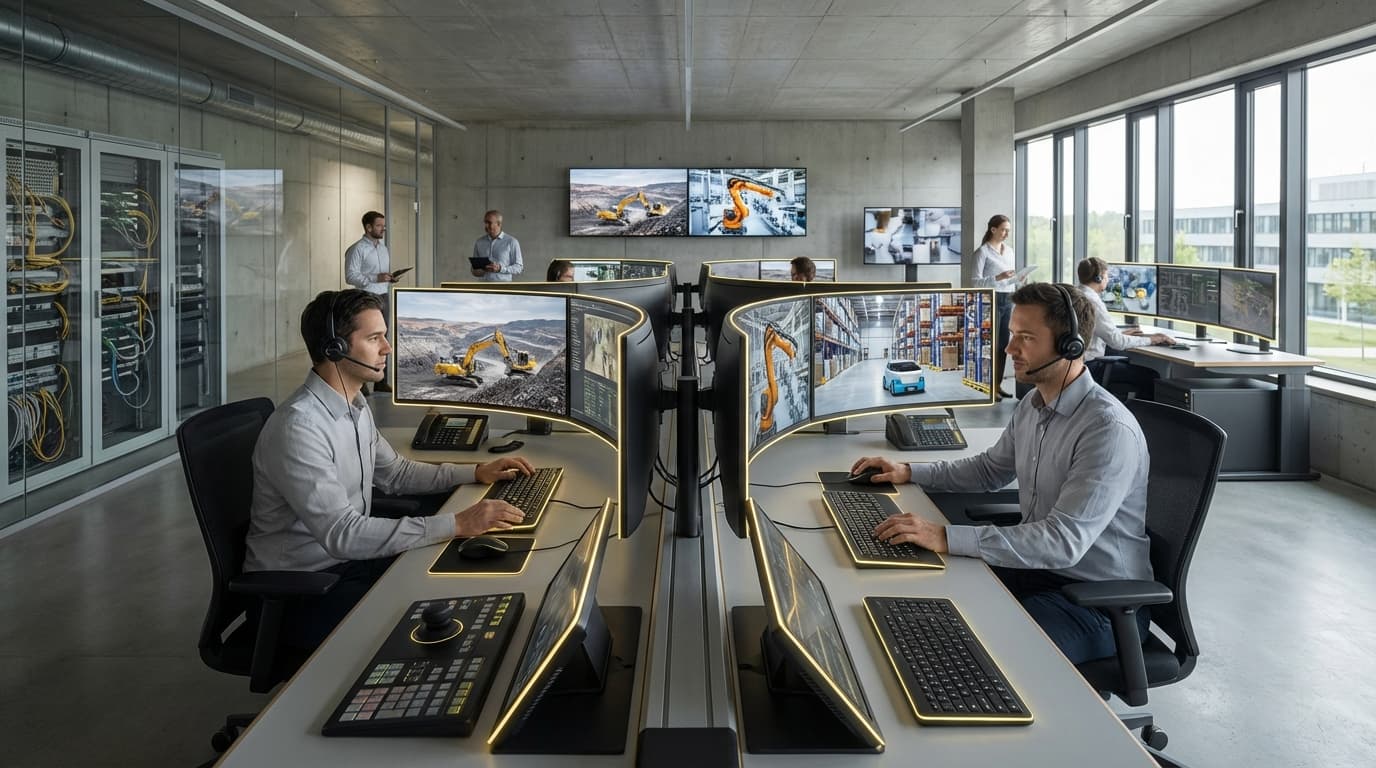
Remote Operations Centers
Remote Operations Centers represent a fundamental shift in how industrial operations are monitored and controlled, moving from on-site supervision to centralised command hubs that can oversee multiple facilities simultaneously. These sophisticated control environments integrate advanced telecommunications infrastructure, real-time data visualisation systems, and teleoperation interfaces to create a unified operational picture across geographically dispersed assets. At their core, these centers rely on high-bandwidth, low-latency networks that transmit sensor data, video feeds, and control signals between remote sites and central operators. The physical infrastructure typically includes multi-screen workstations, redundant communication systems, and specialised input devices that allow operators to switch seamlessly between monitoring autonomous systems and taking direct control when intervention is required. Advanced sensor fusion techniques combine data from cameras, LIDAR, industrial IoT devices, and production monitoring systems into coherent dashboards that present operators with actionable intelligence rather than raw data streams.
The industrial imperative driving adoption of Remote Operations Centers stems from persistent challenges in workforce deployment, operational efficiency, and safety management across distributed facilities. Traditional models requiring skilled operators at every production site face mounting difficulties as expertise becomes scarcer and more expensive, particularly in remote or hazardous locations such as offshore platforms, mining operations, or chemical processing facilities. These centralised hubs address this constraint by allowing a smaller pool of highly trained specialists to supervise multiple sites, optimising labour deployment while maintaining or even enhancing operational oversight. The technology also enables faster response to anomalies, as operators can quickly redirect attention and resources to emerging issues without the delays inherent in physical travel. Furthermore, remote operations significantly reduce personnel exposure to dangerous environments, whether in extreme temperatures, toxic atmospheres, or areas with heavy machinery, fundamentally transforming the risk profile of industrial work.
Early implementations have emerged across sectors where distributed operations are common, including mining companies operating multiple extraction sites, logistics providers managing warehouse networks, and energy companies overseeing pipeline infrastructure or renewable energy installations. The offshore oil and gas industry has been particularly active in deploying these systems, with some operators reporting substantial reductions in personnel stationed on platforms while maintaining production levels. Manufacturing enterprises are increasingly exploring remote operations centers to coordinate production across global factory networks, enabling real-time optimisation of output based on demand signals and resource availability. As 5G networks expand and edge computing capabilities mature, the technology is expected to extend into more dynamic applications, including construction equipment fleets and agricultural robotics. This evolution aligns with broader trends toward industrial digitalisation and the emergence of "lights-out" facilities that operate with minimal human presence, positioning Remote Operations Centers as a critical enabler of the next phase of industrial automation and the distributed, resilient supply chains that future economies will demand.
Related Organizations

Mining giant that operates 'AutoHaul', the world's first fully autonomous, heavy-haul, long-distance railway system.

Provides the eMine portfolio, including charging infrastructure and trolley systems for electric mines.

Global metals and green energy company developing massive green hydrogen and ammonia projects worldwide through its energy division.

Multinational conglomerate operating in aerospace and building technologies.

A global technology and engineering company whose Cargo Solutions division produces real-time trackers (GO loggers).

Provides a human-assisted autonomy platform for yard trucking, integrating teleoperation centers to handle edge cases in logistics hubs.

Develops a software platform for remote teleoperation of autonomous vehicles, focusing on low-latency video compression and network bonding.

Woodside Energy
Australia · Company
Operates a state-of-the-art remote operations center in Perth for its LNG facilities, utilizing AI and advanced telecommunications.
Supporting Evidence
Research this in Signals
Signals turns a topic into a sourced research record you can inspect and rerun. Your first scan is free, and this one starts with Remote Operations Centers already loaded, so edit it or scan as is.