Industrial Data Spaces
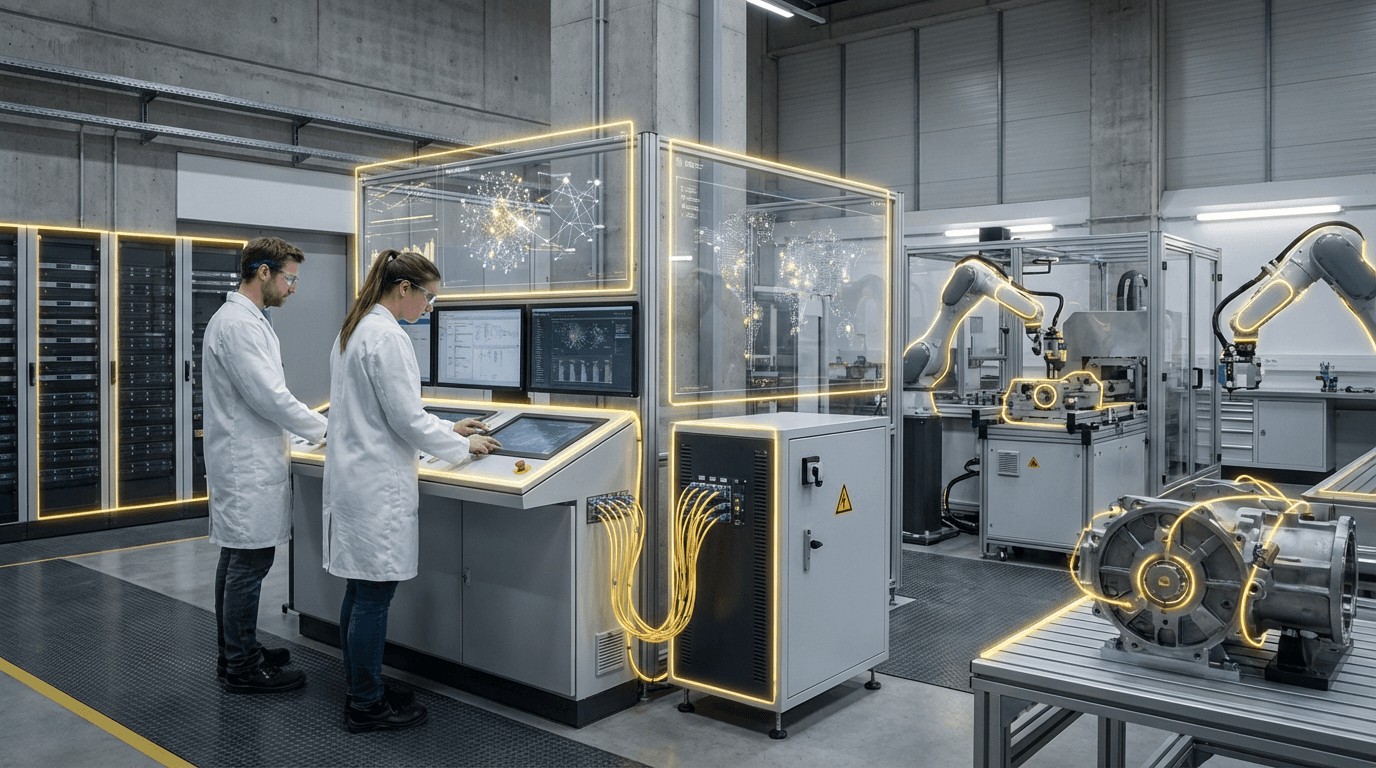
Industrial Data Spaces represent a fundamental shift in how manufacturing and industrial enterprises approach data sharing in an era where collaboration is essential yet competitive concerns remain paramount. Traditional data-sharing models have forced companies into an uncomfortable choice: either lock data behind corporate firewalls and forgo the benefits of ecosystem collaboration, or expose sensitive operational information to partners and risk losing competitive advantage. This technology resolves that tension through federated architectures that enable sovereign data exchange—allowing organisations to share specific datasets with defined partners under precisely controlled usage policies. At its technical core, Industrial Data Spaces employ distributed connector nodes that enforce data sovereignty rules at the point of exchange, cryptographic techniques to ensure data provenance and integrity, and policy engines that translate business rules into machine-executable access controls. Rather than centralising data in a single repository, the architecture maintains data at its source while enabling secure, auditable queries and transfers across organisational boundaries.
The industrial sector faces mounting pressure to optimise complex, multi-tier supply chains, integrate cyber-physical systems across company boundaries, and enable new service models built on operational data. However, manufacturers understandably hesitate to share production metrics, quality data, or machine telemetry with suppliers, customers, or even consortium partners when doing so might reveal process innovations, capacity constraints, or other commercially sensitive insights. Industrial Data Spaces address this challenge by making data sovereignty a first-class architectural principle rather than an afterthought. Companies can participate in collaborative analytics, predictive maintenance networks, or supply chain optimisation initiatives while retaining granular control over who accesses their data, for what purposes, and under what conditions. This capability unlocks new business models such as equipment-as-a-service arrangements where machine builders access usage data without exposing end-user production secrets, or collaborative quality management where tier-one suppliers share defect patterns with OEMs under strict confidentiality terms.
Early implementations have emerged primarily in European manufacturing contexts, driven by initiatives that promote digital sovereignty and cross-border data collaboration. Automotive supply chains have piloted Industrial Data Spaces to coordinate just-in-time production across multiple suppliers without centralising sensitive capacity and inventory data. Similarly, industrial equipment manufacturers are exploring these architectures to enable condition monitoring and predictive analytics across installed bases while respecting customer data ownership. The technology aligns with broader Fourth Industrial Revolution trends toward networked production, where value creation increasingly depends on data flows between autonomous systems across organisational boundaries. As regulatory frameworks around data governance mature and industries recognise that competitive advantage lies not in hoarding data but in orchestrating its strategic use, Industrial Data Spaces are positioned to become foundational infrastructure for industrial ecosystems. The approach offers a pragmatic path forward: enabling the data liquidity that smart manufacturing requires while preserving the sovereignty that industrial enterprises demand.
Related Organizations

Promotes a standard for data sovereignty and data exchange, defining the reference architecture for International Data Spaces (IDS).

An open ecosystem for the automotive industry implementing IDS standards to create a continuous data chain.

Research institute for Software and Systems Engineering, a primary architect of the International Data Spaces standard.

A European initiative developing a federated data infrastructure to ensure data sovereignty and availability across Europe.

Provides 'Connector-as-a-Service' to enable companies to join data spaces like Catena-X without managing complex infrastructure.

Develops data marketplaces and data space solutions, allowing companies to monetize and share industrial data securely.

Provides technology to build data exchanges and marketplaces, enabling organizations to monetize and circulate data securely.

Host of major open-source IoT and Smart City projects (like Eclipse Ditto) that enable vendor-neutral infrastructure.

The IT services subsidiary of Deutsche Telekom, offering sovereign cloud solutions.

Dutch organization for applied scientific research, actively investigating molten metal pyrolysis for industrial hydrogen.

Non-profit driving the definition of open standards (NGSI-LD) for smart city data exchange to prevent vendor lock-in.

Specializes in system integration and connectivity for federated data spaces.
Japanese system integrator working on interoperability between European Data Spaces (IDS) and Japanese industrial platforms.
Supporting Evidence
Research this in Signals
Signals turns a topic into a sourced research record you can inspect and rerun. Your first scan is free, and this one starts with Industrial Data Spaces already loaded, so edit it or scan as is.