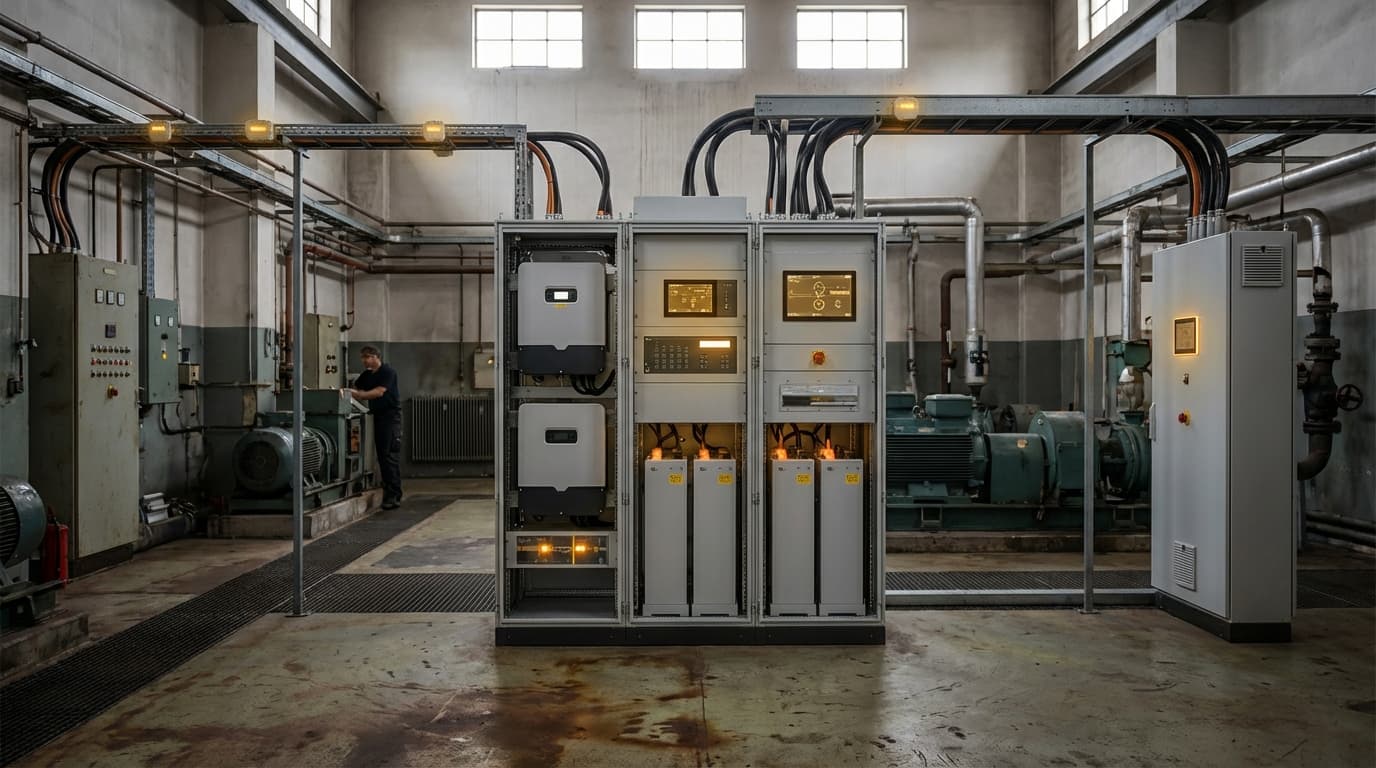
Smart Grid Integration
Smart Grid Integration represents a fundamental shift in how industrial facilities interact with electrical infrastructure, transforming energy-intensive operations from passive consumers into active participants in the broader energy ecosystem. At its technical core, this technology employs advanced metering infrastructure, real-time monitoring systems, and automated control algorithms that enable bidirectional power flow between industrial facilities and the electrical grid. These systems continuously analyse energy pricing signals, production schedules, and grid demand patterns to optimise when and how facilities consume, store, or supply electricity. The integration relies on sophisticated energy management software that coordinates multiple components—including on-site generation assets, battery storage systems, and flexible manufacturing equipment—to respond dynamically to both internal production requirements and external grid conditions. Power electronics and inverter technologies enable seamless switching between grid consumption and supply modes, while communication protocols ensure that industrial systems can receive and respond to grid operator signals within milliseconds.
The industrial sector has historically faced significant challenges related to energy costs, which can represent a substantial portion of operational expenses, particularly for energy-intensive manufacturing processes. Traditional industrial operations have been constrained by rigid energy consumption patterns that leave facilities vulnerable to peak pricing periods and unable to capitalise on favourable market conditions. Smart Grid Integration addresses these limitations by enabling demand response capabilities, where facilities can automatically reduce or shift energy-intensive processes to off-peak hours when electricity prices are lower. This flexibility extends beyond simple load shifting—facilities equipped with energy storage systems can purchase electricity during low-demand periods, store it, and either use it during expensive peak hours or sell it back to the grid when prices spike. This capability transforms the traditional cost structure of industrial energy consumption, creating new revenue streams and reducing exposure to volatile energy markets. Furthermore, this technology enables industrial facilities to support grid stability by providing ancillary services such as frequency regulation and voltage support, which are increasingly valuable as electrical grids incorporate more intermittent renewable energy sources.
Early adopters of Smart Grid Integration are already demonstrating its viability across various industrial sectors, from automotive manufacturing plants that schedule energy-intensive processes around renewable energy availability to chemical facilities that leverage thermal storage to balance production loads. Research suggests that facilities implementing these systems can reduce energy costs by significant margins while simultaneously improving their environmental performance by aligning consumption with periods of cleaner grid electricity. The technology is particularly compelling for industries with flexible production schedules or those that can economically justify battery storage investments. As regulatory frameworks increasingly support distributed energy resources and as battery storage costs continue to decline, industry analysts note that Smart Grid Integration is becoming economically attractive for a broader range of industrial operations. This trend aligns with the broader movement toward industrial decarbonisation and the development of virtual power plants, where aggregated industrial facilities can collectively provide grid services at scale. The future trajectory points toward increasingly sophisticated integration, where artificial intelligence and machine learning algorithms will predict optimal energy strategies days or weeks in advance, and where industrial facilities become integral components of resilient, flexible electrical grids capable of supporting high penetrations of renewable energy.
Related Organizations

Global specialist in energy management and automation that integrates cybersecurity into its industrial hardware and software.

Industrial giant offering the 'Senseye Predictive Maintenance' suite and MindSphere IoT platform.
The advanced energy services arm of Enel Group, focusing on demand response and flexibility.

Develops enterprise software that unlocks the value of distributed energy resources (DERs) through Virtual Power Plants (VPPs).

Provides Cooper Power series reclosers and Yukon feeder automation software.

Provides an intelligent energy platform that connects industrial and commercial assets to energy markets for automated demand response and frequency response.

Maintains the efficiency charts for solar cells and conducts foundational research on perovskite stability.

A global leader in AI-driven clean energy solutions and services.

Connects distributed energy resources to electricity markets, focusing heavily on commercial and industrial VPPs.

A flexibility aggregator that connects industrial processes to the grid for balancing services.
Supporting Evidence
Research this in Signals
Signals turns a topic into a sourced research record you can inspect and rerun. Your first scan is free, and this one starts with Smart Grid Integration already loaded, so edit it or scan as is.