3D Gaussian Splatting Engines
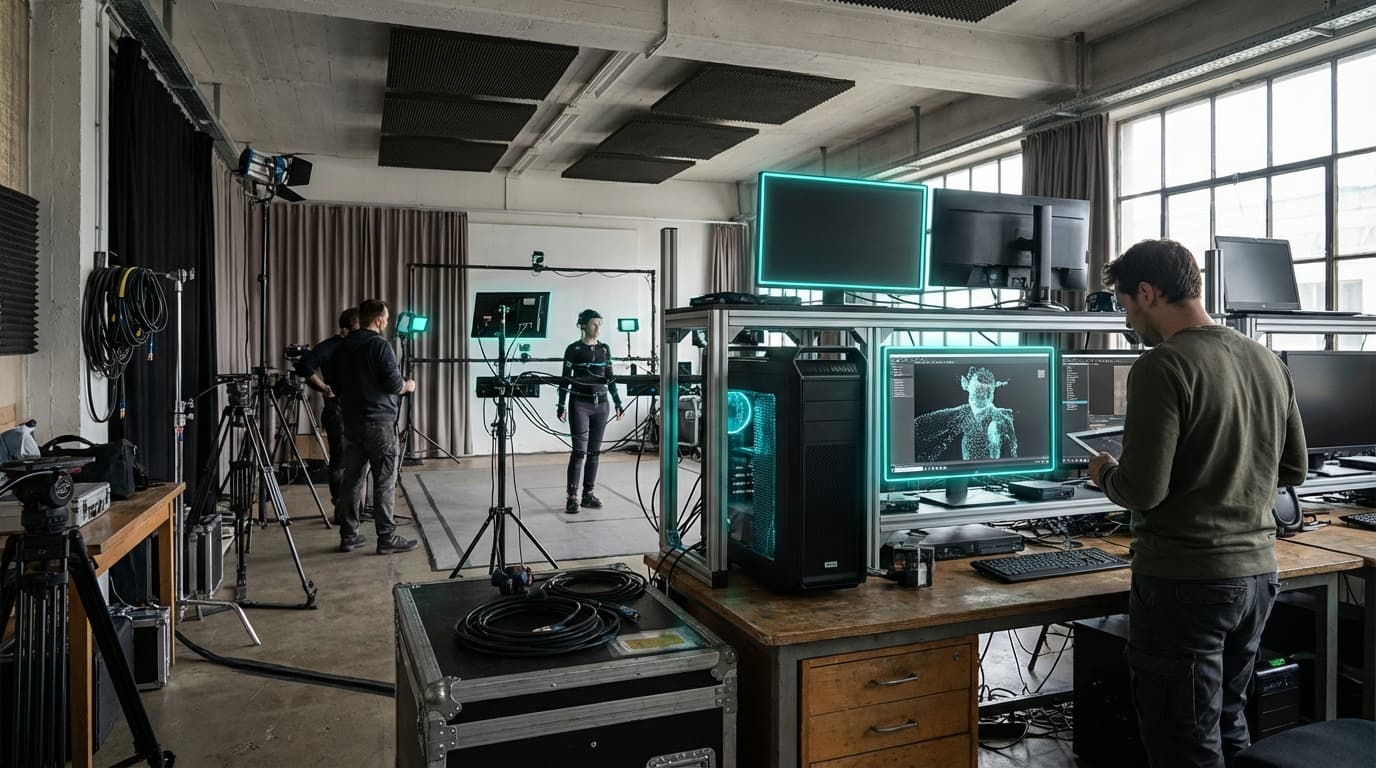
3D Gaussian splatting engines represent scenes as millions of anisotropic Gaussian blobs with per-blob color, opacity, and covariance. Instead of ray marching through neural networks, they rasterize these splats directly on the GPU, achieving NeRF-level realism at interactive frame rates and allowing editors to edit splats like particles. Capture pipelines convert multi-view images into splat clouds in minutes, enabling portable files that stream efficiently to WebGL, Unreal, or custom viewers.
Studios use splats to build volumetric location libraries for AR scouting, lightweight digital twins for sports replays, and immersive tourism experiences that run on phones. Because the format supports progressive refinement, streaming services can send low-res previews first, then layer in detail as bandwidth allows. Paired with LiDAR data, splats fill gaps with photoreal draw-ins, helping virtual production teams align CG and practical sets.
Ecosystem maturity (TRL 5) hinges on tooling: DCC apps need splat-aware editing, and compression standards must emerge to keep files manageable. Open-source viewers from Graphdeco and Luma Labs demonstrate what’s possible, and standards bodies discuss adding splat modes to glTF. Expect Gaussian splatting to sit alongside NeRFs as a pragmatic option where real-time playback and editability trump absolute compression rates.
Related Organizations

The French National Institute for Research in Digital Science and Technology, heavily involved in AI research and Scikit-learn.

Creators of Dream Machine, a high-quality video generation model, and 3D capture technology.

United States · Startup
Software dedicated to creating and training Radiance Fields and Gaussian Splats.

Pioneers in Neural Radiance Fields (NeRF) and light-field reconstruction algorithms.

AR platform company that develops the Lightship ARDK and owns Scaniverse, a 3D scanning app leveraging LiDAR.


Developing foundation models for robotics (Project GR00T) and vision-language models like VILA.
A web-based 3D design tool enabling real-time collaboration.

Provides the High Definition Render Pipeline (HDRP) which supports real-time ray tracing for gaming and industrial visualization.
Supporting Evidence
Research this in Signals
Signals turns a topic into a sourced research record you can inspect and rerun. Your first scan is free, and this one starts with 3D Gaussian Splatting Engines already loaded, so edit it or scan as is.