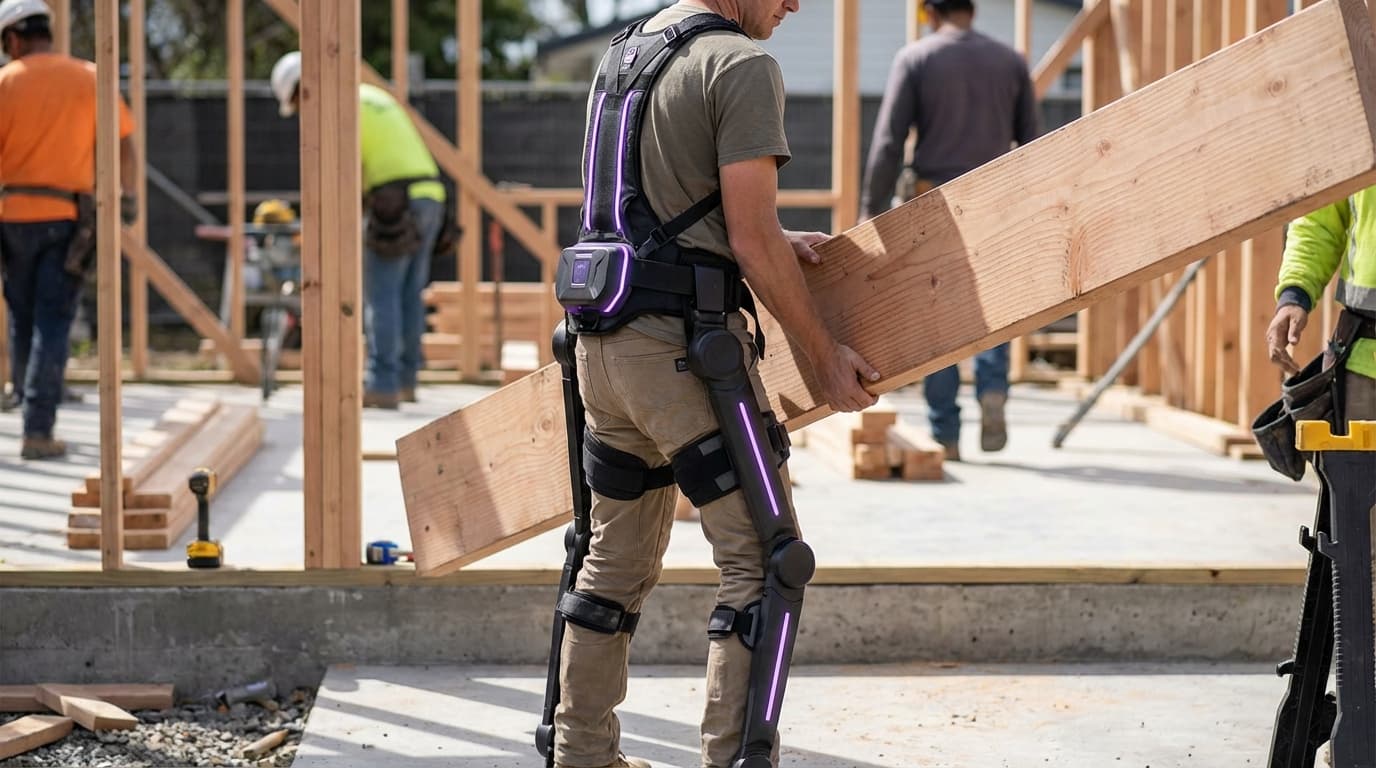
AI-driven semi-active exoskeletons use machine learning algorithms to automatically detect when workers need assistance and activate support only during specific movements that cause biomechanical strain. Unlike passive exoskeletons that provide constant support or fully active systems that require continuous power, semi-active exoskeletons intelligently engage assistance mechanisms only when needed, such as during lifting, bending, or overhead work. The AI algorithms learn from movement patterns, muscle activity, and biomechanical signals to predict when assistance is required.
The technology reduces worker fatigue, prevents injuries, and protects long-term musculoskeletal health by providing targeted support during high-risk movements. By activating only when needed, semi-active systems are lighter, more energy-efficient, and less intrusive than fully active exoskeletons. The AI continuously adapts to individual workers' movement patterns and task requirements, optimizing assistance timing and intensity. Applications include manufacturing, construction, logistics, healthcare, and any industry involving manual material handling or repetitive physical tasks. The technology improves worker safety, reduces injury-related costs, and enables workers to maintain productivity while protecting their long-term health, addressing critical workforce sustainability challenges.