Urban Mining
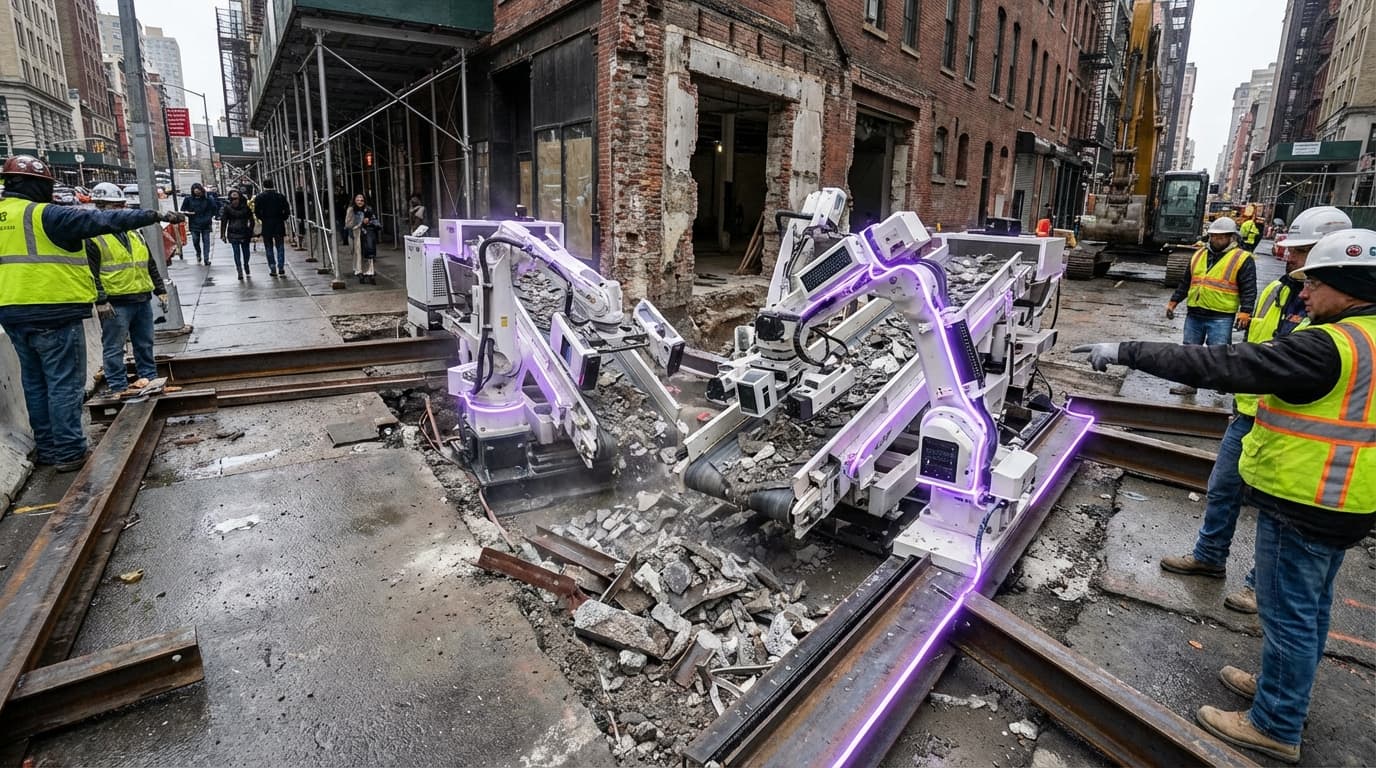
Urban mining treats cities as resource deposits, systematically recovering valuable materials from waste streams including electronic waste, construction debris, end-of-life vehicles, and other discarded products. The approach recognizes that urban waste contains concentrations of valuable materials—often higher than natural ores—including precious metals (gold, silver, platinum), rare earth elements, copper, aluminum, and other critical materials. Urban mining uses advanced sorting, separation, and extraction technologies to recover these materials, creating a circular economy where waste becomes a resource and reducing dependence on environmentally destructive traditional mining.
The technology addresses dual challenges: resource scarcity as easily accessible mineral deposits are depleted, and waste management as cities generate increasing amounts of material waste. Urban mining can recover materials more efficiently than traditional mining (since they're already concentrated), reduce environmental impact compared to extracting from ores, and create economic value from waste. Applications include e-waste recycling facilities that extract gold and rare earths from electronics, construction waste processing that recovers metals and aggregates, and vehicle recycling that recovers valuable components and materials. Companies and municipalities worldwide are developing urban mining operations.
At TRL 7, urban mining is commercially practiced for various materials, though recovery rates and economic viability vary. The technology faces challenges including the complexity of separating mixed materials, ensuring economic viability compared to virgin materials, developing efficient extraction processes, and creating markets for recovered materials. However, as resource prices increase, environmental regulations tighten, and extraction technologies improve, urban mining becomes increasingly attractive. The technology could transform waste management into resource recovery, reduce environmental impact of material extraction, create local economic opportunities, and contribute to circular economy models, potentially making cities self-sufficient in many materials while reducing the need for environmentally destructive mining operations.
Related Organizations

Creates a closed-loop supply chain for lithium-ion batteries by recycling end-of-life batteries into critical materials.

Global materials technology group with extensive operations in battery recycling and refining.
Uses Spoke & Hub technologies to recover critical materials from lithium-ion batteries with high efficiency.

Develops bio-refining technology using microbes to recover precious metals from electronic waste.
United States · Company
Manufactures rare earth permanent magnets using recycled materials.

Specializes in the recovery of rare earth elements from end-of-life magnets and electric vehicle motors.
Japan · Company
Japanese conglomerate with extensive environmental management and recycling operations for recovering 22 types of metal.

Uses electro-extraction technology to recover critical minerals from waste streams and low-grade ores.
Australia · Company
A global metal recycling company with a dedicated division (Sims Lifecycle Services) for IT asset disposition and recycling.

A global leader in water, waste, and energy management with dedicated facilities for e-waste and battery recycling.

Major commodity trader investing heavily in circularity partnerships (e.g., with Li-Cycle and circular supply chains).
Supporting Evidence
Research this in Signals
Signals turns a topic into a sourced research record you can inspect and rerun. Your first scan is free, and this one starts with Urban Mining already loaded, so edit it or scan as is.