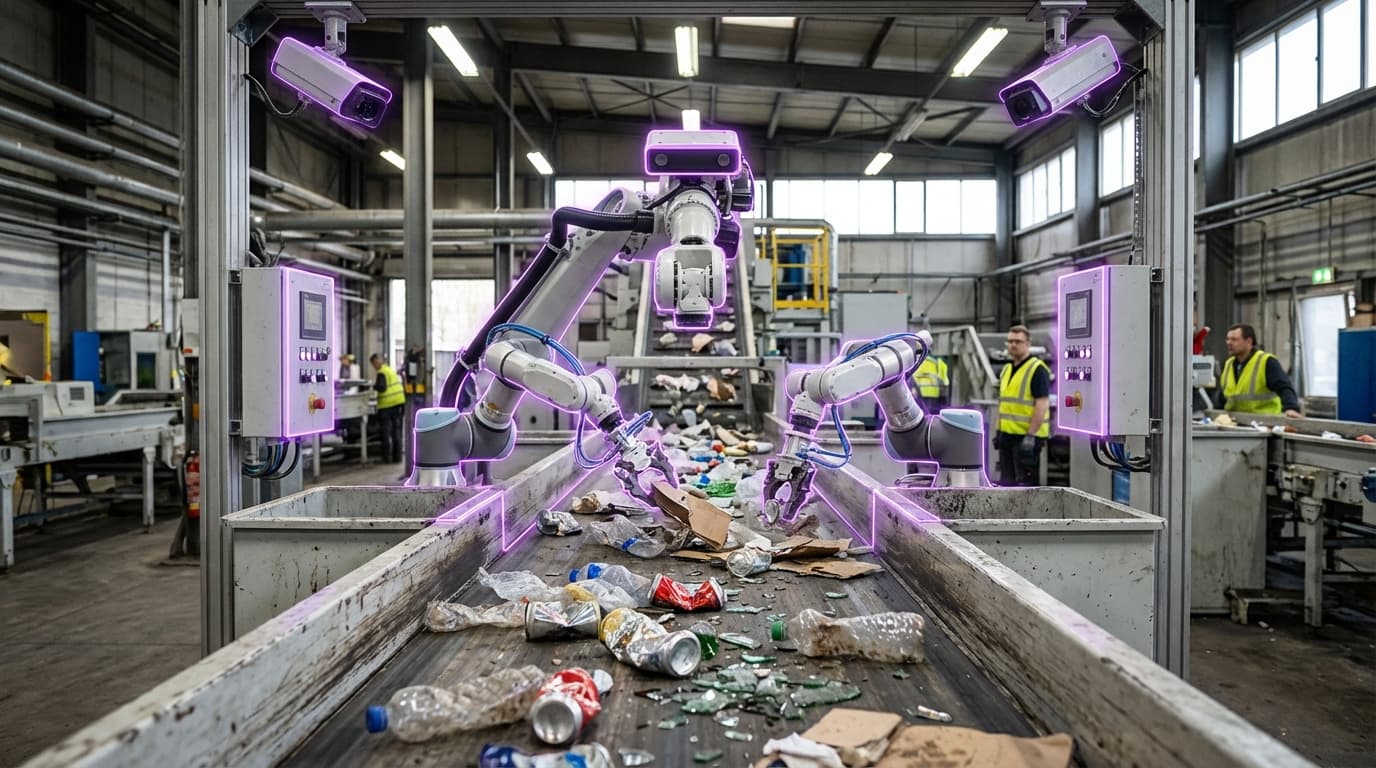
Machine Vision Recycling System
Machine vision recycling systems use advanced computer vision, artificial intelligence, and robotic sorting to automatically identify, classify, and separate recyclable materials from waste streams. These systems employ high-speed cameras, spectral imaging, and AI algorithms trained on millions of material samples to recognize different types of plastics, metals, paper, and other recyclables based on visual characteristics, shape, color, and material properties. Robotic arms or air jets then sort materials into appropriate bins with precision and speed far exceeding human capabilities.
The technology addresses fundamental challenges in recycling: contamination from improper sorting, high labor costs, inconsistent sorting quality, and the difficulty of identifying materials that look similar but have different recycling requirements. Machine vision systems can identify materials that are difficult for humans to distinguish, sort at high speeds, and operate continuously without fatigue. Applications include material recovery facilities (MRFs) that process municipal waste, specialized recycling facilities for electronics or plastics, and sorting systems integrated into waste collection vehicles. Companies like AMP Robotics, ZenRobotics, and various waste management firms are deploying these systems.
At TRL 6, machine vision recycling systems are commercially deployed in various facilities, though accuracy and cost-effectiveness continue to improve. The technology faces challenges including handling diverse and contaminated waste streams, identifying materials that are damaged or obscured, adapting to new material types, and achieving cost parity with manual sorting in some markets. However, as AI algorithms improve and hardware costs decrease, these systems become increasingly viable. The technology could significantly improve recycling rates and quality, reduce contamination that makes materials unrecyclable, and make recycling more economically sustainable, potentially transforming waste management by making recycling more efficient and effective at scale.
Related Organizations

Applies AI and robotics to modernize recycling infrastructure.

TOMRA
Norway · Company
Provides sensor-based sorting solutions for the food, recycling, and mining industries.

Provides AI waste analytics to monitor and audit waste flows.
United Kingdom · Startup
Brings advanced machine learning, computer vision, and robotics to the waste management industry.
Finland · Company
A supplier of AI-based robotic waste sorting systems, now part of Terex.
United States · Company
Designs and manufactures recycling equipment and systems.
United States · Startup
Develops RecycleOS, an AI operating system for recycling plants.
Machinex
Canada · Company
A leader in sorting technologies for the waste and recycling industry.
France · Company
Manufacturer of intelligent optical sorting equipment for waste treatment.
Supporting Evidence
Research this in Signals
Signals turns a topic into a sourced research record you can inspect and rerun. Your first scan is free, and this one starts with Machine Vision Recycling System already loaded, so edit it or scan as is.