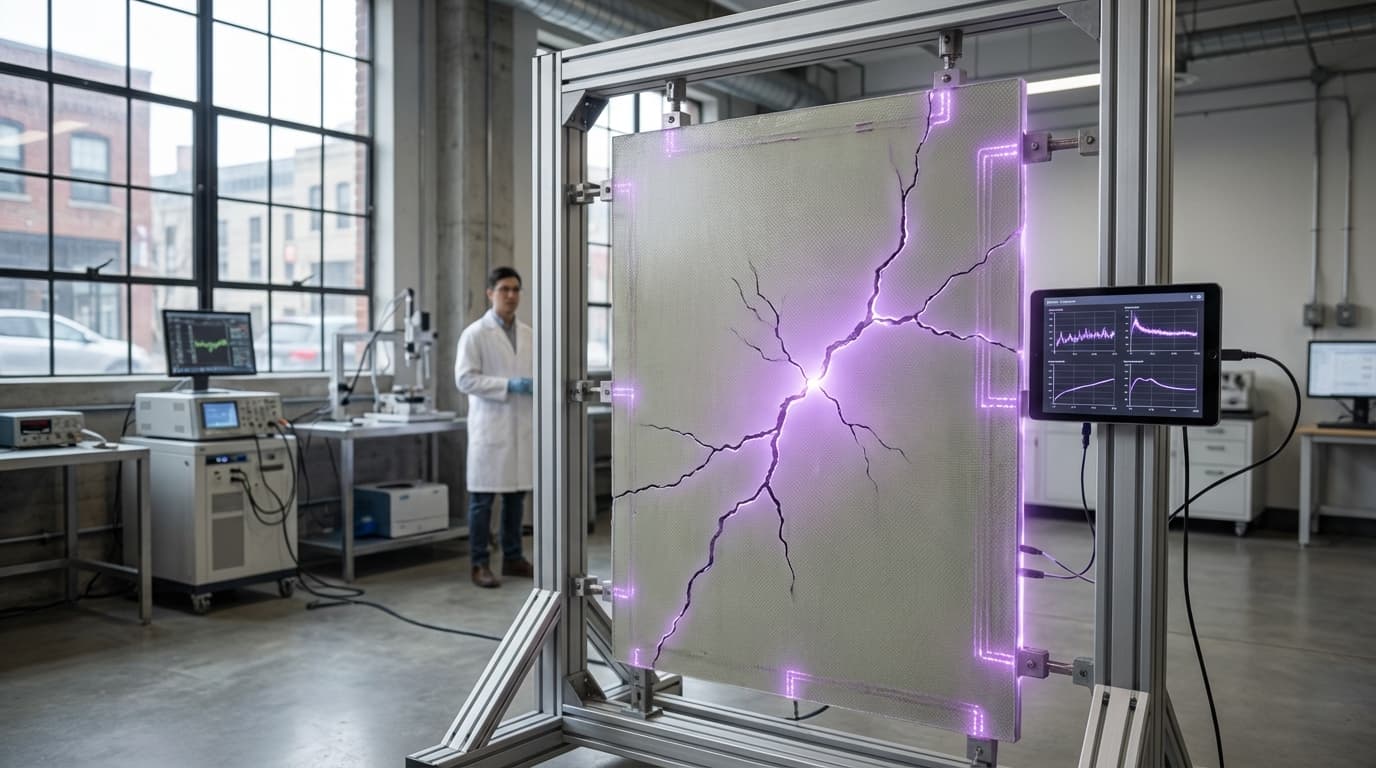
Self-healing Material
Self-healing materials are engineered to autonomously repair damage such as cracks, scratches, or other forms of degradation without external intervention. These materials use various mechanisms including microcapsules containing healing agents that rupture when damage occurs, vascular networks that deliver healing materials to damaged areas, or intrinsic healing through reversible chemical bonds that can reform after breaking. When damage occurs, these mechanisms activate automatically, filling cracks, restoring structural integrity, and extending the material's useful life.
The technology addresses the enormous cost and complexity of maintaining infrastructure and products, where damage accumulates over time and requires expensive, disruptive repairs. Self-healing materials can prevent small cracks from growing into major failures, reduce maintenance requirements, and extend service life significantly. Applications include self-healing concrete for roads and buildings, self-repairing coatings and paints, self-healing polymers for products and components, and materials for aerospace and automotive applications where reliability is critical. Research institutions and companies are developing various self-healing material systems.
At TRL 6, self-healing materials are being tested and deployed in various applications, though healing capacity, speed, and repeatability remain areas of development. The technology faces challenges including limited healing capacity for large or severe damage, healing speed (some processes take hours or days), ensuring healing works in various environmental conditions, and cost-effectiveness compared to traditional materials. However, as the technology improves and costs decrease, self-healing materials become increasingly viable. The technology could transform infrastructure maintenance by creating materials that maintain themselves, potentially reducing maintenance costs dramatically, extending infrastructure lifespan, and improving safety by preventing failures, while also enabling products that are more durable and require less replacement.
Related Organizations

Develops self-healing technologies for high-performance coatings, adhesives, and sealants.
Green Basilisk
Netherlands · Startup
Develops self-healing concrete using limestone-producing bacteria.
United States · Research Lab
An interdisciplinary research institute at the University of Illinois Urbana-Champaign.

Provides healable and sustainable composite materials.

A leading technical university known for research into self-healing asphalt using steel wool and induction heating.

A premier bio-inspired engineering lab developing soft robotics and adaptive materials.

Develops, manufactures, and sells advanced materials, including self-healing coatings.

Develops supramolecular polymers that exhibit self-healing properties.


Supporting Evidence
Research this in Signals
Signals turns a topic into a sourced research record you can inspect and rerun. Your first scan is free, and this one starts with Self-healing Material already loaded, so edit it or scan as is.