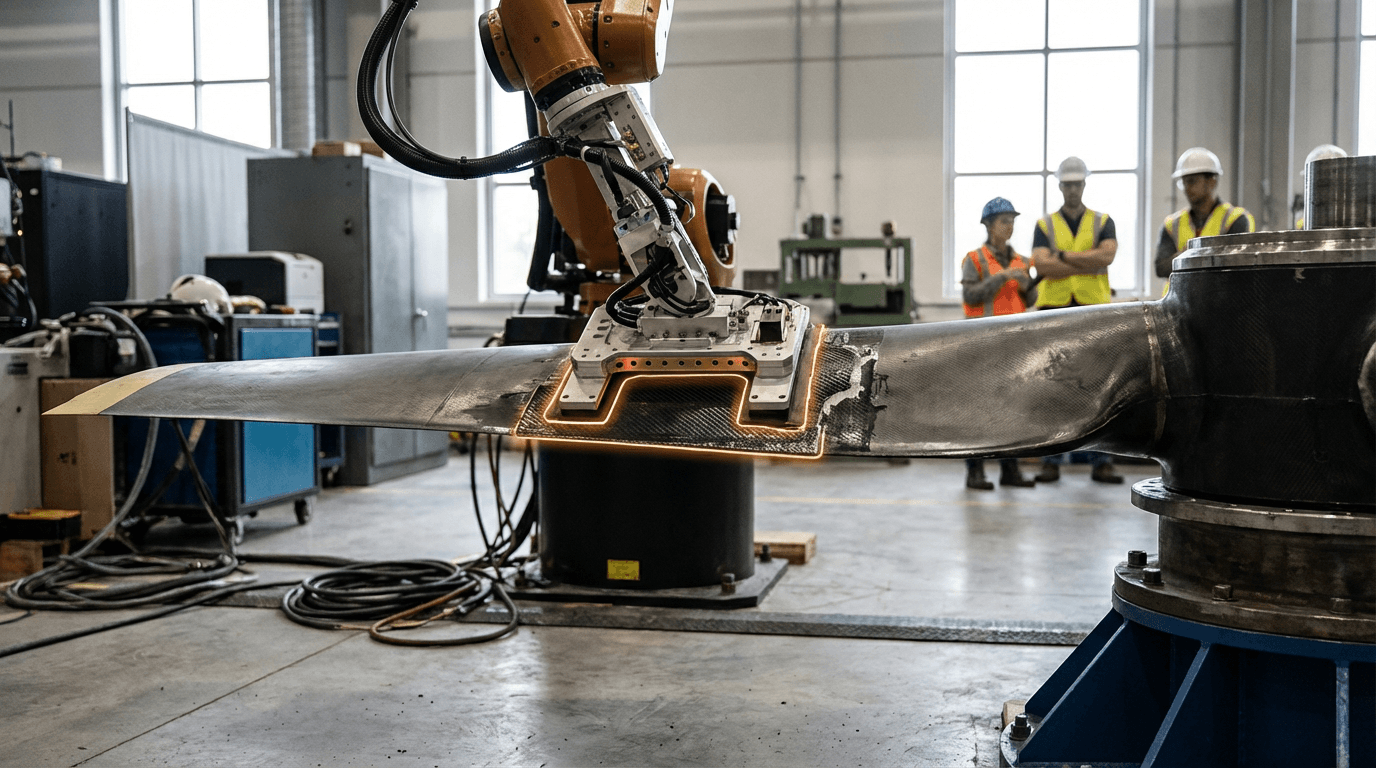
Self-Healing Materials & Adaptive Structures
Self-healing materials represent a paradigm shift in manufacturing and structural engineering, moving beyond traditional damage prevention to systems that autonomously restore their integrity after mechanical, chemical, or thermal damage. These materials employ several distinct mechanisms to achieve self-repair: microencapsulation systems embed tiny capsules of healing agents within a material matrix that rupture when cracks propagate, releasing reactive compounds that polymerize and seal the damage; vascular networks mimic biological circulatory systems by incorporating channels filled with repair fluids that flow to damaged areas; and intrinsic self-healing polymers utilize reversible chemical bonds that can break and reform under specific conditions, allowing molecular-level repair without external intervention. Some advanced formulations combine multiple healing mechanisms to address different damage types, while others incorporate shape-memory alloys or polymers that can restore original geometries after deformation. The technical challenge lies in balancing healing efficiency with the material's primary mechanical properties, ensuring that the self-repair capability doesn't compromise strength, durability, or other critical performance characteristics.
The manufacturing sector faces persistent challenges related to material degradation, maintenance costs, and premature component failure. Traditional approaches require regular inspection regimes, scheduled maintenance, and eventual replacement of worn parts—processes that consume significant resources and often necessitate costly downtime. Self-healing materials address these limitations by extending operational lifespans and reducing the frequency of interventions, particularly valuable in applications where access is difficult or dangerous. In aerospace manufacturing, where component failure can have catastrophic consequences and maintenance windows are tightly constrained, self-healing composites can repair micro-cracks from fatigue or impact before they propagate into critical failures. Automotive manufacturers are exploring self-healing coatings that maintain aesthetic appearance and corrosion protection by sealing minor scratches and abrasions, reducing warranty claims and enhancing vehicle longevity. The technology also enables new business models around "build-once" infrastructure, where initial material costs are offset by dramatically reduced lifecycle expenses, making previously impractical designs economically viable.
Research institutions and industrial partners have demonstrated self-healing capabilities across diverse applications, from concrete that uses embedded bacteria to precipitate calcium carbonate in cracks, to electronic circuits with liquid metal channels that restore conductivity when severed. Early commercial deployments include protective coatings for consumer electronics, self-sealing tires that contain puncture damage, and specialized composites for wind turbine blades that repair environmental degradation. The technology shows particular promise in robotics and advanced manufacturing systems, where components could autonomously maintain themselves during extended operations in remote or hazardous environments. As manufacturing increasingly emphasizes sustainability and circular economy principles, self-healing materials align with broader industry trends toward durability, resource efficiency, and waste reduction. Future developments are likely to focus on multi-functional materials that combine self-healing with sensing capabilities to detect and report damage severity, as well as systems that can undergo multiple healing cycles without performance degradation. The convergence of self-healing materials with additive manufacturing techniques may enable the production of complex structures with embedded repair mechanisms tailored to specific stress patterns and failure modes, fundamentally transforming how we design for longevity in manufacturing and infrastructure applications.
Related Organizations

Develops self-healing technologies for high-performance coatings, adhesives, and sealants.

Produces concrete mixed with limestone-producing bacteria that autonomously repair cracks.

Provides healable and sustainable composite materials.

A leading technical university known for research into self-healing asphalt using steel wool and induction heating.

Develops, manufactures, and sells advanced materials, including self-healing coatings.

Develops supramolecular polymers that exhibit self-healing properties.

Developed the SWIFT (Sacrificial Writing into Functional Tissue) method for 3D printing vascular channels in living matrices.


Michelin
France · Company
Offers Michelin Connected Fleet and MEMS (Michelin Earthmover Management System) for smart tire monitoring.

A global group that develops and manages sustainable infrastructure solutions, including testing self-healing materials in construction projects.
Supporting Evidence
Research this in Signals
Signals turns a topic into a sourced research record you can inspect and rerun. Your first scan is free, and this one starts with Self-Healing Materials & Adaptive Structures already loaded, so edit it or scan as is.