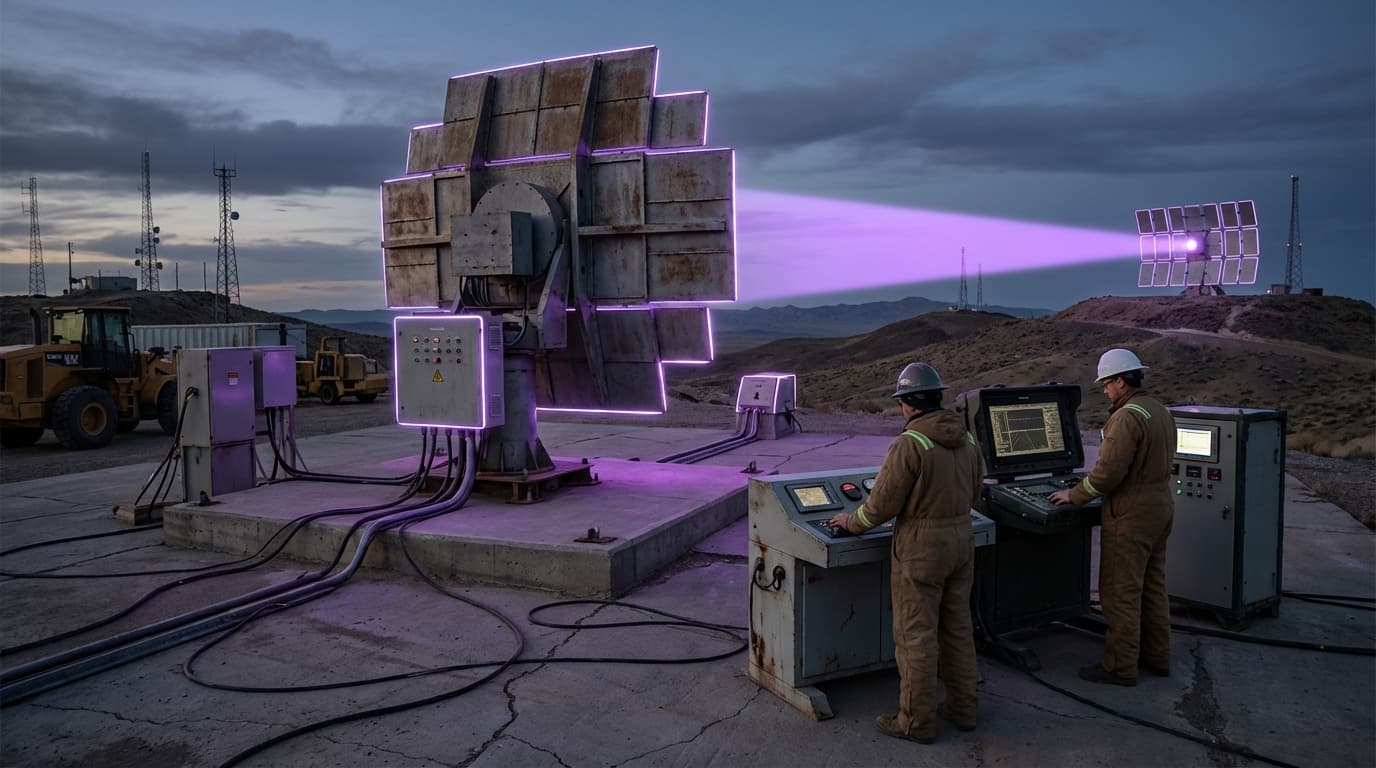
Power Beaming
Power beaming uses focused electromagnetic waves—typically microwaves or lasers—to transmit electrical energy wirelessly over distances without physical connections. The technology converts electricity into electromagnetic radiation at the transmitter, focuses it into a beam, and converts it back to electricity at the receiver. Microwave power beaming operates at lower frequencies and can penetrate atmospheric conditions, while laser power beaming uses focused light beams for higher efficiency over shorter distances.
The technology enables power delivery to remote or mobile systems where physical infrastructure is impractical, such as drones, satellites, electric vehicles, or remote sensors. Power beaming could eliminate the need for batteries in some applications, enable continuous operation of mobile devices, and provide emergency power in disaster scenarios. Research institutions and companies like PowerLight, WiTricity, and various space agencies are developing power beaming systems for applications ranging from charging electric vehicles to powering space-based solar arrays.
At TRL 5, power beaming has been demonstrated in laboratory and limited field tests, with some commercial applications emerging for specific use cases. The technology faces challenges including efficiency losses during transmission, safety concerns with high-power beams, regulatory approval for radio frequency emissions, and the need for precise alignment between transmitter and receiver. However, as wireless power becomes increasingly important for IoT devices, electric vehicles, and space applications, power beaming offers a pathway to truly wireless energy systems. If efficiency and safety challenges can be addressed, the technology could enable new classes of applications and eliminate one of the last physical constraints on device mobility.
Research this in Signals
Signals turns a topic into a sourced research record you can inspect and rerun. Your first scan is free, and this one starts with Power Beaming already loaded, so edit it or scan as is.