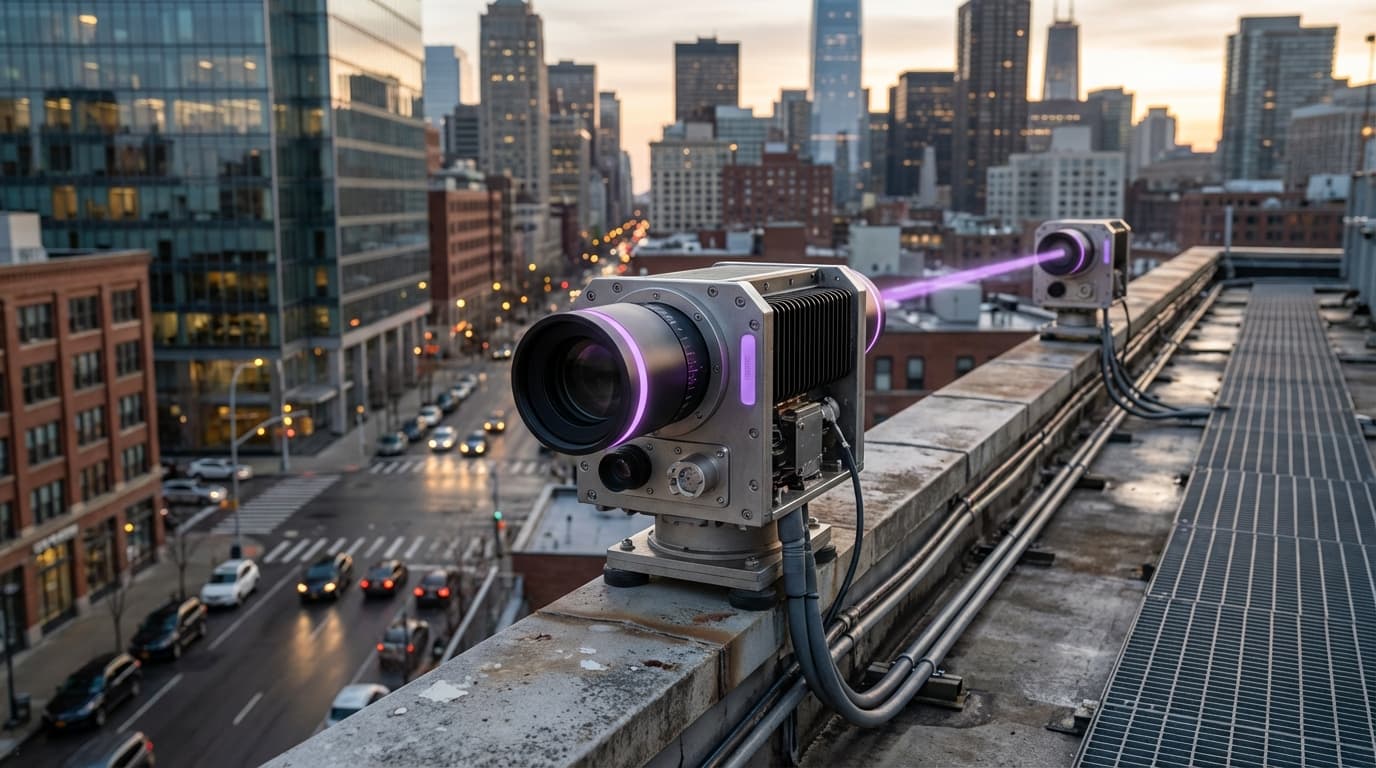
Laser Communication
Laser communication, also known as optical communication or free-space optical communication, uses focused laser beams to transmit data through space or the atmosphere. Unlike radio frequency communication, laser systems operate at much higher frequencies (typically in the infrared spectrum), enabling orders of magnitude higher data rates while using less power and requiring smaller, lighter equipment. The narrow beam width provides inherent security and reduces interference, though it requires precise pointing and tracking between transmitter and receiver.
The technology is revolutionizing space communications by enabling high-bandwidth data links between satellites, spacecraft, and ground stations. NASA's Laser Communications Relay Demonstration (LCRD) and the European Space Agency's optical communication systems have demonstrated data rates of gigabits per second over millions of kilometers. Commercial satellite constellations are integrating laser inter-satellite links to create high-speed space networks that can route data globally without ground infrastructure.
At TRL 5, laser communication systems are being deployed in space missions and tested for various applications. The technology is particularly valuable for deep space missions where traditional radio communication becomes impractical, and for satellite constellations requiring high-speed inter-satellite links. However, challenges remain in atmospheric interference for ground-to-space links, precise pointing requirements, and the need for clear line-of-sight. As these systems mature and become more reliable, laser communication could enable new capabilities in space exploration, global internet connectivity, and real-time data transmission from remote locations, fundamentally changing how we communicate across vast distances.
Related Organizations

Manufactures laser communication terminals for air, space, and mobile applications.

Conducts advanced demonstrations like LCRD (Laser Communications Relay Demonstration) and DSOC (Deep Space Optical Comm).

Deploys optical inter-satellite links (lasers) on Starlink satellites to reduce latency and ground station dependence.

A market leader in laser communication terminals for satellites, powering the European Data Relay System.

Partner in the EuroQCI initiative, working on the space segment of the European quantum communication infrastructure.

Developing Project Kuiper, a satellite constellation that will utilize optical inter-satellite links.

Building a space-based optical data transport network to relay data for other satellites.
United States · Company
Provides free-space optical communication technology for US defense and intelligence (acquired SA Photonics).

Developed the SOLISS (Small Optical Link for International Space Station) system.
Supporting Evidence
Research this in Signals
Signals turns a topic into a sourced research record you can inspect and rerun. Your first scan is free, and this one starts with Laser Communication already loaded, so edit it or scan as is.