Space-Based Solar Power
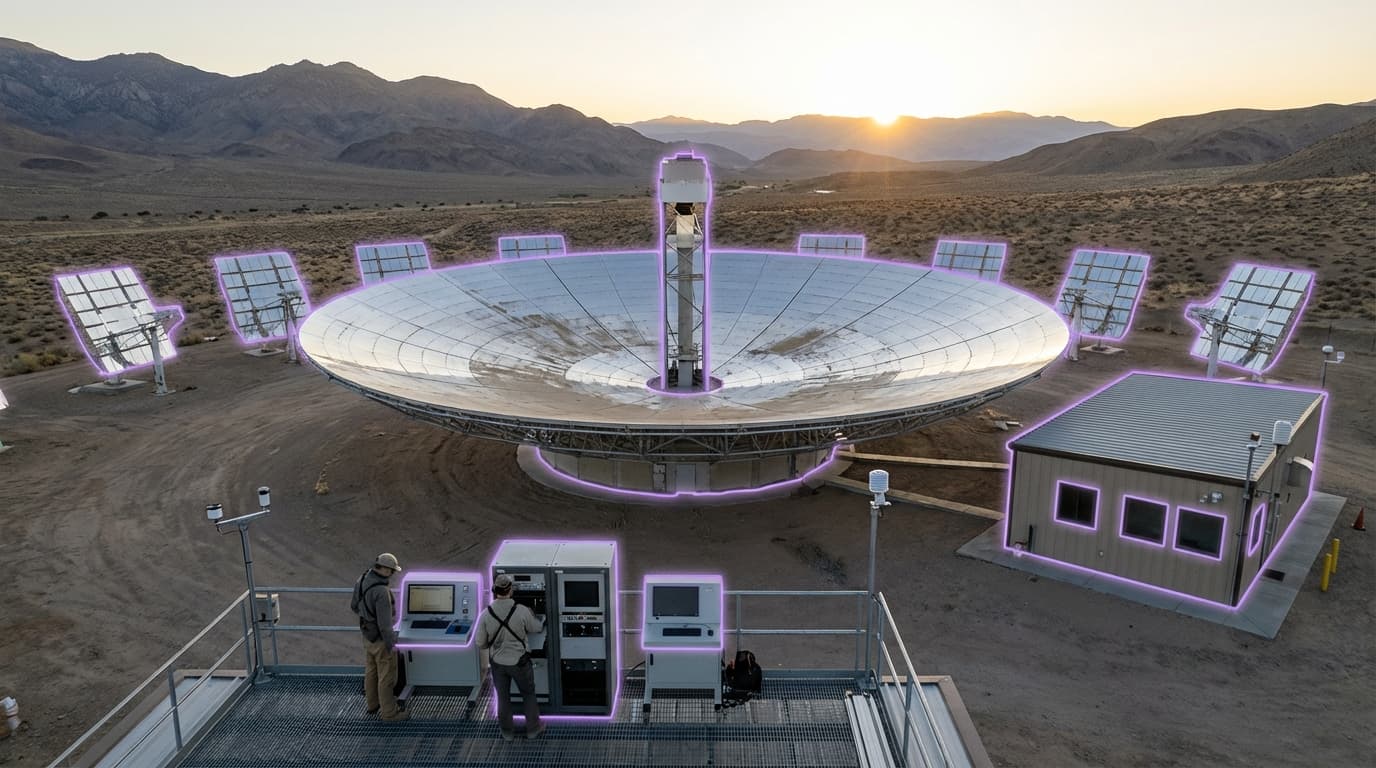
Space-based solar power (SBSP) systems deploy large solar arrays in space—typically in geostationary orbit—where they can capture sunlight 24/7 without atmospheric interference, weather, or day-night cycles. The collected solar energy is converted to electricity, then transformed into microwaves or laser beams that are transmitted to receiving stations (rectennas) on Earth, where they're converted back to electricity for the grid. Space-based systems can generate significantly more power than ground-based solar due to constant exposure to unfiltered sunlight.
The technology addresses fundamental limitations of terrestrial solar power: intermittent generation, weather dependence, and land use requirements. SBSP could provide baseload renewable energy comparable to nuclear or fossil fuel plants, but without emissions or fuel requirements. Major space agencies including NASA, JAXA, and ESA are researching SBSP, while private companies like Solaren and Space Energy are developing commercial concepts. Recent advances in launch costs, solar panel efficiency, and wireless power transmission are making the concept more economically viable.
At TRL 3, space-based solar power remains largely conceptual, with ground-based demonstrations of key technologies like wireless power transmission. The technology faces enormous challenges including the cost of launching and assembling massive structures in space, efficiency of power transmission through the atmosphere, safety of high-power microwave beams, and the need for extremely large orbital and ground infrastructure. However, as launch costs decrease and energy demand grows, SBSP could become economically viable. If these challenges can be overcome, space-based solar power could provide a transformative source of clean, continuous energy, potentially meeting a significant portion of global electricity demand while overcoming the intermittency limitations of terrestrial renewable energy sources.
Related Organizations

The Painter Group at Caltech is a world leader in piezo-optomechanical quantum transduction.
China Academy of Space Technology (CAST)
China · Government Agency
Constructing the Bishan space solar power station ground verification system and planning orbital tests.

Leading long-term research into SBSP, with plans to demonstrate power transmission from orbit by 2025.
Leads the EAGLE-1 mission and the SAGA program to build a European quantum communication infrastructure in space.

UK-based startup developing the CASSIOPeiA solar power satellite concept for continuous gigawatt-scale energy.

Proposing a constellation of smaller satellites using infrared lasers to transmit power, rather than microwaves.

Major defense contractor developing Reciprocal Quantum Logic (RQL) for cryogenic computing.

Partner in the EuroQCI initiative, working on the space segment of the European quantum communication infrastructure.
Supporting Evidence
Research this in Signals
Signals turns a topic into a sourced research record you can inspect and rerun. Your first scan is free, and this one starts with Space-Based Solar Power already loaded, so edit it or scan as is.