Israeli Cell Therapy Manufacturing
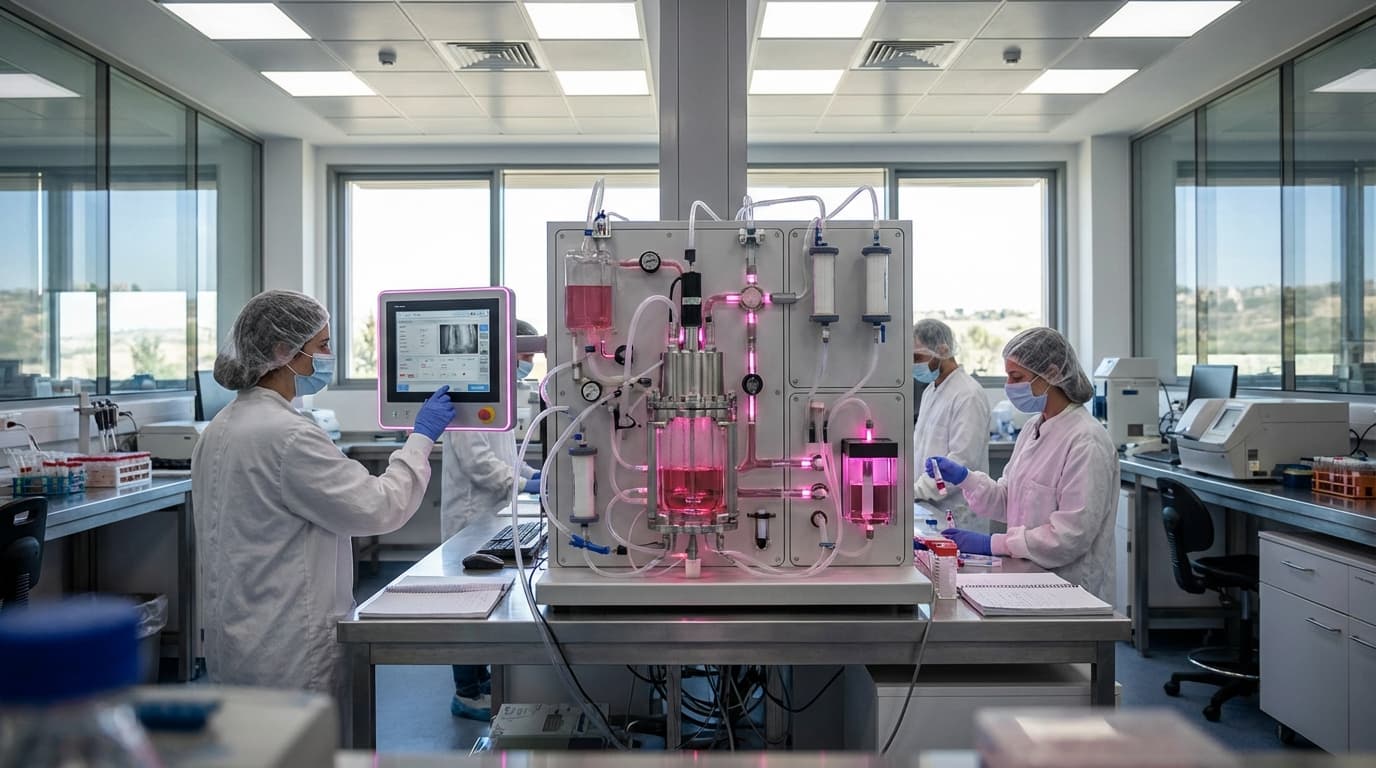
Israeli cell therapy manufacturing represents a leading ecosystem that combines robotic cell processors, AI-powered batch analytics, and regulatory sandboxes (flexible regulatory environments for testing new approaches) to deliver cell and gene therapy (CGT) products including CAR-T cells, natural killer (NK) cells, and stem cell therapies worldwide. Israel's biotech hubs have developed integrated manufacturing infrastructure that sets benchmarks for agile CGT manufacturing, enabling efficient production of personalized cell therapies with advanced automation and quality control systems that support the country's position as a major exporter of cell therapy products.
This innovation demonstrates how integrated manufacturing infrastructure, regulatory flexibility, and advanced automation can enable efficient cell therapy production. Israel's approach combines technical capabilities with regulatory innovation to create a competitive advantage in cell therapy manufacturing. Companies and facilities in Israel are developing these capabilities.
The technology is significant for making cell therapies more accessible and affordable, where efficient manufacturing is critical. As cell therapies expand, Israel's model could influence global manufacturing approaches. However, maintaining quality, managing complexity, and competing globally remain challenges. The technology represents an important model for cell therapy manufacturing, but requires continued innovation to maintain competitiveness. Success could make cell therapies more accessible globally, but the industry must continue to evolve and improve manufacturing efficiency.
Related Organizations
Israel · Startup
Develops the ADVA X3, an automated, precise, and controllable bioreactor system for cell therapy manufacturing.
Israel · Company
A pioneer in cell therapies, known for Omisirge, an FDA-approved nicotinamide-modified cell therapy manufactured in Israel.
United States · Company
Focuses on decentralized cell therapy manufacturing via its POCare (Point of Care) platform and Mobile Processing Units.
Israel · Company
Uses a proprietary 3D cell expansion technology to manufacture placenta-derived cell therapies on an industrial scale.
Israel · Government Agency
Home to the ARC Innovation Center and a major hub for on-site CAR-T production and clinical trials in Israel.
Israel · Company
Manufactures live bone grafts from patient adipose tissue using a unique bioreactor system.
Israel · Company
Develops industrial-scale manufacturing for pluripotent stem cell-derived therapies for diabetes and ALS.

Develops Mitochondrial Augmentation Therapy (MAT), involving the enrichment and manufacturing of autologous cells.
Israel · Startup
Combines hydrogels and cell therapy to manufacture autologous neural implants for spinal cord injury.
Israel · Startup
An AI-powered spatial biology company that helps optimize patient selection and response prediction for immunotherapies.
Supporting Evidence
Research this in Signals
Signals turns a topic into a sourced research record you can inspect and rerun. Your first scan is free, and this one starts with Israeli Cell Therapy Manufacturing already loaded, so edit it or scan as is.