Microfluidic Cell Sorters
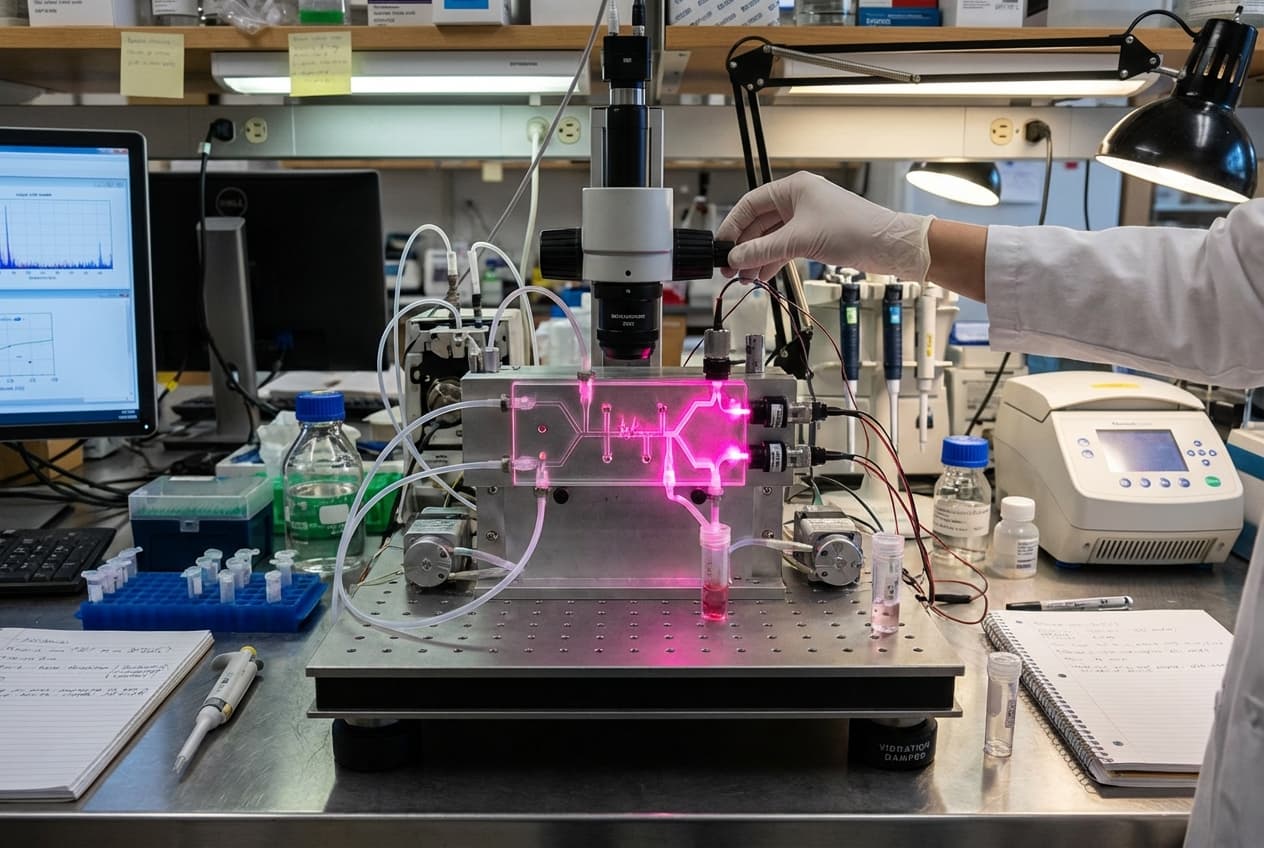
Microfluidic cell sorters are lab-on-chip systems that use microfluidic channels and various separation techniques including acoustic forces, dielectrophoresis (using electric fields), and AI-powered vision systems to isolate and sort individual cells or rare cell populations with minimal sample preparation. These high-throughput systems can process cells rapidly and precisely, and cell therapy manufacturing facilities are deploying them for sterile, closed-loop manufacturing processes that reduce labor requirements and contamination risk compared to traditional open-system cell sorting.
This innovation addresses the need for precise, efficient cell isolation in applications ranging from diagnostics (isolating rare cells like circulating tumor cells) to cell therapy manufacturing (selecting specific cell types for therapeutic use). Traditional cell sorting methods are often slow, require large sample volumes, and have higher contamination risks. Microfluidic systems offer faster, more precise sorting with smaller samples and better contamination control. Companies like Berkeley Lights, Celsee, and various research institutions are developing these technologies.
The technology is particularly valuable for cell therapy manufacturing, where isolating specific cell types with high purity is critical for product quality and safety. As cell therapies become more common, efficient, sterile cell sorting becomes essential for manufacturing. However, ensuring sorting accuracy, managing throughput, and integrating with manufacturing workflows remain challenges. The technology represents an important tool for advancing cell-based diagnostics and therapies, but requires continued development to achieve the speed, accuracy, and integration needed for widespread use. Success could enable more efficient cell therapy manufacturing and better diagnostics, supporting the growth of personalized medicine and cell-based therapies.
Related Organizations

Combines microfluidics with AI-powered imaging to sort cells based on morphology without staining.
United States · Company
Develops the WOLF Cell Sorter, a microfluidic system designed for gentle, low-pressure single-cell sorting.
Japan · Startup
Develops 'Ghost Cytometry', a proprietary AI-based flow cytometry technology for high-speed, label-free cell sorting.
United States · Startup
Uses magnetic levitation technology within microfluidic channels to sort cells by density without labels.
United Kingdom · Company
Provides picodroplet microfluidic technology for single-cell analysis and isolation, primarily for biopharmaceutical discovery.
United States · Startup
Produces the NX One, a benchtop microfluidic single-cell isolation system designed to be affordable and easy to use.
France · Company
Develops the cellenONE, a single-cell isolation and dispensing system using acoustic microfluidic technology.
United States · Company
Specializes in microfluidic cell sorting technology for industrial and clinical applications, including the GigaSort system.
United States · Company
Offers the Tapestri platform, which uses microfluidics to encapsulate single cells for multi-omics analysis.

A non-profit engineering innovation company that develops acoustic microfluidic separation systems for CAR-T manufacturing.
Supporting Evidence
Research this in Signals
Signals turns a topic into a sourced research record you can inspect and rerun. Your first scan is free, and this one starts with Microfluidic Cell Sorters already loaded, so edit it or scan as is.